
Private Equity Consolidation in the Frozen Food Sector: Strategic Capital Deployment and Sector-Specific Value Creation
The frozen food sector has emerged as a prime target for private equity (PE) consolidation in 2025, driven by resilient consumer demand, margin stability, and strategic alignment with macroeconomic trends. As global food and beverage M&A activity rebounds, financial sponsors are deploying dry powder to capitalize on undervalued assets, operational inefficiencies, and innovation opportunities. This article examines the dynamics of PE consolidation in the frozen food industry, focusing on how strategic capital deployment and sector-specific value creation strategies are reshaping the competitive landscape.
Market Dynamics and Consolidation Trends
The frozen food sector's appeal to private equity lies in its dual resilience: it offers both convenience-driven demand and margin protection amid inflationary pressures. According to a Capstone Partners report, frozen food M&A transactions grew by 14.3% year-over-year in 2023, with strategic buyers accounting for 62.5% of deals and financial acquirers for 37.5%. By 2025, financial buyers have regained momentum, leveraging cheaper capital and deploying $115 billion in Q1 2025 alone to target high-margin frozen and shelf-stable food assets, according to a PitchBook report.
Key drivers include shifting consumer preferences toward plant-based options, sustainable packaging, and ready-to-eat meals. For instance, Nestlé's expansion of its plant-based frozen meals under the Sweet Earth brand and Tyson Foods' launch of plant-based frozen nuggets reflect broader industry trends, as noted in a Future Market Insights analysis. Meanwhile, regional players like McCain Foods are investing in sustainability initiatives, such as transitioning to 100% renewable energy, as outlined in the same Future Market Insights analysis.
Strategic Capital Deployment: Add-Ons and Operational Synergies
Private equity firms are prioritizing add-on acquisitions to scale platforms and diversify product portfolios. In Q3 2025, platform deals in the Branded segment grew by 17.4% year-over-year, as sponsors seek to consolidate fragmented markets and achieve economies of scale, according to a Capstone Partners update. For example, PepsiCo's $1.2 billion acquisition of Siete Foods and Flower Foods' purchase of Simple Mills provided liquidity to venture capitalists, enabling further investment in the sector, as detailed in a FoodNavigator USA article.
Capital deployment also emphasizes technological integration and supply chain optimization. A notable case involves a PE-backed frozen foods contract manufacturer that leveraged operational due diligence to uncover underutilized production capacity, delaying a $15 million capital expenditure and unlocking incremental output, as described in a L.E.K. insight. Similarly, AI-enabled risk intelligence platforms have been deployed to streamline supplier networks, improve forecast accuracy, and reduce ingredient costs by up to 12%, according to a WNS case study.
Sector-Specific Value Creation: Innovation and Margin Resilience
Value creation in the frozen food sector hinges on three pillars: operational efficiency, innovation, and supply chain resilience. Private equity firms are investing in lean manufacturing principles to reduce waste and improve throughput, while also modernizing distribution networks to address climate-related disruptions, as highlighted in a Lincoln International perspective. For instance, a health snack portfolio backed by PE utilized sale-leaseback financing to fund equipment upgrades, enhancing production capabilities and supporting growth, according to an Ascension Advisory post.
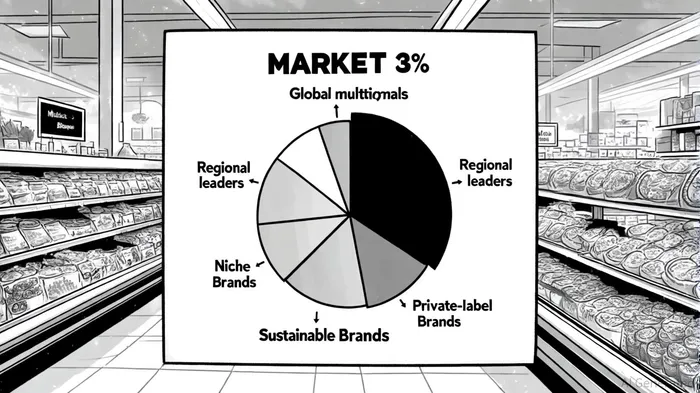
Innovation is another critical lever. Future Market Insights notes that niche brands like Amy's Kitchen and Strong Roots have captured 12% of the market by catering to organic and gluten-free trends, while private-label brands such as Walmart and Aldi emphasize affordability. PE-backed companies are also accelerating R&D in plant-based proteins and sustainable packaging, aligning with Millennial and Gen Z consumer preferences, as described in a Kroll report.
Future Outlook and Investment Implications
The frozen food sector's M&A outlook remains robust, with 2025 deal activity expected to outpace 2023 levels. As inflation moderates, frozen food producers are likely to retain pricing power, further enhancing their attractiveness to financial sponsors, according to a FoodManufacture outlook. However, challenges such as supply chain volatility and regulatory scrutiny of ESG claims could temper growth.
Investors should focus on firms with scalable distribution networks, strong brand equity, and clear pathways to innovation. Regional players with local market expertise, such as Nomad FoodsNOMD-- and Frosta AG, present compelling opportunities for consolidation, while global multinationals like Nestlé and Unilever offer stability through diversified portfolios, as noted in a Polaris Market Research blog.
Conclusion
Private equity consolidation in the frozen food sector is not merely a response to macroeconomic cycles but a strategic alignment with enduring consumer trends. By deploying capital toward operational improvements, innovation, and supply chain resilience, financial sponsors are unlocking value in an industry poised for long-term growth. As the sector navigates evolving demands for sustainability and convenience, the most successful players will be those that balance scale with agility-a dynamic that private equity is uniquely positioned to drive.







Comentarios
Aún no hay comentarios