
Private AI Energy Infrastructure Financing in Texas: Emerging Power Generation Models as a Strategic Hedge Against Grid Fragility and Surging Demand
The rapid ascent of artificial intelligence (AI) has ignited a seismic shift in energy infrastructure, with Texas emerging as a pivotal battleground for innovation. As hyperscalers like Anthropic, GoogleGOOGL--, and OpenAI pour tens of billions into AI-driven data centers, the state faces a dual challenge: meeting surging electricity demand while fortifying its grid against vulnerabilities exposed by past crises. The result is a reimagining of power generation models that blend traditional and renewable energy sources, underpinned by novel financial mechanisms and risk-mitigation strategies. For investors, this convergence of AI demand and energy resilience offers a compelling case for strategic capital allocation.
The AI-Driven Energy Surge and Diversified Power Generation
Texas's energy landscape is being reshaped by the voracious appetite of AI infrastructure. Anthropic's $50 billion investment in custom data centers, coupled with Google's $40 billion commitment to three new facilities in West Texas, underscores the scale of demand. These projects, part of broader initiatives like the Stargate Initiative-a $500 billion consortium led by OpenAI, SoftBank, and Oracle-are projected to add 20 data centers nationwide, with Texas hosting the first. To power them, developers are proposing over 100 new gas-fired power plants, collectively offering 58,000 megawatts of capacity-enough to supply 8 million households.
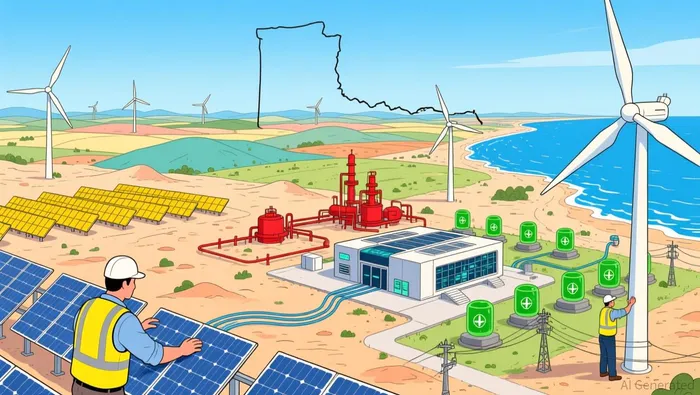
Yet the state is not relying solely on natural gas. The 50,000-acre Data City Texas project near Laredo exemplifies a hybrid approach, integrating solar, wind, and hydrogen to generate 5 gigawatts of power. Similarly, firms like Titus Low Carbon Ventures are pioneering solutions that combine natural gas with battery storage and renewables. These models reflect a strategic pivot toward diversified energy portfolios, balancing the reliability of gas with the scalability of renewables to hedge against grid instability.
Grid Resilience: From Crisis to Innovation
The 2021 winter blackout, which left millions without power and caused $130 billion in economic losses, exposed critical weaknesses in Texas's grid. In response, regulators and utilities are adopting AI-driven resilience strategies. CenterPoint Energy has partnered with Guidehouse to deploy advanced analytics and AI-enabled storm detection tools, aiming to reduce outages by 2029. Meanwhile, the Texas legislature has allocated $10 billion in low-cost loans for gas plants, prioritizing rapid deployment of firm power sources.
Regulatory reforms are also gaining traction. HB1500, passed in 2023, mandates firming requirements for new generators, with debates ongoing over whether to include battery storage as a compliant resource. Such policies signal a shift toward hybrid systems that integrate storage with intermittent renewables, addressing reliability concerns while supporting clean energy transitions.
Financial Mechanisms and Risk Mitigation
The surge in AI-driven energy demand has spurred innovative financing models. The Texas Energy Fund's Outside ERCOT Grant Program (OEGP) has allocated $1.5 billion to modernize infrastructure and enhance weatherization. Complementing this, the U.S. Department of Energy's $10.5 billion GRIP Program funds grid resilience projects, including self-healing technologies and infrastructure upgrades in hurricane-prone regions.
Private partnerships are equally critical. Google's collaboration with Fervo Energy on a geothermal project in Nevada, supplying carbon-free electricity, highlights how tech firms are diversifying energy sources. Similarly, Valero Energy's 17 AI pilots with C3 AI aim to optimize production and reduce costs in its transition to sustainable aviation fuel. These initiatives underscore the role of digitalization in mitigating operational risks and enhancing efficiency.
Strategic Implications for Investors
For investors, Texas's energy-AI nexus presents a unique opportunity. The state's regulatory flexibility, abundant natural resources, and tech-driven demand create a fertile ground for returns. However, success hinges on aligning with projects that balance scalability with sustainability. The Data City Texas model not only meets immediate power needs but also positions itself for future hydrogen integration. Similarly, firms leveraging AI for grid resilience-such as those using predictive analytics for vegetation management-offer dual benefits of reliability and cost efficiency.
Yet challenges persist. Environmental concerns over gas plant emissions and permitting controversies necessitate careful due diligence. Investors must prioritize projects with robust climate risk assessments, as emphasized by HARC's research on asset valuation.
Conclusion
Texas's energy infrastructure is undergoing a transformation driven by AI's insatiable demand and the imperative to avert grid failures. By blending gas, renewables, and cutting-edge technologies, private investments are not only meeting power needs but also building resilience against future shocks. For investors, the state's evolving landscape offers a blueprint for strategic capital deployment-one that harmonizes innovation, regulation, and sustainability to power the AI era.







Comentarios
Aún no hay comentarios