
Privacy Coins: The Next Institutional On-Ramp or Regulatory Dead End?
In 2025, privacy coins have emerged as one of the most polarizing assets in the crypto space. ZcashZEC-- (ZEC), the flagship privacy coin, has seen a meteoric rise, surging over 1,100% in late 2025 to reach a market capitalization of $9.24 billion. This rally has been fueled by a confluence of macroeconomic demand for privacy, institutional adoption, and technological innovation. Yet, the same asset now faces a critical inflection point: regulatory scrutiny is tightening, governance debates are intensifying, and recent price action suggests growing uncertainty. Is Zcash the next institutional on-ramp for privacy-focused assets-or is it teetering on the edge of a regulatory dead end?
The Drivers Behind Zcash's Rally
Zcash's recent surge is not a fluke. Three key factors have positioned it as a compelling asset for both retail and institutional investors:
Institutional Adoption and Product Innovation
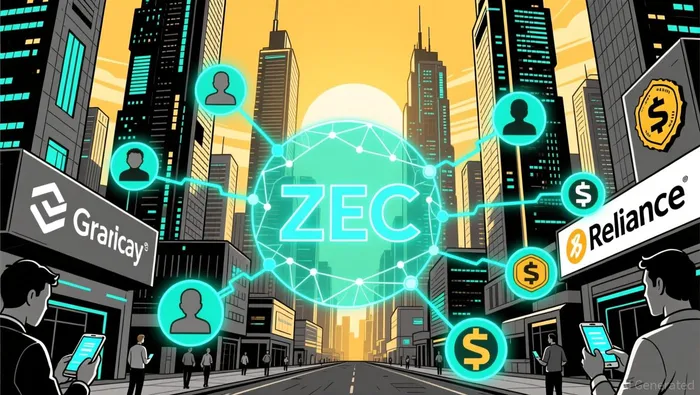
Grayscale's filing for a Zcash ETF and investments from firms like Reliance Global Group have signaled a shift in institutional sentiment. These moves validate Zcash as a privacy-focused asset that can coexist with regulatory frameworks. For context, Grayscale's Zcash Trust, launched in early 2025, has attracted over $1.2 billion in assets under management, reflecting a growing appetite for privacy coins among institutional investors seeking diversification.Scarcity and Halving Dynamics
The November 2025 Zcash halving event reduced daily supply by 1,500 ZEC, cutting inflation into single digits. This scarcity-driven narrative mirrors Bitcoin's supply mechanics, making Zcash an attractive store of value for investors wary of inflationary assets.
- Technological Differentiation
Zcash's use of zk-SNARKs-a cryptographic protocol enabling optional transparency-has allowed it to navigate regulatory gray areas. Unlike fully anonymous coins like Monero, Zcash can selectively disclose transaction details to comply with EU regulations. This adaptability has made it a preferred privacy solution in jurisdictions like the United States and Singapore, where compliance is a priority according to recent market analysis.
Regulatory Headwinds: The Privacy-Compliance Paradox
Despite these tailwinds, Zcash faces a regulatory crossroads. The EU's AMLR (Anti-Money Laundering Regulation) framework, set to phase out highly anonymous crypto assets by 2027, has created a paradox: privacy and compliance must coexist. Zcash's zk-SNARKs model offers a middle ground, but it's not foolproof.
For example, in late 2025, several exchanges delisted privacy coins due to compliance concerns, including Zcash. This has led to fragmented liquidity and increased volatility. Meanwhile, the EU's regulatory focus on "high-risk" assets has forced Zcash to defend its utility in a world increasingly prioritizing transparency.
Macroeconomic Demand: Privacy as a Commodity
The demand for privacy coins is not purely speculative-it's rooted in macroeconomic shifts. As governments and corporations intensify surveillance in financial systems, privacy has become a premium commodity. Zcash's year-to-date 845% gain outpaces Bitcoin's performance, reflecting its role as a hedge against over-regulated environments.
Institutional investors are also driving this trend. The Grayscale Zcash Trust has provided a regulated on-ramp for capital inflows, while advancements in cryptographic privacy (e.g., zk-SNARKs) have enhanced Zcash's utility in a monitored digital world. However, this demand is double-edged: the same macroeconomic factors that drive adoption also heighten regulatory scrutiny.
The Recent Downturn: Governance and Technical Breakdowns
Zcash's recent 33% weekly price drop and 9.6% 24-hour decline highlight vulnerabilities in its ecosystem. Key triggers include:
- Governance Debates: Criticism from Ethereum co-founder Vitalik Buterin on token-based governance models has raised fears of dilution in Zcash's privacy focus. This has created uncertainty about long-term direction, deterring short-term buyers.
- Technical Weakness: Zcash broke below critical support levels, triggering liquidations and bearish momentum. On-chain data shows a $39.34 million net outflow as traders reevaluated positions.
- Derivatives Cooling: Reduced open interest and derivatives activity signal a cautious market, with traders exiting leveraged positions amid weakening momentum.
The Outlook: A Tug-of-War Between Institutional Adoption and Regulation
Analysts remain divided on Zcash's future. Price targets range from $155 to $544, with outcomes hinging on three factors:
- Regulatory Adaptability: Can Zcash maintain its privacy-first ethos while complying with evolving AMLR frameworks? Its zk-SNARKs model offers a blueprint, but execution will be critical.
- Institutional Momentum: Continued adoption by firms like Grayscale and Reliance could solidify Zcash as a mainstream asset. Conversely, regulatory pushback could stifle this growth.
- Macroeconomic Trends: Interest rate changes and global market sentiment will influence demand for privacy as a diversification tool.
Conclusion: A High-Stakes Balancing Act
Zcash's journey in 2025 underscores the broader tension in the crypto space: privacy versus compliance, innovation versus regulation. While its rally demonstrates the viability of privacy coins as institutional assets, the recent downturn highlights the fragility of this narrative. For Zcash to thrive, it must navigate a narrow path-leveraging its technological edge to satisfy regulators while preserving the privacy that made it valuable in the first place.
In the end, the question isn't just about Zcash. It's about whether privacy can coexist with the increasingly regulated financial world. The answer will determine if privacy coins are the next institutional on-ramp-or a regulatory dead end.






Comentarios
Aún no hay comentarios