
Primary Hydrogen's Wicheeda North Project: A Strategic Rare Earth Play Positioned for High-Impact Exploration and Resource Expansion
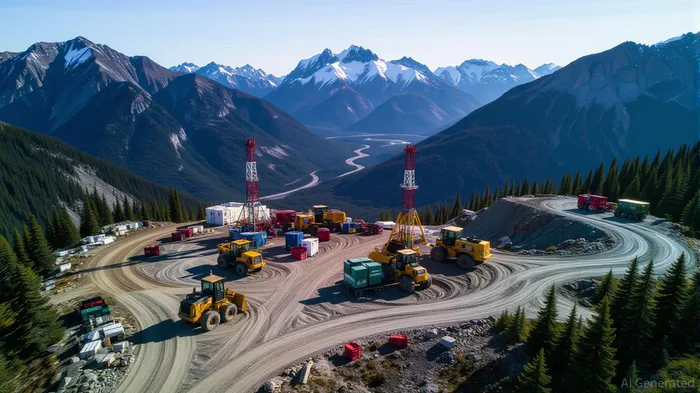
The rare earth element (REE) sector is undergoing a seismic shift, driven by the global clean energy transition and the urgent need to diversify supply chains away from China's dominant 83.20% share of U.S. REE imports. In this evolving landscape, junior explorers like Primary Hydrogen Corp. (TSXV: PHO) are emerging as critical players, leveraging strategic geological positioning and market-driven catalysts to unlock value. Their Wicheeda North Project in British Columbia's Rocky Mountain Trench—a corridor historically associated with carbonatite-related REE deposits—offers a compelling case study in how junior exploration firms can capitalize on both resource potential and geopolitical tailwinds.
Geological Catalysts: A Carbonatite-Linked Opportunity
The Wicheeda North Project spans 2,138 hectares and sits just 5 kilometers from Defense Metals Corp.'s Wicheeda REE deposit, which hosts a robust 35 million tonnes of measured, indicated, and inferred resources grading up to 2.95% total rare earth oxide (TREO). This proximity is no coincidence: the Rocky Mountain Trench is a geologically prolific zone, with carbonatite intrusions—known hosts for REE mineralization—forming the backbone of the region's potential.
Primary Hydrogen's 2025 exploration program is methodically targeting seven geophysical and geochemical anomalies, including Grid A and Grid D, where soil samples show 99th percentile REE concentrations. These anomalies align with sub-circular magnetic features and deep-seated fault systems, suggesting a high likelihood of carbonatite-hosted mineralization. The company's $1.5 million work plan includes 2,000 meters of trenching, 70 drill pads, and an airborne EM survey to map untested southern claims. Such efforts aim to expand the known resource footprint and potentially intersect high-grade REE zones akin to those at the adjacent Wicheeda deposit.
Notably, the project's geological setting also supports natural hydrogen exploration, a dual-play strategy that could diversify revenue streams. Carbonatite systems are often associated with hydrogen-rich fluids, and Primary Hydrogen's joint venture with Power One Resources Corp. underscores the project's versatility. This dual focus aligns with the growing demand for hydrogen as a clean energy carrier, further enhancing the asset's strategic value.
Market-Driven Momentum: Clean Energy Demand and Policy Tailwinds
The demand surge for REEs, particularly neodymium and dysprosium, is accelerating as electric vehicles (EVs) and wind turbines dominate the clean energy agenda. By 2025, global REE demand is projected to exceed 220,000 metric tons, with neodymium and dysprosium growth rates surpassing 10% annually. The U.S. Department of Energy's $28 million in funding for critical mineral projects and Canada's $3.8 billion Critical Minerals Strategy highlight the urgency of securing domestic supply chains.
Wicheeda North's proximity to existing infrastructure—including hydroelectric grids, rail, and highways—positions it to benefit from these initiatives. Defense Metals' $853,825 in funding from the Critical Minerals Infrastructure Fund for a 46km transmission line to connect the Wicheeda deposit to the provincial grid is a blueprint for how infrastructure development can unlock value. Primary Hydrogen's access to similar networks reduces capital intensity and accelerates timelines for resource monetization.
Moreover, the project's alignment with indigenous partnerships—such as the Mistawasis Nêhiyawak First Nation's equity stake in the adjacent Wicheeda project—addresses a critical component of modern resource development. Investors are increasingly prioritizing ESG-aligned assets, and Wicheeda North's collaborative model could streamline permitting and community engagement.
Investment Thesis: A High-Conviction Junior Play
Primary Hydrogen's Wicheeda North Project embodies the ideal junior exploration catalyst: geological proximity to a proven deposit, strategic infrastructure, and alignment with global demand trends. With a $120,500 Phase 1 exploration budget and a joint venture structure that shares risk and reward with Power One, the company is poised to generate material discoveries without overleveraging capital.
The stock's recent performance reflects market optimism, with a 150% year-to-date gain as of July 2025, driven by the release of geophysical data and the $1.5 million joint venture agreement. However, the asset's true potential lies in its ability to intersect high-grade REE mineralization in 2026, which could trigger a step-up in valuation multiples. Defense Metals' Wicheeda project, which has already secured a preliminary feasibility study, trades at a 25x EBITDA multiple—a benchmark Primary Hydrogen could approach if drill results confirm resource continuity.
Conclusion: A Dual-Play Positioned for 2026
For investors seeking exposure to the REE boom, Primary Hydrogen's Wicheeda North Project offers a rare combination of technical viability, strategic positioning, and market alignment. As the company transitions from exploration to resource delineation, the project's potential to host a district-scale deposit—alongside its natural hydrogen prospects—positions it as a high-impact catalyst in the critical minerals sector. With global demand for REEs set to double by 2030, the time to act is now.







Comentarios
Aún no hay comentarios