
PriceSmart's Strategic Expansion and Operational Efficiency: A Pathway to Long-Term Value Creation in Discount Retail
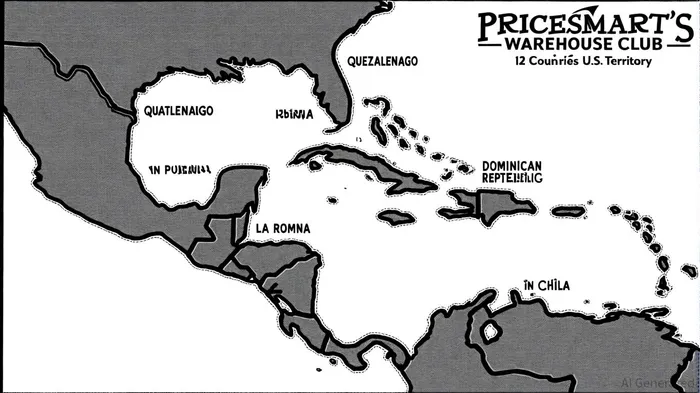
In the fiercely competitive discount retail sector, PriceSmart Inc.PSMT-- (NASDAQ: PSMT) has emerged as a standout player, leveraging strategic expansion and operational efficiency to drive long-term value creation. As the company navigates the evolving dynamics of Latin American markets—where the middle class continues to expand and e-commerce adoption accelerates—its ability to balance growth with cost discipline positions it as a compelling investment opportunity.
Strategic Expansion: Fueling Growth in High-Potential Markets
PriceSmart's 2025 expansion plans underscore its commitment to capitalizing on untapped demand in Latin America. The company has opened new warehouse clubs in Medellín (Colombia), Escuintla (Guatemala), and Santa Ana (El Salvador), while inaugurating a domestic distribution center in Panama to streamline supply chains [1]. These moves align with its three-pillar strategy: expanding its physical footprint, enhancing membership value, and accelerating omni-channel capabilities. By Q3 2025, PriceSmartPSMT-- operated 55 clubs across 12 countries and one U.S. territory, with two new openings slated for 2025 and a potential entry into Chile [2].
The company's geographic diversification is particularly noteworthy. Chile, a market with a GDP per capita exceeding $20,000 and a growing appetite for membership-based retail, represents a high-margin opportunity. Local consultants have already been engaged to evaluate site selection, signaling a data-driven approach to market entry [2]. Such strategic caution contrasts with the aggressive, sometimes risky, expansion tactics of rivals, reducing exposure to regional economic volatility.
Operational Efficiency: The Engine Behind Sustainable Growth
PriceSmart's operational efficiency is a cornerstone of its value proposition. The company has invested heavily in digital tools to optimize supply chain performance, including Coupa for procurement and Relex for inventory forecasting [3]. These technologies have enabled a 19.3% year-over-year surge in digital sales to $76.2 million, now accounting for 5.1% of total net merchandise sales [4]. By Q2 2025, digital sales had grown to 5.7% of revenue, supported by enhanced mobile app features like click-and-collect and home delivery [1].
Membership program profitability further strengthens its financial model. PriceSmart's total membership accounts rose 4.1% to 1.9 million by Q2 2025, with a 12-month renewal rate of 87% [4]. The Platinum tier, offering premium benefits, now constitutes 16.1% of members—up from 11% in FY20—driving higher average revenue per user [2]. This tiered approach mirrors Costco's successful model, where membership fees contribute a stable, recurring revenue stream.
Financial Performance: Outperforming Industry Benchmarks
PriceSmart's financials reflect its operational discipline. For fiscal 2024, total revenue reached $4.9 billion, a 11.4% increase year-over-year, with operating income rising 19.7% to $220.9 million [5]. In Q4 2024, adjusted EBITDA hit $70.7 million, and full-year adjusted EBITDA reached $303.6 million [6]. These figures outpace the discount retail sector's average EBITDA margin of 5.2% [7], highlighting PriceSmart's pricing power and cost control.
The company's gross margin of 15.8% in FY2024 [5] also compares favorably to peers like Walmart (12.5%) and Target (24.5%), though its focus on bulk sales and membership fees allows it to balance lower margins with high-volume growth. Capital expenditures of $101.6 million in the nine months ending May 31, 2025, reflect prudent reinvestment in infrastructure, with $50.2 million allocated to new store openings [2].
Navigating Challenges: Currency Risks and Liquidity Constraints
Despite its strengths, PriceSmart faces headwinds. Foreign exchange losses in Trinidad and Honduras—where $73.9 million in local currency is illiquid—reduced reported sales growth by 1.5% in Q2 2025 [2]. Additionally, rising SG&A expenses and tariff challenges weigh on margins. However, the company is mitigating these risks by rerouting merchandise from Asia directly to its Panama and Costa Rica distribution centers, cutting costs and transit times [4].
The company's liquidity position remains robust, with $85.1 million in unreserved tax receivables providing a buffer against short-term volatility [2]. Management's focus on digital transformation—such as launching integrated e-commerce platforms in five markets—also addresses long-term competitiveness in a sector where online sales are projected to grow 12% annually [8].
Conclusion: A Compelling Case for Long-Term Value Creation
PriceSmart's dual focus on strategic expansion and operational efficiency creates a durable competitive advantage. By targeting high-growth Latin American markets, optimizing supply chains, and enhancing membership value, the company is well-positioned to outperform peers in a sector where margin pressures are endemic. While currency risks and liquidity constraints warrant caution, management's proactive strategies—such as leveraging free trade zones and investing in digital infrastructure—mitigate these challenges.
For investors seeking exposure to a discount retail play with a clear path to long-term value creation, PriceSmart offers a compelling thesis. Its ability to balance aggressive growth with cost discipline, coupled with a strong balance sheet, makes it a standout in an increasingly fragmented industry.





Comentarios
Aún no hay comentarios