
Pressure on Fed and Powell rises as Wall Street rate cut bets mount
Generado por agente de IATheodore Quinn
lunes, 7 de abril de 2025, 9:55 am ET2 min de lectura
The Federal Reserve is under increasing pressure as Wall Street traders ramp up their bets on rate cuts, driven by a mix of economic uncertainty and political turmoil. With President Donald Trump's policies creating a climate of elevated uncertainty, the Fed finds itself in a delicate balancing act, trying to navigate between the need to support economic growth and the risk of stoking inflation.
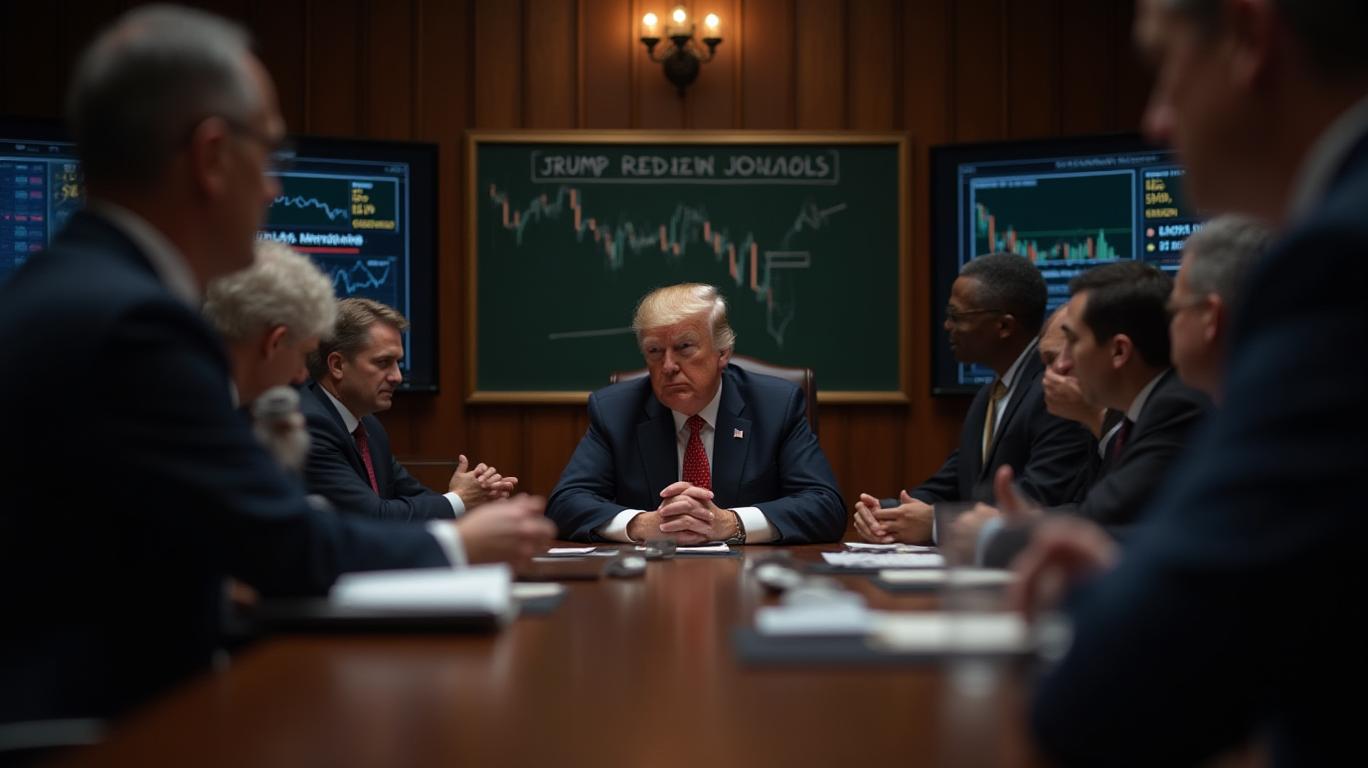
The latest data from the Federal Reserve's Beige Book shows a significant increase in mentions of uncertainty, with the term appearing 47 times in the latest report compared to just 17 times in January. This surge in uncertainty is largely attributed to Trump's on-again, off-again tariff policy and rapid-fire layoffs of government workers, which have created a spike in uncertainty among businesses and caused a sharp drop in consumer confidence.
The economic outlook remains mixed, with some signs of strength and others of weakness. The jobs report for April showed employers added 151,000 jobs, and the unemployment rate ticked up to 4.1%, which is still relatively low. However, there are signs that consumer spending has slowed compared to the healthy gains in the second half of last year, and surveys of consumers and businesses point to heightened uncertainty about the economic outlook.
The Fed's own data shows that the economy remains mostly healthy despite the elevated uncertainty. The central bank's preferred inflation gauge shows that prices rose 2.5% in January compared with a year ago, and core prices rose 2.6%, the smallest increase since June. This suggests that inflation is moving in the right direction, but it is still above the Fed's 2% target.
Wall Street traders, as a result, have boosted their forecasts for rate cuts, with futures pricing indicating they now expect three rate cuts by the Fed this year, up from just one a month or so ago. Those rate reductions could help bring down borrowing costs for mortgages, auto loans, credit cards, and business loans.
However, Fed Governor Christopher Waller noted that there are "good news" cuts and "bad news" cuts. "Bad news" cuts occur if the Fed reduces rates out of concern that the economy is slowing, while "good news" reductions are those that reflect a sense by the Fed that inflation is returning to its target of 2%. Waller added that he still believes it will be possible for the Fed to engineer "good news" rate cuts later this year, though he dismissed the potential for a cut at the Fed’s next meeting this month.
The Fed's decision to keep interest rates unchanged in the coming months could have nuanced impacts on the stock market, particularly in sectors like Big Tech and insurance, which are sensitive to interest rate changes. The Fed’s pause in rate cuts (contrary to Wall Street’s expectation of three rate cuts this year) could disappoint investors who priced in cheaper borrowing. Big Tech firms rely heavily on low borrowing costs for investments, stock buybacks, and expansion. The Fed’s pause could strain valuations, while insurers might face headwinds if cuts materialize later.
The Fed's stance is critical. While Powell emphasized waiting for "greater clarity" on policy impacts, traders now expect three rate cuts in 2025 (up from one), driven by inflation cooling to 2.5% (core: 2.6%, the lowest since June). However, the Fed distinguishes between "good" cuts (inflation nearing 2%) and "bad" cuts (economic slowdown). Current data (inflation at 2.5%) suggests a "good" cut scenario, but risks remain.
Investors should adopt a flexible, diversified strategy emphasizing quality, stability, and hedging. Key actions include diversifying across sectors/geographies to reduce policy exposure, monitoring Fed signals and inflation data to time rate-cut opportunities, holding cash and Treasuries to buffer against political/election volatility, and prioritizing firms with strong balance sheets to navigate economic uncertainty.
In conclusion, the Fed faces a challenging environment as it navigates the uncertainties created by Trump's policies and the mounting pressure from Wall Street for rate cuts. The central bank must carefully balance the need to support economic growth with the risk of stoking inflation, all while dealing with the political pressures that come with the job.



Divulgación editorial y transparencia de la IA: Ainvest News utiliza tecnología avanzada de Modelos de Lenguaje Largo (LLM) para sintetizar y analizar datos de mercado en tiempo real. Para garantizar los más altos estándares de integridad, cada artículo se somete a un riguroso proceso de verificación con participación humana.
Mientras la IA asiste en el procesamiento de datos y la redacción inicial, un miembro editorial profesional de Ainvest revisa, verifica y aprueba de forma independiente todo el contenido para garantizar su precisión y cumplimiento con los estándares editoriales de Ainvest Fintech Inc. Esta supervisión humana está diseñada para mitigar las alucinaciones de la IA y garantizar el contexto financiero.
Advertencia sobre inversiones: Este contenido se proporciona únicamente con fines informativos y no constituye asesoramiento profesional de inversión, legal o financiero. Los mercados conllevan riesgos inherentes. Se recomienda a los usuarios que realicen una investigación independiente o consulten a un asesor financiero certificado antes de tomar cualquier decisión. Ainvest Fintech Inc. se exime de toda responsabilidad por las acciones tomadas con base en esta información. ¿Encontró un error? Reportar un problema


SOBRE NOSOTROS
Nuestra historiaAutores de noticiasBase de conocimientosPolítica de privacidadTérmino de usoDescargo de responsabilidad de corretaje de tercerosTérminos de uso de AIMEDivulgaciones de riesgos de AInvest AICarrerasCONTÁCTENOS
Email: support@ainvest.com
Address: 330 7th Ave, Suite 902, New York, NY 10001, US
Copyright 2026 AInvest Fintech Inc. All rights reserved.


Comentarios
Aún no hay comentarios