
Prediction Markets: Risk-Defense Investor Guardrails
Prediction markets are experiencing explosive growth, with weekly trading volumes hitting a record $2 billion in late 2023, fueled heavily by $414.7 million in sports betting and $322.6 million in political markets. Platforms like Polymarket, now holding 100% market share, and Kalshi, valued at $5 billion after a $300 million raise, are positioning themselves as a legitimate new asset class that bets on real-world outcomes rather than traditional company performance. However, this rapid expansion is built on foundations of significant vulnerability. Regulatory uncertainty looms large as state challenges emerge against current CFTC no-action letters, creating a precarious environment where the rules governing these markets could shift dramatically overnight. 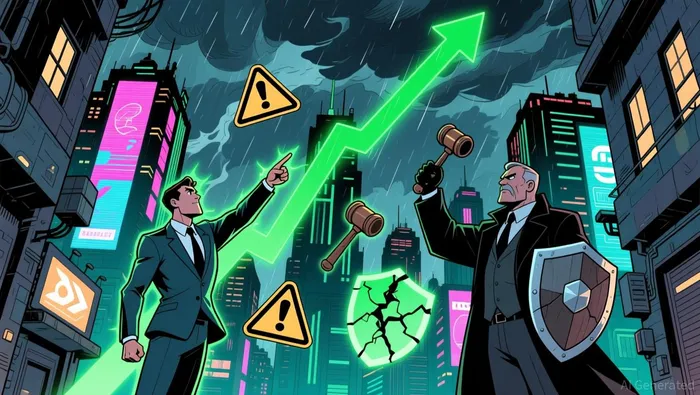 . More critically, the very mechanics driving their appeal-extreme volatility and herd behavior-are powerful accelerants for downside risk. When market sentiment turns, liquidity can evaporate faster than it formed, especially given threats like manipulation, oracle errors, and money laundering that undermine trust and market integrity. Downside risks are tangible: tactics like airdrop farming artificially inflate volumes to secure token allocations, and Polymarket itself has delayed its token launch until 2025, signaling internal concerns about sustainability and governance. For investors, this means the high potential returns come bundled with amplified exposure to rapid capital loss during volatile events, where the ease of entering a position doesn't guarantee a smooth exit when fear sets in.
Prediction markets-new platforms like Kalshi and Polymarket that let traders bet on future events-have exploded in popularity, raising hundreds of millions in funding while promising to turn "odds over headlines." But beneath this hype lies a storm of regulatory uncertainty and hidden risks that demand immediate attention. U.S. agencies including the SEC, CFTC, and DOJ are still debating whether these markets fall under securities or gambling rules, leaving firms exposed to potential anti-fraud enforcement actions even when assets remain unclassified. A StarCompliance survey shows most companies already forbid employee participation, especially in markets tied to specific stocks.
The real danger isn't just legal gray areas. These markets face manipulation risks, oracle errors that misreport outcomes, and money laundering vulnerabilities-all amplified by extreme volatility and herd behavior that can wipe out capital fast. Liquidity crunches could trigger cascading trust failures, while regulators eye "hooks" to link prediction markets to traditional finance for expanded oversight. As we dig deeper into this landscape, one truth stands out: in uncertain terrain, cash preservation and compliance rigor must come before speculative gains. Next, we'll dissect how these risks directly impact corporate treasury decisions and investor portfolios.







Comentarios
Aún no hay comentarios