
Prediction Markets: A New Frontier in Combating Social Media Extremism and Enhancing Information Integrity
The rise of prediction markets as a transformative force in the digital age is not merely a speculative trend but a structural shift in how societies aggregate information, forecast outcomes, and address systemic challenges like social media extremism. As these markets evolve from niche platforms to mainstream financial instruments, their integration with emerging technologies and their potential to counter misinformation and polarization present a compelling investment thesis centered on financial and technological infrastructure.
The Dual Power of Prediction Markets: Accuracy and Incentives
Prediction markets aggregate collective intelligence by allowing participants to trade contracts on real-world events, with prices reflecting the probability of outcomes. Platforms like Kalshi and Polymarket have demonstrated exceptional accuracy in forecasting high-stakes events, such as the 2024 U.S. presidential election, outperforming traditional polling and media projections. This accuracy stems from financial incentives that reward informed participation, creating a self-correcting mechanism that aligns market prices with ground-truth outcomes according to research. For instance, Kalshi's $5.8 billion trading volume in November 2025 underscores its role as a trusted data source for public events according to Forbes.
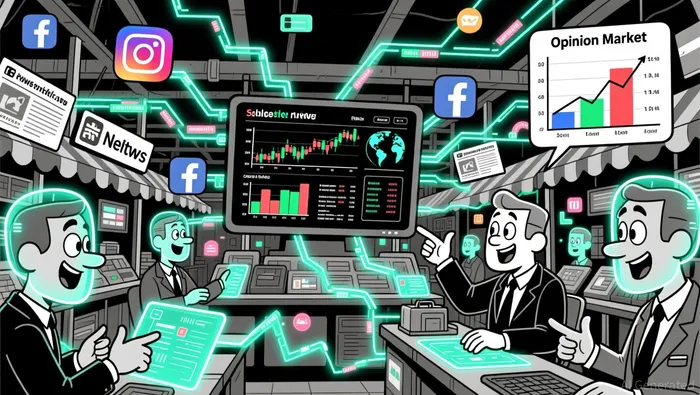
Beyond political forecasting, prediction markets are increasingly leveraged to address societal challenges. A 2024 academic paper introduced the Opinion Market Model (OMM), which simulates online opinion dynamics and tests interventions to counter far-right extremism. The model shows that strategically amplifying moderate views through prediction markets can reduce the dominance of extremist narratives, offering a scalable solution to counter polarization. This application highlights how prediction markets can shift from passive forecasting to active intervention in information ecosystems.
Financial and Technological Infrastructure: The Backbone of Growth
The infrastructure supporting prediction markets is rapidly maturing, driven by blockchain, regulatory innovation, and partnerships with mainstream institutions. Kalshi, the first CFTC-regulated prediction market, operates on a centralized model with institutional-grade compliance, while Polymarket leverages decentralized blockchain technology to enable global, permissionless participation. These platforms are not only financial tools but also technological innovations that democratize access to real-time data.
Key developments include:
1. Mainstream Integration: Prediction market data is now featured in media outlets like CNN and CNBC, which use Kalshi's real-time odds to inform public discourse according to The Block. Google's recent integration of prediction market data into its Finance tools further signals institutional validation according to NBC News.
2. Regulatory Advocacy: The Coalition for Prediction Markets, formed by Kalshi, Crypto.com, Coinbase, and others, is pushing for federal oversight to standardize rules and protect against state-level fragmentation according to Morningstar. This coalition aims to position prediction markets as a legitimate financial infrastructure, akin to stock exchanges.
3. Surveillance and Integrity: Collaborations with entities like Eventus and IC360 are developing frameworks to detect insider trading and manipulation, ensuring market fairness as volumes grow.
Countering Extremism: From Data to Action
While direct collaborations between prediction markets and NGOs like the Counter Extremism Project (CEP) remain unreported, the potential for integration is evident. Prediction markets can serve as early warning systems for extremist trends by aggregating public sentiment on topics like geopolitical conflicts or social media engagement patterns according to NBC News. For example, contracts predicting the likelihood of military escalations or changes in political leadership could inform counter-extremism strategies by identifying high-risk scenarios according to NBC News.
Moreover, the OMM model demonstrates how prediction markets can be weaponized against extremism by incentivizing users to bet on outcomes that promote moderation. By creating financial rewards for behaviors that counter polarization, these markets could shift the economic incentives of social media platforms, which currently prioritize divisive content for engagement according to Frontiers in Social Psychology.
Investment Implications: A $Trillion Opportunity
The prediction market industry is projected to become a trillion-dollar asset class, driven by its dual role as a financial infrastructure and a tool for societal problem-solving. Key investment themes include:
- Regulatory Infrastructure: Companies and platforms that navigate the legal gray areas of prediction markets, such as Kalshi's CFTC compliance model, are well-positioned to dominate as federal frameworks emerge.
- Technological Innovation: Blockchain-based platforms like Polymarket, which enable decentralized, tamper-proof markets, will benefit from global adoption and institutional investment.
- Surveillance and Compliance: Firms developing AI-driven tools to monitor market integrity, such as Eventus and IC360, will see growing demand as prediction markets scale.
Risks and Ethical Considerations
Critics argue that prediction markets could incentivize harmful behaviors, such as spreading misinformation to manipulate outcomes according to Vox. However, the industry is proactively addressing these risks through partnerships with integrity-focused entities and self-regulatory frameworks. The ethical debate underscores the need for robust governance but also highlights the transformative potential of prediction markets when aligned with public good.
Conclusion
Prediction markets represent a paradigm shift in how societies process information and address systemic challenges. By combining financial incentives, technological innovation, and regulatory clarity, they offer a scalable solution to counter social media extremism and enhance information integrity. For investors, the convergence of these factors presents a unique opportunity to capitalize on a sector poised to redefine global financial and social infrastructure.







Comentarios
Aún no hay comentarios