
Is Precision BioSciences (DTIL) Now a Buy for Long-Term Biotech Investors?
For long-term biotech investors, the allure of gene-editing pioneers like Precision BioSciences (DTIL) lies in their potential to redefine therapeutic paradigms. As the field of genetic medicine accelerates, companies with robust pipelines and sustainable financial models are poised to capture significant value. But does DTILDTIL--, a developer of ARCUS® gene-editing platforms, meet these criteria? A closer look at its clinical progress and financial health offers clarity.
Pipeline Progress: Advancing From Proof of Concept to Clinical Reality
Precision BioSciences has made notable strides in 2025, particularly in its flagship programs targeting chronic hepatitis B (HBV) and Duchenne Muscular Dystrophy (DMD). The PBGENE-HBV program, currently in Phase 1 of the ELIMINATE-B trial, has demonstrated safety and dose-dependent antiviral activity across three cohorts, with Cohort 3 dosing initiated in Q3 2025. These updates, presented at the Liver Meeting 2025, underscore the therapy's potential to achieve functional cures for HBV, a market estimated to exceed $10 billion annually.
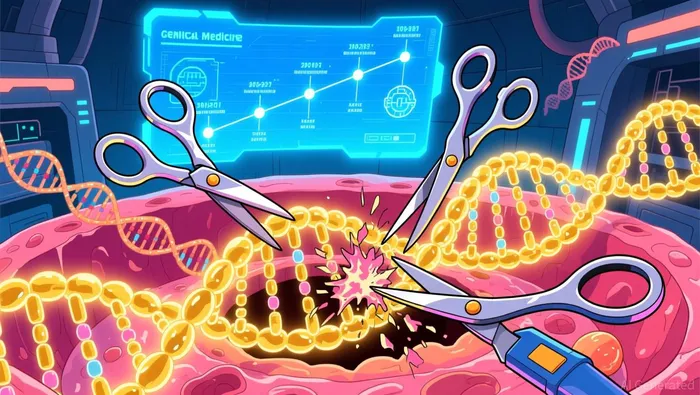 Meanwhile, the PBGENE-DMD program, aimed at correcting the genetic defect in DMD, has shown durable muscle function improvements in preclinical mouse models. With an IND filing targeted for late 2025 and Phase 1 trials expected in mid-2026, the program aligns with a growing demand for curative therapies in rare diseases. Such milestones, if achieved, could position DTIL as a key player in the $2.5 billion DMD treatment market.
Collaborations further bolster DTIL's pipeline. Its partnership with iECURE to develop ECUR-506 for neonatal OTC deficiency-a rare metabolic disorder-highlights the company's ability to leverage its ARCUS platform for unmet medical needs. These alliances not only diversify DTIL's therapeutic focus but also mitigate development risks by sharing costs and expertise.
Financial Viability: Navigating Burn Rate With Strategic Fundraising
Despite its clinical momentum, DTIL's financials have historically been a concern. As of September 30, 2025, the company reported $71.2 million in cash, cash equivalents, and restricted cash. However, a net cash outflow of $50.1 million in the same period raises questions about sustainability. To address this, DTIL recently secured a $75 million equity offering, led by investors including Aberdeen Investments and Bleichroeder LP. The proceeds, slated to fund ongoing trials and the upcoming PBGENE-DMD Phase 1 trial, extend the company's cash runway into the second half of 2027.
This fundraising is critical. While a free cash flow of -$58.7 million as of December 2024 indicates ongoing burn, the extended runway provides breathing room to achieve key milestones. For long-term investors, the ability to secure capital at a time when gene-editing remains a high-priority sector is a positive signal.
Risk vs. Reward: A Calculated Bet
Investing in DTIL is not without risks. Gene-editing therapies face regulatory scrutiny, and delays in trials-such as those seen in Cohort 3 of ELIMINATE-B-could impact timelines. Additionally, the competitive landscape for HBV and DMD is intensifying, with players like CRISPR Therapeutics and Sarepta Therapeutics advancing their own programs.
Yet, DTIL's differentiated approach-using homology-directed repair (HDR) to enable precise gene insertion-offers a unique value proposition. Its partnerships and recent capital raise also suggest confidence from both industry peers and investors. For those with a multi-year horizon, the company's progress in translating preclinical success into clinical candidates could justify the risk.
Conclusion: A Buy for the Patient Investor
Precision BioSciences stands at an inflection point. Its pipeline, anchored by PBGENE-HBV and PBGENE-DMD, reflects a clear path toward addressing high-unmet-need diseases. Financially, the recent $75 million raise and extended runway provide a buffer to navigate the inherent volatility of gene-editing development. While the burn rate remains a watchpoint, the company's strategic focus on partnerships and capital efficiency positions it as a compelling long-term play for investors willing to bet on the transformative potential of gene editing.
For now, DTIL appears to be a "buy" for those who can stomach the risks of a high-growth, high-volatility biotech stock-and who are aligned with the long-term vision of curative therapies.





Comentarios
Aún no hay comentarios