
Why Precious Metals, Especially Silver, Present a Unique Opportunity in 2026
The year 2025 has been nothing short of extraordinary for silver. By November 26, 2025, the metal had surged 109% year-to-date, reaching a historic high above $60 per troy ounce. This outpaced gold's 59% gain and underscored silver's dual identity as both an industrial workhorse and a speculative asset. As we approach 2026, the confluence of structural demand shifts, de-dollarization trends, and institutional re-evaluation of portfolios positions silver-and precious metals more broadly-as a compelling investment opportunity.
Structural Demand: From Solar Panels to AI Infrastructure
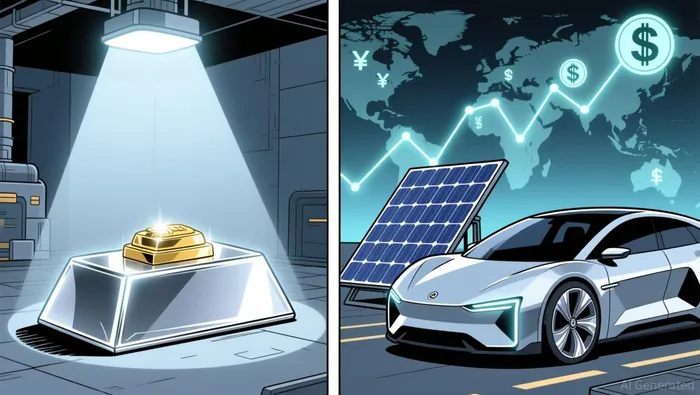
Silver's industrial demand is being driven by the global transition to green energy and technological innovation. Solar photovoltaic (PV) installations alone accounted for 29% of industrial silver demand in 2024, with projections indicating this share will grow. Meanwhile, electric vehicles (EVs) require 67–79% more silver than internal combustion engines, and the automotive sector's silver demand is expected to grow at a 3.4% compound annual rate through 2031.
Beyond EVs and solar, silver is critical to AI hardware and data center expansion. As global IT power capacity surges, driven by government incentives and private-sector investment, silver's role in high-conductivity components becomes indispensable. These structural shifts are not cyclical but foundational, creating a floor for demand even as macroeconomic conditions fluctuate.
Safe-Haven Appeal and De-Dollarization: Silver's Undervalued Edge
While gold has long dominated the safe-haven narrative, silver is gaining traction as a more accessible alternative. The gold-silver ratio spiked above 100 in 2025, signaling silver's undervaluation relative to gold. Historically, this ratio normalizes around 50–60, suggesting significant upside potential for silver as investors rebalance portfolios.
De-dollarization trends are amplifying this dynamic. Central banks, particularly in China, India, and Gulf states, are diversifying reserves away from the U.S. dollar, boosting demand for both gold and silver. However, silver's price volatility and lower ownership levels make it a high-beta play in this environment. Unlike gold, which is already heavily institutionalized, silver remains under-owned, with exchange-traded products holding over 1.13 billion ounces as of June 2025. This under-ownership creates a unique opportunity for investors seeking asymmetric returns in a de-dollarizing world.
Institutional Forecasts and the Case for Rebalancing
Institutional interest in silver is surging. A Goldman Sachs Marquee survey of 900 institutional clients found that 70% expect gold prices to rise by the end of 2026, with 36% projecting a break above $5,000 per ounce. While gold's structural bull case remains robust-supported by central bank demand, ETF inflows, and a weaker dollar-silver's potential for outperformance is more pronounced. Analysts like Mike Maloney and Peter Krauth argue that silver could reach $95 per ounce within 12–24 months, a target that reflects both industrial demand and speculative momentum.
For investors, the key is to balance exposure between gold and silver. Gold provides stability in a de-dollarizing world, while silver offers higher growth potential. As the U.S. Federal Reserve's easing cycle continues and global debt concerns persist, precious metals will likely remain a hedge against inflation and currency debasement.
Conclusion: A Strategic Re-Evaluation
The 2025 silver surge-driven by industrial demand, de-dollarization, and undervaluation-has set the stage for 2026. While gold's role as a safe-haven asset is well-established, silver's dual identity as an industrial and investment metal makes it a unique opportunity. With structural demand from solar, EVs, and AI infrastructure, coupled with its under-owned status, silver is poised to outperform in a world where traditional assets face headwinds.
For investors, the message is clear: portfolios must be re-evaluated to account for the shifting dynamics of 2026. Silver's 109% YTD gain is not an anomaly but a harbinger of a broader structural bull market.







Comentarios
Aún no hay comentarios