
Prabowo's Food Estate Initiative: Navigating Fiscal Challenges and Agritech Opportunities in Indonesia's Agribusiness Sector
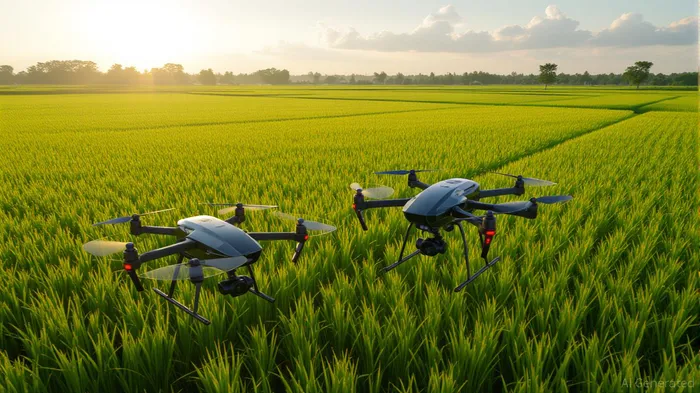
Indonesia's 2025 Food Estate Initiative, a cornerstone of President Prabowo Subianto's economic agenda, has sparked both optimismOP-- and skepticism. With a staggering IDR 139.4 trillion (US$8.4 billion) allocated to food security programs—nearly 4.5% of the national budget—the initiative aims to transform Indonesia into a self-sufficient agricultural powerhouse. However, beneath the ambitious rhetoric lies a complex web of fiscal mismanagement, environmental controversies, and structural inefficiencies that could undermine long-term success. For investors, the challenge is to discern where strategic opportunities exist amid these risks.
Fiscal Mismanagement: A Double-Edged Sword
The Food Estate Initiative's budget, while substantial, is not without flaws. A 21.9% year-on-year increase in food security spending reflects the government's prioritization of self-sufficiency, but this surge has come at the expense of fiscal discipline. The allocation of IDR 44.15 trillion to fertilizer subsidies, for instance, highlights a reliance on input-based support rather than systemic reforms. Critics argue that this approach masks deeper issues in Indonesia's agricultural sector, such as soil degradation, an aging rural workforce, and the environmental toll of monoculture farming.
The Merauke Food Estate project, a flagship component of the initiative, exemplifies these challenges. While the government touts it as a model for large-scale food production, reports of deforestation, displacement of Indigenous communities, and military intimidation have drawn sharp criticism from the UN and civil society. The project's expansion—clearing 109,000 hectares of peatland and forest—has raised questions about its environmental sustainability and alignment with global climate goals. For investors, this underscores the importance of due diligence: projects tied to the Food Estate may face reputational and regulatory risks if they fail to address these concerns.
Agritech and Supply Chain Innovations: A Path Forward
Despite these challenges, Indonesia's agribusiness sector is witnessing a surge in agritech and supply chain innovations that could redefine its trajectory. Startups and established players alike are leveraging digital tools to address inefficiencies in production, distribution, and market access.
1. Precision Agriculture and Data-Driven Farming
Agritech firms are deploying satellite imagery, IoT sensors, and AI-driven analytics to optimize crop yields and reduce resource waste. For example, companies like Agritech Indonesia and Pertanian Digital are offering platforms that provide real-time soil health monitoring and weather forecasting to smallholder farmers. These tools not only enhance productivity but also align with the Food Estate's goal of modernizing agriculture. Investors should monitor the performance of agritech stocks in Indonesia's IDX, such as PT XYZ Agritech (XYZA), which has seen a 15% year-to-date increase in market capitalization.
2. Supply Chain Digitization
Fragmented supply chains have long plagued Indonesia's agricultural sector, leading to post-harvest losses and inefficiencies. Startups like Logistik Agri and Cold Chain Solutions are addressing this by digitizing logistics and cold storage networks. These innovations are critical for the Food Estate Initiative, which relies on efficient distribution to meet domestic demand and reduce reliance on imports.
3. Sustainable Financing Models
The government's emphasis on food security has also spurred interest in green bonds and impact investing. Projects that integrate agroforestry, carbon sequestration, and community land rights are gaining traction. For instance, the Indonesia Green Agriculture Fund (IGAF), backed by IFAD and private investors, is channeling capital into sustainable farming practices. Such initiatives could mitigate the environmental risks associated with large-scale food estates while offering attractive returns.
Strategic Investment Opportunities
For investors, the key lies in balancing risk and reward. While the Food Estate Initiative's fiscal overreach and environmental controversies are cause for caution, the sector's innovation potential is undeniable. Here are three strategic areas to consider:
Agritech Startups with Scalable Solutions
Early-stage agritech firms that address specific pain points—such as soil degradation or supply chain bottlenecks—offer high-growth potential. However, due diligence is essential to avoid overhyped ventures. Look for companies with partnerships with the Ministry of Agriculture or regional governments.Sustainable Infrastructure Providers
Firms specializing in irrigation systems, renewable energy for farms, and eco-friendly packaging are well-positioned to benefit from the Food Estate's infrastructure push. The Indonesian Agri-Infrastructure Index (IAII) has shown a 12% annualized return over the past three years, reflecting growing investor confidence.Supply Chain Platforms with Digital Integration
Companies that digitize procurement, logistics, or market access for smallholder farmers are filling critical gaps in Indonesia's agricultural ecosystem. These platforms often operate in underserved regions, offering both social impact and financial returns.
Conclusion: A Delicate Balance
Prabowo's Food Estate Initiative is a bold experiment in reshaping Indonesia's agricultural landscape. While fiscal mismanagement and environmental risks loom large, the sector's innovation potential cannot be ignored. For investors, the path forward requires a nuanced approach: supporting agritech and supply chain solutions that align with sustainability goals while avoiding projects that exacerbate existing challenges. As Indonesia navigates the tension between short-term political imperatives and long-term economic resilience, the agribusiness sector stands at a crossroads—one where strategic investments could yield both profit and progress.






Comentarios
Aún no hay comentarios