
PPL and Blackstone's Gas-Fired Gambit: Powering Data Centers in the Age of AI
The rapid expansion of hyperscale data centers, fueled by artificial intelligence and cloud computing, is reshaping energy demand in ways utilities never imagined. Nowhere is this clearer than in Pennsylvania, where PPL CorporationPPL-- and BlackstoneBX-- Infrastructure have launched a $15 billion joint venture to build gas-fired power plants targeting the state's booming data center sector. The partnership is a masterclass in aligning infrastructure investment with two urgent trends: solving PJM Interconnection's looming capacity shortages and capitalizing on Pennsylvania's gas abundance to power the AI revolution. For investors, this represents a rare opportunity to own a defensive utility with growth exposure to tech-driven demand.
The Data Center Energy Crunch
Data centers now account for 2% of global electricity use—a figure projected to double by 2030—and their hunger for reliable, low-cost power is straining grids. In PJM, the mid-Atlantic grid operator covering 65 million customers, the problem is acute. PJM forecasts a 6 GW generation shortfall by 2026-27, driven by retiring coal plants, stagnant renewable output, and 13 GW of data center projects in advanced planning stages. Without new capacity, summer blackouts and sky-high energy prices loom.
PPL and Blackstone's Playbook: Stability in Volatility
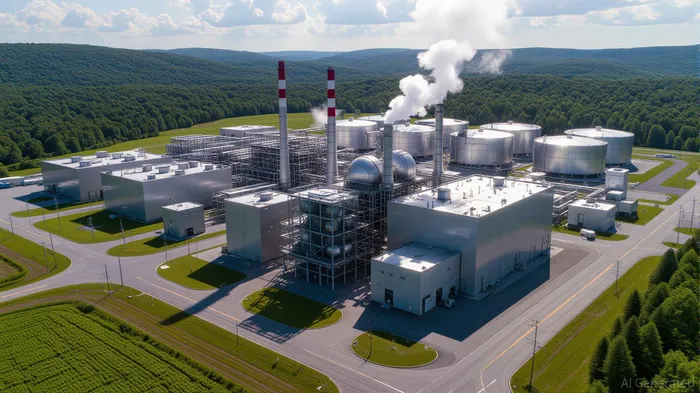
The joint venture's strategy is both pragmatic and innovative. By siting combined-cycle gas plants near the Marcellus and Utica shale basins—where Pennsylvania produces 20% of U.S. natural gas—the project leverages abundant, low-cost fuel and existing pipeline networks. Crucially, the partners aim to lock in hyperscalers like GoogleGOOGL-- and AmazonAMZN-- via long-term energy services agreements (ESAs), which guarantee stable cash flows akin to regulated utility returns. This avoids the volatility of merchant energy markets, where prices swing with weather or geopolitical events.
The model is already proving attractive. While the venture has yet to finalize ESA deals, its focus on “regulatory-like risk profiles” aligns with hyperscalers' demand for price certainty. For PPLPPL--, this plays to its strengths: 55 years of grid management expertise and a beta of 0.65, reflecting lower volatility than the broader market. Meanwhile, Blackstone's $25 billion Pennsylvania investment thesis—backed by the state's “all-of-the-above energy” policy—secures political tailwinds.
Navigating PJM's Capacity Crisis
PJM's capacity market, designed to ensure grid reliability, faces a perfect storm. Retiring coal plants, delayed renewable projects, and data centers' round-the-clock power needs are squeezing margins. PJM's capacity auction results, due later this year, could reveal whether new projects like PPL-Blackstone's are sufficient to avoid price spikes.
The joint venture's 6 GW target directly addresses this gap, but success hinges on two factors: securing ESAs and Pennsylvania's pending legislation to allow utilities to reinvest in generation ownership. Both are achievable, but delays could pressure PPL's valuation.
Pennsylvania's Gas Advantage
Pennsylvania's shale gas reserves and pipeline infrastructure are the venture's secret weapon. With 30,000 miles of gas lines and a 20-year track record of production growth, the state offers a secure fuel source. The Fast Track permitting system further accelerates development, with Blackstone's projects aiming to begin construction by 2026.
For investors, this means two benefits:
1. Defensive income: PPL's 3.8% dividend yield (up 6% in April 2025) is fortified by its regulated utility business, which accounts for 85% of earnings. Historical data reinforces this stability: dividend announcement dates from 2022 to 2025 correlated with positive stock performance, with a 3-day win rate of 42.86%, rising to 64.29% over 10 days. The maximum return observed was 0.86% on day 40, underscoring the dividend's role in attracting investors during payout cycles.
2. Growth catalyst: The joint venture's ESAs, once signed, could add a new earnings stream with minimal operational risk.
Risks and Rewards
The venture is not without hurdles. ESA delays, regulatory setbacks, or gas price spikes could pressure returns. However, PPL's conservative balance sheet (49% debt-to-equity) and Blackstone's infrastructure expertise mitigate these risks.
The Investment Case
PPL is a compelling pick for investors seeking utilities with growth legs. Its regulated grid business provides a stable base, while the Blackstone JV taps into secular trends: data center demand, AI adoption, and Pennsylvania's energy renaissance. At a 12.5x 2025 P/E multiple—below its five-year average—the stock offers upside if ESA deals materialize and PJM capacity concerns ease.
For defensive investors, PPL's low beta and dividend resilience make it a hedge against market volatility. For growth-focused investors, its alignment with tech infrastructure demand positions it to benefit as hyperscalers scale. This is a utility stock with the soul of an infrastructure play—ideal for portfolios needing both stability and momentum.
In a world where data centers are the new factories, PPL and Blackstone are building the power plants of the digital age. The question isn't whether their gamble will pay off—it's whether they'll get there fast enough to keep the lights on for AI's future.





Comentarios
Aún no hay comentarios