
PowerBank (SUUN)'s Strategic Expansion in New York's Clean Energy Market: Assessing Long-Term Growth Through Policy Alignment and Project Execution
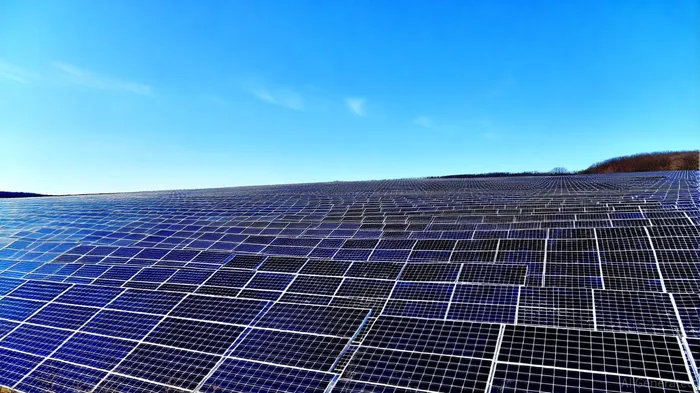
In the rapidly evolving clean energy landscape, PowerBankSUUN-- (SUUN) has positioned itself as a key player in New York's renewable energy transition. The company's recent projects, including a 6.9 MW DC ground-mount solar initiative in the Capital District and a 20 MW portfolio of solar and battery storage systems for military facilities, underscore its alignment with New York's ambitious climate goals. As the state races toward its target of 6 GW of solar capacity by 2025 and 100% clean electricity by 2040, PowerBank's ability to secure incentives, execute large-scale projects, and leverage policy frameworks could determine its long-term growth potential.
Policy Alignment: Leveraging New York's Clean Energy Framework
New York's renewable energy strategy is anchored by the Climate Leadership and Community Protection Act (CLCPA) and the Build Public Renewables Act (BPRA), which mandate a transition to 100% clean energy by 2040 and prioritize public-sector decarbonization by 2030 [1]. To achieve these targets, the state has deployed a suite of financial incentives, including NYSERDA's NY-Sun program and the Value of Distributed Energy Resources (VDER) tariff.
PowerBank's NY-Crawford Rd project, a 6.9 MW community solar initiative, qualifies for NY-Sun incentives, which reduce project costs through a tiered incentive structure [2]. This alignment with NYSERDA's programs not only enhances the project's financial viability but also positions PowerBank to contribute to the state's goal of expanding clean energy access to underserved communities. Similarly, the company's 20 MW solar and battery storage portfolio for the New York State Division of Military and Naval Affairs (DMNA) leverages federal tax credits and state incentives to reduce utility costs for military facilities while advancing decarbonization [3]. These projects exemplify PowerBank's ability to navigate complex regulatory environments and secure funding mechanisms critical to scaling renewable infrastructure.
Project Execution: Scaling Capacity and Resiliency
PowerBank's track record in executing large-scale projects further strengthens its growth narrative. The company has developed over 100 MW of solar capacity and maintains a 1 GW development pipeline, demonstrating its operational expertise [4]. Its recent 2.8 MW and 3.16 MW projects in upstate New York and Pennsylvania, now in the interconnection study phase, highlight its geographic diversification and technical capabilities [5].
The Day Hollow project, expected to qualify under New York's VDER program, illustrates PowerBank's strategic use of market-based incentives. VDER compensates distributed energy resources for grid and environmental benefits, such as reduced emissions and peak load management, creating a revenue stream that enhances project economics [6]. By integrating battery storage into its solar projects-such as the 1 MW/2 MWh system in the DMNA portfolio-PowerBank also addresses New York's focus on energy resiliency, particularly for critical infrastructure like military bases [7].
Financial and Strategic Implications
The financial incentives embedded in New York's clean energy policies are pivotal to PowerBank's scalability. For instance, the NY-Sun program's tiered incentives reduce capital expenditures, while federal tax credits (e.g., the Investment Tax Credit) amplify returns on investment [8]. According to a report by CleanChoice Energy, New York's renewable sector attracted over $5 billion in investments in 2024 alone, with community solar projects accounting for a significant share [9]. PowerBank's focus on community solar and storage positions it to capture a growing segment of the market, where demand is driven by both environmental and economic factors.
Moreover, the company's partnerships with state agencies and public entities mitigate risks associated with project financing and permitting. The DMNA contracts, secured through a competitive process led by the New York Power Authority, ensure long-term revenue stability via power purchase agreements (PPAs) [10]. This contrasts with the volatility often seen in private-sector PPAs, where market fluctuations can impact profitability.
Conclusion: A Model for Sustainable Growth
PowerBank's expansion in New York reflects a strategic alignment with state-level decarbonization goals and a proven ability to execute complex projects. By securing incentives, leveraging policy frameworks, and diversifying its portfolio with storage and community solar, the company is well-positioned to capitalize on New York's $5 billion clean energy investment pipeline [11]. For investors, the key risks include regulatory shifts and interconnection delays, but PowerBank's partnerships with public entities and its robust development pipeline suggest a resilient growth trajectory. As New York continues to phase out fossil fuels and prioritize clean energy, PowerBank's role in enabling this transition could translate into sustained revenue streams and market leadership.





Comentarios
Aún no hay comentarios