
The Power of Pipes and Progress: How Ohio and Kentucky Are Rewriting the Infrastructure Investment Playbook
The American heartland is pulsing with a new kind of energy-one that's not just about oil or coal but about the transformative power of utility-led infrastructure. Ohio and Kentucky, two states long seen as industrial bellwethers, are now emerging as laboratories for economic revitalization through strategic investments in water systems, renewable energy, and transportation. For equity investors, these developments aren't just about bricks and mortar; they're about building long-term value in sectors where demand is surging and policy tailwinds are strong.
Ohio: A Blueprint for Incremental Modernization
Ohio's 2025 ASCE report card gave its bridges and dams a modest upgrade but underscored the need for sustained funding to address aging systems. A $5.15 million investment in water infrastructure across seven communities is a case in point. This funding isn't just about preventing leaks-it's about attracting businesses that rely on reliable utilities. For example, Schaeffler Transmissions' new e-mobility production facility in Dover and Quality Logistics' expansion in Columbus were made possible by tax credits and infrastructure upgrades, according to an Ohio development announcement.
However, Ohio's energy sector remains anchored to fossil fuels. While the state is gradually integrating wind and solar, its focus has been on maintenance rather than moonshot projects, the ASCE report found. This creates a unique opportunity for investors: equities in companies like JobsOhio, which are driving incremental modernization, could offer steady returns as the state balances preservation with innovation.
Kentucky: The Clean Energy Revolution
Kentucky's trajectory is far more audacious. Governor Andy Beshear's Better Kentucky Plan has unlocked over $1 billion in federal and state funds for clean energy and infrastructure, including a landmark $670 million allocation for East Kentucky Power Cooperative to build 757 megawatts of renewable energy, as reported by WKYT. This isn't just greenwashing-it's a calculated bet on long-term equity. By reducing carbon emissions by 2.3 million tons annually, the state is positioning itself as a hub for sustainable manufacturing and logistics.
The private sector is taking notice. Ford and SK Innovation's $6 billion BlueOval SK EV battery plant in Hardin County, supported by Bipartisan Infrastructure Law grants, is projected to create 5,000 jobs, according to a C2ES analysis. Similarly, Ascend Elements' $1 billion "Apex" facility in Hopkinsville, backed by $480 million in federal matching funds, highlights how public-private partnerships can scale high-impact projects. These investments aren't just creating jobs-they're building ecosystems where equity capital can thrive.
The Equity Angle: Sustaining the Momentum
For investors, the key question is sustainability. Ohio's reliance on federal funding for infrastructure maintenance raises concerns about long-term viability, the ASCE analysis notes. In contrast, Kentucky's aggressive clean energy push is attracting private capital, but it hinges on the survival of Inflation Reduction Act tax credits. If Congress cuts these incentives, projects like East Kentucky's wind farms could face delays, dampening returns.
Yet the broader trend is clear: infrastructure-driven revitalization is a winner. Roland Berger's 2025 infrastructure investment outlook finds demand for sustainable assets is outpacing supply, with investors prioritizing projects that align with ESG goals. Both states are tapping into this demand, but Kentucky's boldness gives it an edge.
Conclusion: Where to Put Your Money
The lesson from Ohio and Kentucky is that infrastructure isn't a one-size-fits-all proposition. Ohio's methodical approach suits conservative investors seeking steady, incremental gains. Kentucky's high-stakes bets on clean energy and advanced manufacturing, meanwhile, offer higher volatility but also higher upside-particularly for those who can ride out policy uncertainties.
As the ASCE report card reminds us, America's infrastructure is a patchwork of progress and neglect. But in the heartland, where pipes are being replaced and turbines are spinning, the future is being built-one project, one equity stake at a time.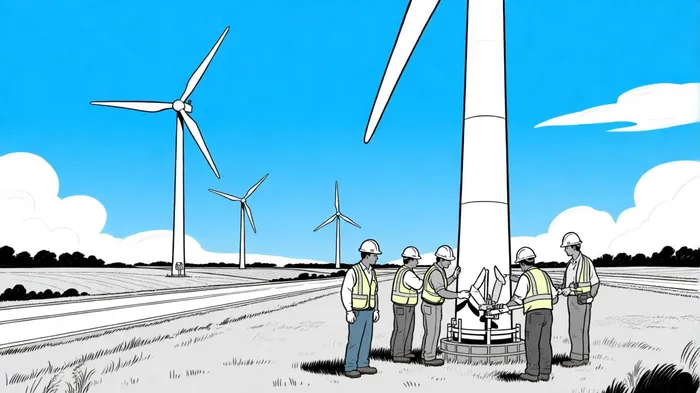







Comentarios
Aún no hay comentarios