
Power Finance's Tumkur-II SPV and Renewable Transmission Growth: Strategic Infrastructure Positioning and Long-Term Yield Potential
India's renewable energy transition is accelerating, driven by ambitious targets to achieve 500 GW of installed capacity by 2030[1]. Central to this vision is the development of robust transmission infrastructure, which ensures that renewable energy generated in remote regions can be efficiently delivered to demand centers. Power Finance Corporation (PFC) has emerged as a pivotal player in this domain, with its newly established Special Purpose Vehicle (SPV), Tumkur II RE Transmission Limited, signaling a strategic bet on India's green energy future. This article analyzes the SPV's role in strengthening renewable transmission, its alignment with national energy goals, and the long-term yield potential for investors.
Strategic Infrastructure Positioning: A Catalyst for Renewable Integration
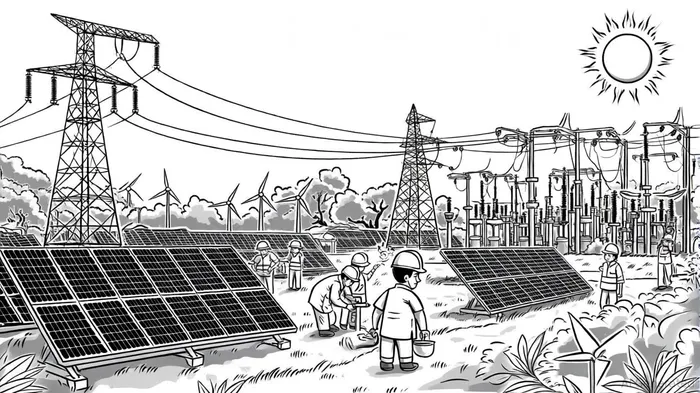
The Tumkur-II SPV, a wholly-owned subsidiary of PFC Consulting Limited (PFCCL), is tasked with developing a transmission system to integrate an additional 1.5 GW of renewable energy capacity in the Tumkur region[2]. This initiative is part of a broader effort to address the critical bottleneck of grid connectivity for renewable projects, particularly in states like Karnataka, which host large solar and wind farms.
The SPV's initial activities—surveys, feasibility studies, land acquisition, and forest clearances—position it as a de-risked entity for future developers[3]. By handling these preliminary tasks, PFCCL reduces the administrative and logistical hurdles that often delay infrastructure projects. Once the Tariff-Based Competitive Bidding (TBCB) process concludes, the SPV will be transferred to a Transmission Service Provider (TSP), who will develop, operate, and maintain the infrastructure under a tariff-based framework[4]. This model ensures competitive pricing while guaranteeing long-term revenue stability for the successful bidder.
A prior example of this approach is the Tumkur-II project awarded to G.R. Infraprojects Limited (GRIL) in 2024, which was handed over on a Build, Own, Operate & Transfer (BOOT) basis for a 35-year period[5]. The project included a 2000 MVA substation and a 27 km 400 kV transmission line, demonstrating the scalability and replicability of such models[6]. The new Tumkur-II SPV builds on this success, with a focus on expanding renewable integration in a region already primed for green energy growth.
Long-Term Yield Potential: Structured Returns in a High-Growth Sector
The TBCB process, overseen by the Ministry of Power, is designed to attract private capital by offering structured returns. For investors, the Tumkur-II SPV represents a low-risk, high-impact opportunity with several advantages:
- Tariff-Based Revenue Stability: The successful bidder will operate under a fixed tariff structure, ensuring predictable cash flows over the project's lifecycle[7]. This is critical in a sector where policy shifts or regulatory uncertainty can disrupt returns.
- Long-Term Asset Lifespan: Transmission infrastructure typically has a 30–40 year operational horizon, aligning with institutional investment timelines[8]. The BOOT model used in the prior Tumkur-II project further underscores the durability of such assets.
- Policy-Driven Demand: India's push for renewable energy—backed by initiatives like the National Green Hydrogen Mission and state-level renewable purchase obligations—guarantees sustained demand for transmission capacity[9].
Moreover, PFC's role as a Bid Process Coordinator (BPC) adds credibility to the project. By managing the competitive bidding process, PFC ensures transparency and minimizes the risk of project failure, a key concern for investors in infrastructure.
Broader Market Trends: Renewable Transmission as a Strategic Asset Class
India's renewable energy capacity is projected to grow at a CAGR of over 15% through 2030[10]. However, transmission constraints currently limit the dispatch of 15–20% of generated renewable energy[11]. This gap presents a significant opportunity for SPVs like Tumkur II RE Transmission Limited, which are specifically designed to bridge the infrastructure deficit.
The government's emphasis on public-private partnerships (PPPs) further enhances the appeal of such projects. By leveraging private capital and expertise, SPVs can accelerate project timelines while reducing fiscal burdens on the public sector. For instance, the Tumkur-II project's 400 kV transmission line and pooling station are expected to serve as a model for future renewable transmission corridors[12].
Conclusion: A Win-Win for Investors and the Energy Transition
Power Finance's Tumkur-II SPV exemplifies the strategic alignment of infrastructure development with India's decarbonization goals. For investors, the project offers a unique combination of policy support, structured returns, and long-term asset value. As renewable energy transitions from niche to mainstream, transmission infrastructure will remain a cornerstone of growth—positioning SPVs like Tumkur II as essential components of a sustainable energy future.







Comentarios
Aún no hay comentarios