
The Power of Consistent Saving and Market Discipline in Building 401(k) Millionaire Portfolios
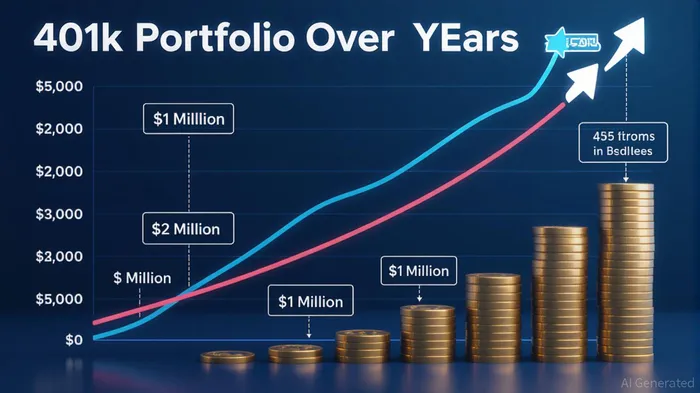
In 2025, a record 595,000 Americans have joined the “401(k) millionaire club,” a testament to the power of long-term discipline and strategic saving[3]. This milestone, however, is not a fluke but the result of decades of consistent contributions, employer matches, and resilience through market cycles. For most of these millionaires—Gen Xers and baby boomers who began saving 25 years ago—the path to wealth was paved by saving 14.2% of their income annually, combining personal contributions with employer matches[3]. Yet, only 2.5% of Americans have reached this threshold, underscoring that success requires more than luck—it demands a blueprint[2].
The Triad of Success: Contributions, Matches, and Market Resilience
The first pillar of 401(k) millionaire portfolios is consistent contributions. Data from 2025 shows that the average millionaire participant contributes 14.2% of their salary, a rate that includes both employee and employer inputs[3]. This level of commitment ensures that even modest incomes can grow into seven figures over time. For example, a 30-year-old earning $70,000 annually who saves 15% of their salary (including a 5% employer match) and earns a 7.5% average annual return would amass over $1.2 million by age 65[3].
The second pillar is employer matches, which act as a guaranteed return on investment. Most employers offer 50 cents to $1 for every dollar contributed up to 6% of salary[2]. Taking full advantage of this “free money” is critical. A 2025 report notes that the combined employee and employer contribution limit is $70,000, with employer matches alone potentially adding $10,000 or more to a portfolio annually[3]. Over 30 years, these contributions compound into hundreds of thousands of dollars in additional wealth.
The third pillar is market resilience. Volatility is inevitable, but disciplined investors use downturns to their advantage. Dollar-cost averaging—automating regular contributions—ensures that market dips are met with additional shares purchased at lower prices[2]. For instance, during the 2022 market correction, 401(k) millionaires who maintained contributions saw their portfolios recover faster than those who paused savings[2].
Actionable Strategies for Aspiring Millionaires
- Automate and Maximize Contributions: Set up automatic payroll deductions to contribute at least enough to capture the full employer match. For 2025, this means contributing at least 6% of salary if the match is 100% up to that threshold[3].
- Leverage Catch-Up Contributions: Investors over 50 should take advantage of the $7,500 catch-up allowance, accelerating growth in the final decades before retirement[3].
- Diversify and Rebalance: A diversified portfolio of stocks, bonds, and index funds mitigates risk while maintaining growth potential. Rebalance annually to maintain target allocations[2].
- Avoid Emotional Decisions: During downturns, resist the urge to sell. Historical data shows that staying invested through corrections yields higher long-term returns[2].
- Review and Adjust Allocations: Younger investors should maintain a higher equity allocation (e.g., 80% stocks), while those nearing retirement should shift to bonds or fixed-income instruments to protect gains[2].
The Bigger Picture: Why Discipline Trumps Timing
The 401(k) millionaire phenomenon is not about market timing but time in the market. According to a 2025 study, those who started saving at age 25 and contributed 15% of their salary outperformed peers who began at 35 by over $500,000, even with identical returns[3]. This compounding effect is amplified by employer matches, which provide an immediate boost to early contributions.
However, challenges remain. Only 64% of savers feel confident about retirement, while employers report lower confidence in their employees' preparedness[4]. To bridge this gap, individuals must treat retirement savings as a non-negotiable expense, just like rent or utilities.
Conclusion
The 2025 surge in 401(k) millionaires is a case study in the power of consistency and discipline. By automating contributions, maximizing employer matches, and weathering market storms with a long-term mindset, investors can replicate this success. As the data shows, the path to a million dollars is not a sprint but a marathon—one where the early starters, steady contributors, and resilient savers come out ahead.







Comentarios
Aún no hay comentarios