
Powell's Precarious Position: Navigating Fed Uncertainty with Fixed Income Strategies
The specter of political interference in Federal Reserve policy has reemerged with renewed force as President Trump's threats to fire Chair Jerome Powell dominate headlines. This standoff, rooted in disputes over monetary policy and the Fed's costly headquarters renovation, has injected unprecedented uncertainty into markets. With bond yields spiking and equities oscillating wildly, investors must recalibrate strategies to mitigate risks tied to Fed independence and policy direction. 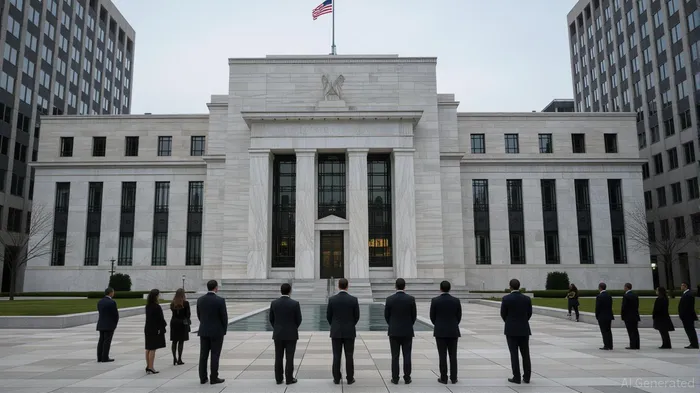
Market Volatility: Bonds Lead the Turmoil
The bond market has proven far more sensitive to this political drama than equities. reveal a 40-basis-point spike in early July—driven by fears of a policy pivot toward rate cuts if Powell is replaced by a more dovish appointee. Conversely, market skepticism about the Fed's ability to remain independent has also fueled yield increases, as investors price in the risk of prolonged uncertainty.
Equities, meanwhile, face a dual dilemma: short-term volatility from headline-driven swings and long-term valuation pressures if Fed credibility erodes. The S&P 500's intra-day swings of 1%+ on days of Trump's public remarks () underscore how this uncertainty is now a daily market driver.
The Fed's Independence: A Pillar Under Siege
The Fed's autonomy, long a cornerstone of U.S. monetary stability, is now at the heart of this clash. Trump's focus on the $2.5 billion renovation—a project approved under former Chair Janet Yellen—has drawn comparisons to Nixon's 1971 wage-price controls, which directly pressured the Fed. JPMorgan's Jamie Dimon warns that politicizing the Fed could lead to “reckless stimulus” to boost short-term growth, destabilizing long-term economic health.
Legal hurdles complicate matters further. While the Federal Reserve Act grants the president dismissal authority, doing so over policy disagreements risks triggering lawsuits. Powell's dual confirmations by Trump (2017) and Biden (2021) create a constitutional ambiguity, as no Fed Chair has ever been removed mid-term. This uncertainty alone could deter the markets from pricing in a clear policy path.
Fixed Income Strategies: Short-Term Treasuries as a Hedge
Investors must position portfolios to withstand both policy shifts and valuation resets. Short-term Treasuries (2-year maturity) are the safest harbor in this storm. Their low duration insulates them from yield shocks, while their liquidity offers flexibility as events unfold.
- Why now? A highlights how short-dated bonds offer superior risk-adjusted returns during policy uncertainty.
- Underweight rate-sensitive sectors: Utilities (XLU), real estate (XLRE), and consumer discretionary stocks—typically buoyed by low rates—now face a dual threat. A Fed embroiled in political battles may delay rate cuts, while a policy pivot under a new chair could trigger sector-wide revaluations.
Policy Pivot or Gridlock? Scenarios and Implications
- Powell Survives: Markets could stabilize, but the Fed's credibility is already damaged. Rate cuts may be delayed until 2026, pressuring equities and keeping bond yields elevated.
- Powell Replaced: A dovish successor might accelerate rate cuts, boosting equities but risking a bond selloff as inflation fears resurface.
Either outcome creates opportunities for tactical fixed income plays. Investors should avoid long-duration bonds and instead focus on floating-rate notes or inverse Treasury ETFs to hedge against yield volatility.
Risk Considerations
- Legal Battles: A dismissal could trigger a prolonged court battle, prolonging uncertainty. Monitor for precedent.
- Market Overreaction: The Fed's independence has been tested before (e.g., Nixon, Reagan), but today's hyper-partisan environment amplifies risks.
Conclusion: Stay Nimble, Prioritize Liquidity
This Fed leadership crisis is as much about perception as policy. With bond markets already pricing in a 30% probability of a 2025 rate cut—a drastic shift from January's 5%—investors must avoid overcommitting to any single scenario.
Recommendations:
- Allocate 20-30% of fixed income to 2-year Treasuries.
- Underweight utilities and real estate ETFs until political clarity emerges.
- Monitor the VIX () for volatility spikes signaling buying opportunities in undervalued sectors.
The Fed's next move remains unclear, but preparing for both policy shifts and market overreactions is the surest path to navigating this storm.
Stay vigilant, stay liquid, and avoid anchoring to any single outcome. The Fed's future—and your portfolio's—is now in play.







Comentarios
Aún no hay comentarios