
Powell's Independence: A Test of Structural Resilience
The standoff between the White House and the Federal Reserve has reached a new, unprecedented level. The Department of Justice has opened a criminal investigation into Chair Jerome Powell's congressional testimony about the central bank's $2.5 billion renovation project, a move Powell has branded a "pretext" to pressure the Fed on interest rates. This is not a routine audit. The DOJ has served subpoenas and threatened a criminal indictment, an extraordinary escalation in President Donald Trump's battle with an independent agency he has repeatedly attacked for not cutting its key rate as quickly as he prefers.
Viewed in isolation, the probe appears to target the accuracy of Powell's statements before the Senate Banking Committee last June. The investigation centers on whether he was truthful about the scope and cost of the renovation of the Fed's two main office buildings in Washington's Foggy Bottom neighborhood. Yet the timing and context scream political weaponization. The Justice Department's stated priority is investigating any "abuse of taxpayer dollars," but the Fed's renovation is self-financed and does not rely on congressional appropriations. The real target, Powell argues, is monetary policy independence.
This move fits a clear pattern of pressure. It follows Trump's earlier threats to sue Powell over the same project and his attempt to remove another Fed board member, Lisa Cook, over unsubstantiated allegations of mortgage fraud. The attempted firing of Cook, the first time a president has sought to remove a Fed governor in the central bank's 112-year history, was itself a direct assault on institutional independence. The Supreme Court has ruled Cook can remain on the board for now, but the case is set to be heard in January, adding another layer of political theater.
The central question now is whether this is a genuine legal probe or a calculated political maneuver. The evidence points to the latter. The investigation arrives as the Fed has cut interest rates at each of its last three meetings, yet Trump remains vocal in his demand for more aggressive easing. The threat of criminal charges against the Fed Chair over building renovations, a project the institution funds itself, is a stark attempt to intimidate an agency that has defied White House preferences. As one Republican senator noted, "If there were any remaining doubt whether advisers within the Trump Administration are actively pushing to end the independence of the Federal Reserve, there should now be none." The structural resilience of the Fed is being tested not by economic data, but by the political calculus of the moment.
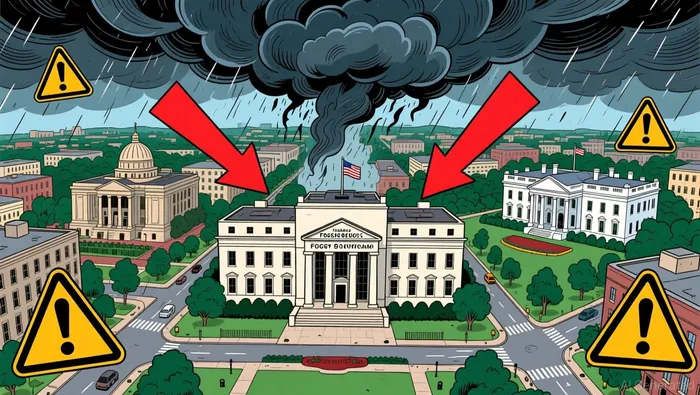
The Structural Vulnerability: Independence Under Siege
The attack on the Federal Reserve's independence is not a vague political threat; it is a targeted assault on specific institutional pillars. The investigation being overseen by the U.S. Attorney's Office for the District of Columbia is a direct challenge to the separation of powers. This office, operating under the Attorney General's authority, is now the instrument of political pressure. Its focus on Powell's testimony before the Senate Banking Committee-a body meant to provide oversight while respecting the Fed's operational autonomy-blurs the line between legislative scrutiny and executive intimidation. The probe is a weaponization of the DOJ's investigative power, turning a routine oversight mechanism into a tool for political coercion.
The vulnerability is compounded by the project itself. The Fed's $2.5 billion renovation of its Foggy Bottom headquarters is a tangible point of contention, but its self-financed nature is critical. The central bank funds the project through its own earnings, not taxpayer appropriations. This makes the DOJ's stated priority of investigating "abuse of taxpayer dollars" a glaring misdirection. Yet, the project's sheer scale and cost have been leveraged by the administration to question Powell's credibility and accountability. By framing a self-funded capital expenditure as a matter of fiscal misconduct, the administration attempts to undermine the Fed Chair's authority on the very issue of monetary policy.
This creates a dangerous precedent. It suggests that an independent agency's internal financial decisions, even those fully within its statutory authority and self-funded, can become grounds for a criminal investigation initiated by the executive branch. The threat of an indictment against the Fed Chair over testimony about a building project is an unprecedented use of the DOJ's power. It signals that the independence of key regulatory institutions is not guaranteed by law, but is subject to the political will of the moment. The structural resilience of the Fed is being tested not by economic data, but by the political calculus of the moment.
Financial and Policy Implications: Beyond the Headlines
The immediate financial impact of the DOJ probe is likely minimal. The investigation targets testimony about a $2.5 billion renovation project that the Fed funds itself, not its balance sheet or monetary operations. Yet the true cost is measured in market psychology and institutional credibility. The primary risk is not the indictment itself, but the chilling effect it will have on future Fed chair testimony and the perception that monetary policy decisions are subject to political retaliation.
This episode directly threatens the Fed's most critical asset: its perceived autonomy. For the central bank to manage its balance sheet and conduct operations without distraction, markets must believe its decisions are made on economic data, not political pressure. When the Chair faces the threat of criminal charges over building renovations, it introduces a new, unpredictable variable into the policy calculus. Investors will begin to price in a higher political risk premium, particularly in long-term interest rates, as they factor in the potential for future interference. The Fed's ability to anchor expectations and smooth volatility hinges on its independence, which is now under direct assault.
The indirect consequences are already visible. The probe has drawn a clear line in the sand from a key political ally. North Carolina Senator Thom Tillis, a Republican on the Banking Committee, has stated he will oppose any future nominee to the Fed, including a replacement for Powell, until this legal matter is fully resolved. This political weaponization of the nomination process creates a dangerous precedent, making the appointment of future Fed leaders a hostage to this standoff. It signals that serving as Chair may now carry an elevated personal and professional risk, potentially deterring strong candidates and weakening the institution's long-term bench.
In practice, the Fed is being forced into a defensive posture it rarely adopts. The central bank has traditionally operated in near-total secrecy, but it is now engaged in a high-stakes public relations battle with the White House, hosting media tours to counter narratives. This is a strategic play to mitigate damage, but it also represents a fundamental shift. The institution is being dragged into the political arena, where its credibility is being challenged not on economic grounds, but on the integrity of its internal communications. The bottom line is that structural resilience is being tested not by economic data, but by the erosion of trust in the system's fairness.
Catalysts and Watchpoints: Scenarios for the Fed's Resilience
The coming weeks will test the Fed's structural resilience against a series of concrete political and legal catalysts. The immediate focus is on the DOJ's next move. The investigation is now in motion, with subpoenas served and the threat of an indictment hanging over Chair Powell. The critical watchpoint is whether prosecutors follow through with a formal indictment. An indictment would be the clearest signal that the probe is not merely a political prelude but a genuine legal proceeding, dramatically escalating the confrontation. If the DOJ instead seeks to compel further testimony or expands the investigation to other Fed officials, it would demonstrate a sustained effort to intimidate the institution. Conversely, a swift drop in the investigation would be a victory for the Fed's defenders, though it may not end the underlying political pressure.
A parallel front is emerging in Congress. The Senate Banking Committee's strong defense of Powell, including Senator Thom Tillis's vow to block all future Fed nominations until the matter is resolved, sets a high bar for legislative action. Watch for any formal moves by the committee or other lawmakers to assert greater control over the DOJ's investigation or to pass legislation aimed at shielding the Fed from political interference. Such a legislative push would be a direct response to the perceived weaponization of the justice system. It would also signal a bipartisan effort to defend institutional norms, but its success would depend on navigating the complex dynamics of a divided Congress.
The most immediate real-time gauge of the crisis's impact will be financial markets. The erosion of the Fed's perceived independence is a direct risk to its policy credibility. Monitor long-dated Treasury yields and volatility indices like the VIX for signs of a rising political risk premium. A sustained climb in yields, particularly the 10-year Treasury, would indicate investors are pricing in a higher probability of future political interference with monetary policy. Similarly, spikes in volatility would reflect heightened uncertainty about the Fed's operational environment. These market signals provide a transparent, data-driven measure of how deeply the standoff is undermining confidence in the central bank's autonomy.
The bottom line is that the Fed's resilience will be determined not by its balance sheet, but by the political and legal battlefield. The DOJ's next steps, the legislative response, and the market's reaction will collectively reveal whether the institution's independence is a durable structural feature or a fragile one, vulnerable to the political winds of the moment.







Comentarios
Aún no hay comentarios