
Is Powell's Fed Head Independence Dead? Trump Outfoxes Himself This Time
Federal Reserve Chair Jerome Powell faces a criminal investigation from the Justice Department, a development he claims is a politically motivated move to pressure the Fed into aligning with the Trump administration's monetary preferences. In a rare public statement, Powell said the threat of criminal charges stems from his insistence on setting interest rates based on economic data rather than political pressure.
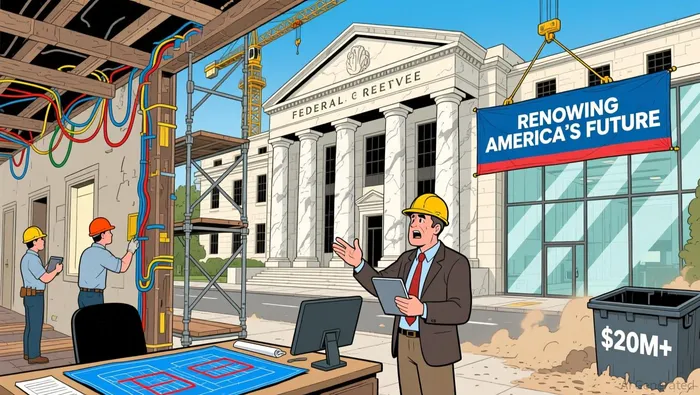
The investigation centers on Powell's testimony about the Fed's $2.5 billion headquarters renovation. Powell acknowledged the project's cost overruns but attributed them to inflation and unexpected construction issues like asbestos and lead contamination. He suggested the Justice Department's action is a pretext to undermine the Fed's independence.
The Fed's independence has long been a cornerstone of U.S. economic policy. Historically, central banks operate with autonomy to avoid political influence, ensuring monetary decisions are made based on economic conditions rather than political expediency. Powell has resisted Trump's repeated demands for aggressive interest rate cuts, maintaining that decisions must be data-driven.
Why Did This Happen?
Trump's administration has long criticized Powell's interest rate policies, with the president often calling for more aggressive rate cuts. In the past, Trump even threatened to fire Powell and attempted to remove Fed Governor Lisa Cook, a move currently being contested in court.
The recent investigation adds to a pattern of Trump's efforts to assert control over the Fed. In 2024, the president appointed Stephen Miran, a conservative economist, to the Federal Open Market Committee (FOMC). Despite Miran's vocal support for rate cuts, the FOMC voted almost unanimously for moderate 25-basis-point cuts in its last three meetings, far from Trump's desired 200- to 300-basis-point reductions.
The administration has also used the renovation costs as a political weapon. Trump personally toured the Fed's headquarters and criticized the project's expenses in public. Powell's term as Fed chair ends in May 2026, and the president is expected to nominate a successor soon. The ongoing investigation may affect the nomination process, with some lawmakers threatening to oppose any candidate until the issue is resolved.
How Did Markets React?
Financial markets reacted cautiously to the news. The U.S. dollar weakened, and Treasury yields rose slightly, reflecting concerns about potential instability in monetary policy. Gold and silver prices surged as investors sought traditional inflation hedges. The S&P 500 and Nasdaq also saw modest declines, with some strategists warning of further volatility if the situation escalates.
Investors remain divided on the implications. Some believe the Fed will continue to act independently, citing its institutional strength and the fact that only a minority of FOMC members are Trump appointees. Others warn that prolonged political pressure could erode public trust in the Fed's ability to control inflation, leading to economic uncertainty.
Goldman Sachs warned that the investigation has "reinforced" concerns about the Fed's independence, a critical factor in maintaining stable inflation expectations. If investors lose confidence in the Fed's independence, it could lead to higher inflation and volatility in global markets.
What Are Analysts Watching Next?
Analysts are closely watching how the investigation unfolds and whether it leads to broader changes in the Fed's governance structure. Some economists argue the Fed should adopt a formal monetary policy rule to reduce discretionary rate-setting and limit political influence.
Prediction markets favor two Trump-aligned economists—Kevin Hassett and Kevin Warsh—as potential replacements for Powell. Hassett, the president's chief economic advisor, has defended the investigation as a necessary inquiry into taxpayer spending. Warsh, a former Fed governor, has long criticized Powell and advocated for a shift in Fed policy.
Lawmakers, including several Republicans, have expressed concerns about the investigation's potential to undermine the Fed's independence. Senate Majority Leader John Thune called for a swift resolution to avoid prolonged political interference in monetary policy. Other lawmakers warned that the move could delay the confirmation process for Powell's successor.
The outcome of this political standoff could have lasting implications for the Fed's role in the U.S. economy. If the administration succeeds in reshaping the central bank, it could mark a significant departure from decades of policy independence. But for now, the FOMC continues to act on economic data, with most analysts expecting the status quo to persist for the near term.







Comentarios
Aún no hay comentarios