
The Potato Crisis: A Catalyst for Russian Agricultural Vulnerabilities and Investment Opportunities in Agribusiness
The tripling of potato prices in Russia since May 2024 has exposed a systemic fragility in the nation's agricultural sector, with profound implications for macroeconomic stability and investment strategies. This crisis, driven by poor harvests, shifting crop priorities, and soaring production costs, has forced the Central Bank into a precarious balancing act between curbing inflation and avoiding economic stagnation. For investors, this volatility presents both risks—particularly in Russian sovereign debt—and opportunities in agribusiness firms positioned to capitalize on the deficit.
The Perfect Storm: Causes of the Potato Price Surge
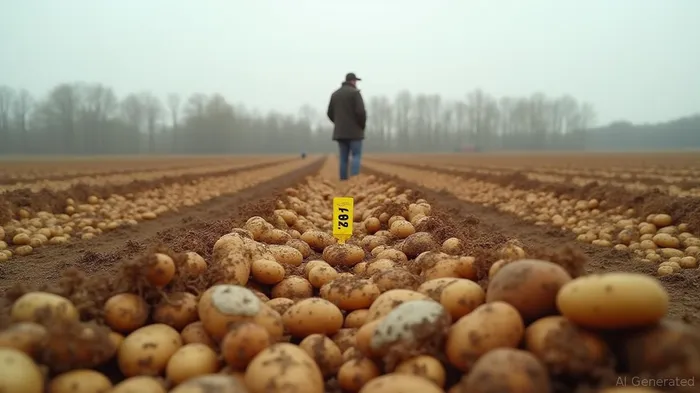
According to Rosstat data, rose to over 85 rubles/kg by May 2025—a 166% increase from 2024 levels, with regional spikes exceeding 200 rubles/kg. The crisis stems from a 12% drop in the 2024 harvest to 17.8 million tons, exacerbated by unseasonal frosts, droughts, and farmers' shift to more profitable crops like oilseeds and sugar beets. Compounding this, inflation-driven costs for fertilizers, fuel, and logistics, combined with the Central Bank's 21% key interest rate, have squeezed agricultural profitability.
The structural weakness lies in Russia's overreliance on domestic production for staples. With home gardening declining and imports accounting for 30–40% of retail stocks by spring 2025—up from negligible levels pre-crisis—the nation's food security is now tied to global markets. Egypt, China, and Belarus emerged as critical suppliers, with duty-free quotas for 300,000 tons of potatoes by July 2025.
Macroeconomic Implications: The Central Bank's Dilemma
The potato crisis has become a linchpin of Russia's inflation dynamics. Food accounts for 40% of the inflation basket, and potato prices alone contributed to a 20% inflation rate for low-income households—10 points higher than the official rate. While the Central Bank reduced its key rate slightly to 19.5% in June 2025, it remains at a 20-year high, reflecting fears of entrenched inflation expectations.
illustrates the institution's aggressive stance: rates have risen from 4.25% in 2020 to 19.5% today, yet inflation remains stubbornly elevated. The Bank's challenge is stark: lowering rates risks further inflation spikes, while maintaining high rates stifles economic growth and debt servicing for households and businesses.
For investors, this creates a high-risk environment for Russian sovereign bonds (OFZ). The ruble's volatility and the government's reliance on restrictive policies to curb inflation could lead to bond downgrades or capital flight.
Investment Opportunities: Agribusiness as a Hedge Against Vulnerability
The crisis has created fertile ground for strategic investments in agribusiness, particularly firms that benefit from Russia's food deficits:
- Export-Oriented Agricultural Firms:
- Belarusian Delfood: A leading exporter of processed potatoes and vegetables, Delfood has expanded into Russia's duty-free market. Its stock price (though not publicly traded) could reflect demand for stable supply chains.
Egyptian Agribusiness: Egypt's surge in potato exports to Russia—up 3.5x in 2025—positions firms like Al-Walid Farms to profit from premium pricing.
Global Commodity Markets:
Wheat and corn prices may rise if Russian farmers continue shifting cultivation to higher-margin crops, reducing grain production. Investors could look to futures contracts or ETFs tracking agricultural commodities (e.g., DBA or MOO).Technology-Driven Agribusiness:
Startups offering precision farming tools or drought-resistant seeds could attract venture capital as Russian farmers seek to stabilize yields amid climate volatility.
Risks and Cautionary Notes
While opportunities exist, risks remain. The potato price forecast—expected to stabilize post-July harvest—depends on favorable weather and logistical execution. A poor 2025 harvest or global supply disruptions (e.g., Egyptian crop failures) could prolong the crisis, further straining the ruble and bonds.
Conclusion: Positioning for the New Agricultural Reality
Russia's potato crisis underscores a broader truth: its economy remains vulnerable to agricultural shocks and external supply chains. For investors, the path forward is clear: avoid overexposure to Russian debt while capitalizing on firms and commodities insulated from—or benefiting from—the structural weaknesses in its food system. The era of cheap, domestically abundant staples is over; the next phase favors those prepared to bet on the global agribusiness firms filling the void.
would further illustrate the scale of this shift, offering data-driven insights into where capital is flowing.
Investment Recommendation:
- Buy: Exposure to Belarusian and Egyptian agricultural exporters via ETFs or direct equity (where accessible).
- Avoid: Russian sovereign bonds until inflation expectations stabilize.
- Monitor: Potato and grain futures as proxies for supply-demand dynamics.
The potato crisis is more than a food inflation blip—it's a seismic shift in Russia's economic landscape. Astute investors will seize the opportunity to profit from its aftermath.







Comentarios
Aún no hay comentarios