
Post-Pandemic Recovery in Restaurants and Tech: Navigating Consumer Shifts and Digital Transformation
The post-pandemic restaurant and tech sectors are undergoing a profound transformation, driven by evolving consumer behavior and the urgent need for digital innovation. As consumers prioritize convenience, affordability and personalized experiences, companies like DoorDashDASH--, Red Robin, and Noodles & Company are adapting through strategic investments in technology, operational efficiency, and customer engagement. This analysis examines how these firms are navigating the new normal and what their strategies imply for investors.
Tech Sector: DoorDash's High-Stakes Bet on Innovation
DoorDash's Q3 2025 results highlight the challenges and opportunities facing tech-driven delivery platforms. While the company exceeded revenue expectations with $3.45 billion in revenue, it missed earnings forecasts, reporting $244 million in net income. The stock plummeted 17% post-earnings, reflecting investor skepticism about its $300+ million 2026 spending plan, which includes a global tech platform and the Dot autonomous delivery robot.
This reaction underscores a critical tension in the sector: investors are wary of near-term profitability risks but recognize the necessity of long-term innovation. DoorDash's investments align with broader industry trends, such as the rise of automation and AI-driven logistics, which are essential to maintaining competitive margins in a delivery-centric world. However, the company's ability to execute these initiatives without overextending its financial flexibility will be pivotal.
Restaurant Sector: Red Robin's Digital Turnaround
Red Robin's Q3 2025 performance illustrates how traditional restaurants are leveraging digital tools to regain relevance. Despite a $9.5 million year-over-year revenue decline, the chain reported a 250-basis-point sequential traffic improvement and a 90-basis-point rise in restaurant-level operating profit margins. These gains were driven by labor efficiency improvements and a revamped loyalty program, which now rewards customers with points redeemable for rewards, boosting engagement and retention.
The company's "North Star" strategy-focusing on operations, menu innovation, and digital growth-has yielded tangible results. For instance, its data-driven marketing program, which uses microtargeted campaigns, has driven outsized traffic growth in pilot locations. Meanwhile, the replacement of conveyor-belt cooking equipment with flat-top grills has enhanced product quality, addressing a key consumer pain point. Red Robin's 22% increase in visits from lapsed users, attributed to its loyalty program, further demonstrates the power of personalized digital engagement.
Noodles & Company: Strategic Closures and Digital Momentum
Noodles & Company's post-pandemic recovery strategy has centered on two pillars: operational efficiency and digital acceleration. The company's decision to close 31–34 underperforming locations by year-end is expected to redirect 30% of their sales to profitable sites, improving overall margins. This approach mirrors broader industry trends, where restaurants are streamlining footprints to focus on high-performing units.
Simultaneously, Noodles has prioritized digital growth, achieving a 12% year-over-year increase in third-party and digital orders. Menu innovations like the Delicious Duos platform and limited-time offerings have driven customer engagement, while a new coaching program has enhanced service quality and order accuracy according to recent reports. These efforts contributed to a 4% rise in comparable sales and improved restaurant contribution margins. Noodles' strategy exemplifies how smaller chains can leverage agility to adapt to shifting consumer preferences.
Industry-Wide Trends: The New Normal
The restaurant sector's post-pandemic evolution is shaped by three key trends:
1. Digital Ordering and Delivery Dominance: Food delivery's share of global food service spending has surged from 9% in 2019 to 21% in 2024, with cloud kitchens and ghost kitchens proliferating to meet demand for convenience.
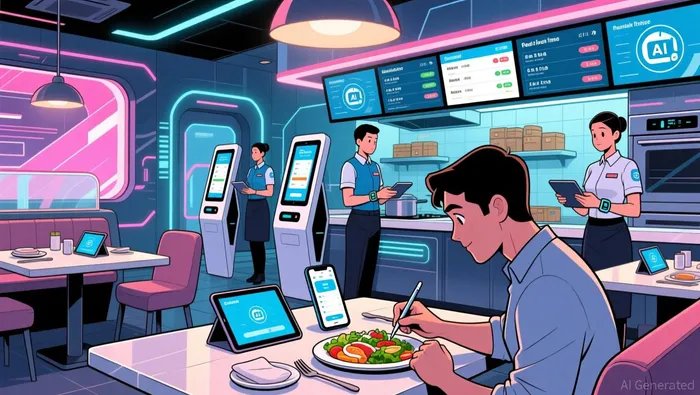
2. Labor and Operational Efficiency: Restaurants are adopting self-service technologies, such as mobile ordering and table-side tablets, to mitigate labor shortages and reduce costs.
3. Experience-Driven Consumption: Over one-third of full-service diners now prioritize experience and service over price, pushing brands to innovate in areas like ambiance, personalization, and sustainability.
These trends create both opportunities and risks. For example, while DoorDash's Dot robot could reduce delivery costs, its success depends on technological scalability. Similarly, Red Robin's labor efficiency gains must be balanced against potential employee burnout, a risk highlighted by its recent staffing model changes.
Investment Implications
For investors, the post-pandemic landscape demands a nuanced approach. Tech platforms like DoorDash must prove that their capital expenditures translate into sustainable margins, while restaurant chains like Red Robin and Noodles must demonstrate that digital and operational initiatives can drive consistent revenue growth.
Red Robin's 25% increase in adjusted EBITDA and Noodles' margin improvements suggest that strategic pivots can yield results, but both face challenges in sustaining momentum. DoorDash's stock volatility highlights the sector's sensitivity to execution risks, particularly in capital-intensive projects.
In the long term, companies that align with consumer priorities-convenience, personalization, and ethical practices-will likely outperform. As Deloitte notes, sustainability and transparency are becoming non-negotiables for modern diners. Brands that integrate these values into their digital transformation strategies, such as Red Robin's eco-friendly packaging initiatives or Noodles' focus on operational transparency, are better positioned to capture market share.
Conclusion
The post-pandemic restaurant and tech sectors are at a crossroads. While consumer behavior shifts present challenges, they also offer a roadmap for innovation. DoorDash's tech bets, Red Robin's digital reinvention, and Noodles' strategic closures all reflect a sector in flux. For investors, the key will be identifying companies that balance short-term profitability with long-term adaptability-a balance that, as these case studies show, is both achievable and essential.







Comentarios
Aún no hay comentarios