
Post-Crypto-Mortem Valuation Shifts in Web3 Creative Studios: Assessing Long-Term Investment Viability in Blockchain-Driven Fashion and Entertainment Assets
The collapse of the 2022 crypto market sent shockwaves through Web3 creative studios, with valuations plummeting and investor confidence eroding. Yet, by 2025, the sector has shown signs of cautious recovery, driven by regulatory clarity, technological innovation, and a pivot toward utility-driven models. For investors assessing the long-term viability of blockchain-driven fashion and entertainment assets, the post-crash landscape reveals a complex interplay of resilience, adaptation, and emerging opportunities.
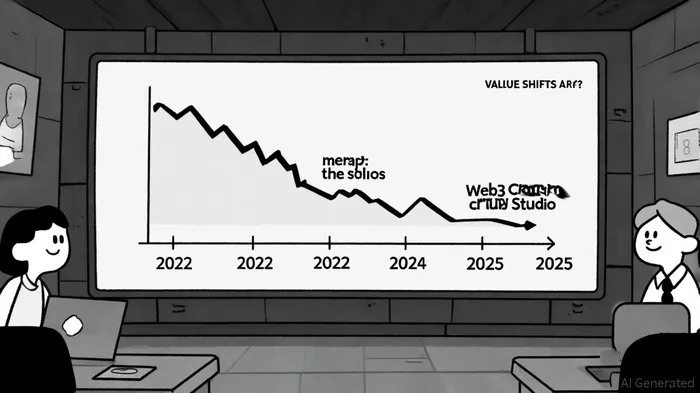
Valuation Trends: From Collapse to Cautious Optimism
The aftermath of the 2022 crypto crash left Web3 creative studios in disarray. Funding for blockchain startups dropped to $1.8 billion in Q4 2023, a 26% decline from the previous year, as regulatory scrutiny and market volatility stifled growth, according to Crunchbase. However, by Q4 2024, the sector saw a modest rebound, with funding rising 20% year-over-year to $1.8 billion, albeit with fewer large-scale deals, per Crunchbase. This recovery was underpinned by a shift in investor focus toward scalable solutions, such as modular blockchains and real-world asset (RWA) tokenization, which addressed earlier criticisms of speculative hype, as noted by Yahoo Finance.
Enterprise valuations also reflected this cautious optimism. Median EV/Revenue multiples for blockchain companies surged from 1.9x in Q4 2022 to 5.3x by Q4 2023, signaling renewed confidence in the sector's ability to deliver tangible value, according to Crunchbase. By 2025, the tokenization of real-world assets-such as luxury goods, real estate, and intellectual property-emerged as a $4 billion on-chain market, with projections of a $16 trillion industry by 2030, per the Yahoo Finance analysis. This growth is further bolstered by the anticipated pro-crypto policies of the incoming U.S. administration, which could reduce regulatory friction and spur innovation, according to TechTarget.
Blockchain-Driven Fashion: From Speculation to Sustainability
The fashion industry's foray into Web3 has evolved from speculative NFT collectibles to utility-driven models that prioritize sustainability and authenticity. Post-2022, brands like Balenciaga and Gucci shifted from high-profile NFT drops to integrating blockchain into physical products and supply chains. For example, Louis Vuitton's phygital offerings-such as a non-transferable NFT treasure trunk and blockchain-enabled authentication insoles-demonstrate a strategic pivot toward "quiet technology," where digital tools enhance physical experiences without overt Web3 branding, as reported by NSS Magazine.
The Aura Blockchain Consortium, established by LVMH, Prada, and Richemont, exemplifies this shift. By leveraging blockchain for product authentication and supply chain transparency, the consortium aims to combat counterfeiting and build consumer trust, according to The Interline. Meanwhile, the European Union's proposed digital product passport (DPP) legislation, which mandates digital twins for physical goods, is accelerating the adoption of blockchain in fashion, per the Yahoo Finance analysis. These developments suggest that the long-term value of blockchain in fashion lies not in speculative NFTs but in its ability to address industry pain points like sustainability and ethical production.
However, challenges persist. The collapse of Nike's RTFKT venture and lawsuits over misrepresenting NFTs as investment assets highlight the risks of overhyping digital assets, a trend examined by The Interline. Investors must scrutinize projects for clear utility and regulatory compliance, as the market remains fragmented and volatile.
Web3 Entertainment: Gaming 2.0 and the Rise of Play-to-Earn Economies
The entertainment sector, particularly blockchain gaming, has emerged as a bright spot in the post-crash recovery. By 2025, Web3 gaming investment surged to $60 million in July, driven by platforms like ToncoinTON-- and Telegram's TON blockchain, which offer scalable, low-cost solutions for in-game economies, per Crunchbase. The rise of "Web2.5" models-blending blockchain with traditional gaming-has introduced features like digital ownership, cross-chain systems, and AI-driven tools, enhancing user engagement and monetization, as reported by Crunchbase.
Projects like GetStyleMoney (GSM), a presale-stage initiative combining AI, blockchain, and fashion, are pioneering "wear-to-earn" models that reward real-world activities such as outfit sharing or scanning clothing, according to Financial Content. This shift from speculative NFTs to functional ecosystems reflects a broader industry trend toward utility-driven value creation.
Yet, the sector faces hurdles. Regulatory uncertainty, technical limitations, and the need for interoperability remain critical challenges. Smaller studios have struggled to keep pace, with many pivoting or closing operations in response to industry realignment, per Crunchbase. Investors must prioritize projects with sustainable tokenomics, strong user retention, and proven teams to navigate these risks.
Expert Insights: Sustainability and the Road Ahead
Blockchain's role in sustainability is gaining traction, with experts emphasizing its potential to transform fashion and entertainment supply chains. According to a 2025 report by the Prism Sustainability Directory, blockchain's immutableIMX--, decentralized ledgers can reduce greenwashing by providing verifiable data on material sourcing, labor practices, and product lifecycles. For instance, pilot projects have shown that blockchain-based reward systems can increase consumer participation in resale programs by 20%, promoting circular economy models, the Prism report found.
However, the success of blockchain in sustainability hinges on collaboration. Partnerships between brands, technology providers, and NGOs are essential to tailor solutions to industry needs and establish robust verification frameworks, the Prism Sustainability Directory notes. Additionally, cultural shifts toward conscious consumption and regulatory pressures-such as the EU's Corporate Sustainability Due Diligence Directive-are creating a favorable environment for adoption.
Conclusion: A Cautious Bull Case for Web3
The post-2022 Web3 landscape is marked by a recalibration of expectations. While the sector's early hype has waned, the focus on utility, sustainability, and scalability suggests a maturing industry with long-term potential. For investors, the key lies in identifying projects that address real-world problems-whether through transparent supply chains, play-to-earn economies, or tokenized real-world assets-while navigating regulatory and technical risks.
As the Web3 market projects a 44.1% CAGR from 2024 to 2033, according to Yahoo Finance, the next few years will be critical in determining whether blockchain-driven fashion and entertainment assets can transition from niche experiments to mainstream investments. The path forward is neither linear nor guaranteed, but for those willing to navigate the complexities, the rewards could be substantial.







Comentarios
Aún no hay comentarios