
Post-Crisis Resilience in the Midstream Energy Sector: Lessons from ONEOK's Mont Belvieu Fire
Post-Crisis Resilience in the Midstream Energy Sector: Lessons from ONEOK's Mont Belvieu Fire
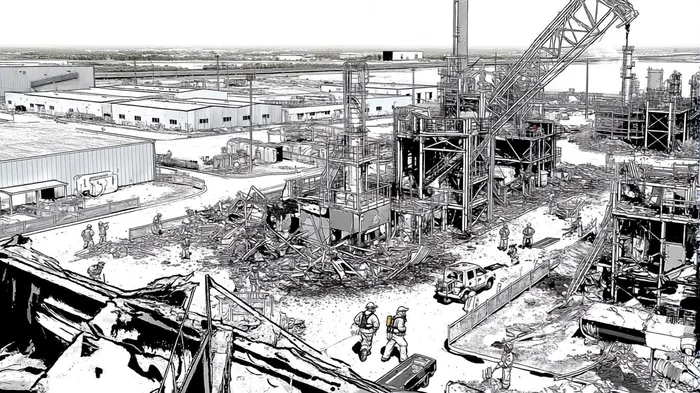
The midstream energy sector, a critical linchpin in the global energy supply chain, faces mounting pressure to balance operational efficiency with infrastructure resilience. The October 2025 explosion at ONEOK's Mont Belvieu facility in Texas-resulting in three non-life-threatening injuries and significant damage-has reignited debates about risk management and recovery strategies in an industry already grappling with aging infrastructure, regulatory scrutiny, and shifting market dynamics. For investors, the incident underscores the importance of evaluating how midstream operators adapt to crises and align their strategies with sector-wide best practices.
Sector-Wide Challenges and ONEOK's Response
The midstream sector in 2025 is navigating a complex landscape. Aging infrastructure ranks as the top concern for industry professionals, with rising inspection and maintenance costs compounding operational risks, according to an industry survey. Regulatory hurdles, permitting delays, and supply chain constraints further strain capital planning. Against this backdrop, ONEOK's response to the Mont Belvieu fire offers a case study in crisis adaptation.
Following the incident, ONEOKOKE-- emphasized its commitment to safety and operational continuity. The company stabilized the facility within hours and launched a thorough investigation into the cause, according to a Hoodline report. This mirrors its approach to the 2022 Medford, Oklahoma explosion, where, according to an InsuranceNewsNet article, a $930 million insurance settlement funded infrastructure upgrades, including the completion of the 125,000-barrel-per-day MB-6 NGL fractionator in Mont Belvieu. Such investments not only enhance capacity but also reduce reliance on third-party services, a strategic move to mitigate future disruptions.
Infrastructure Risk Management: ONEOK vs. Industry Best Practices
The midstream sector's evolving risk landscape demands proactive strategies. Industry best practices emphasize predictive maintenance, digital twins, and safety management systems (SMS) to preempt failures and optimize resource allocation, as discussed in operations and maintenance guidance. ONEOK's 2025 strategic plan aligns with these principles, including AI-driven predictive maintenance for 75% of critical infrastructure and carbon monitoring systems across major facilities, as outlined in the ONEOK strategic plan.
However, ONEOK's approach diverges in its emphasis on physical infrastructure expansion over purely digital solutions. While the company's Permian Basin processing expansion and pipeline capacity increases reflect a traditional capital-intensive model, peers like Enterprise Products Partners have prioritized digital twins and SCADA systems to model deterioration scenarios, a point noted in that operations and maintenance guidance. This contrast highlights a sector-wide divergence: some operators double down on physical resilience, while others leverage technology to extend asset lifespans.
Operational Recovery and Financial Resilience
Post-crisis recovery requires not only technical fixes but also financial discipline. ONEOK's 2025 financial guidance-targeting a 15% earnings-per-share increase and $800 million in net debt reduction-demonstrates its focus on balancing growth with stability, according to the ONEOK strategic plan. This aligns with broader sector trends, where companies are recalibrating capital allocation to prioritize high-return projects. For instance, market connectors (operators of high-throughput corridor infrastructure) are outpacing basin players in earnings stability, as gas demand grows, according to a BCG report.
ONEOK's recent acquisitions, including the EnLink and Medallion midstream assets, further illustrate its strategy to consolidate in-basin operations and diversify into emerging energy infrastructure, such as carbon capture and renewable natural gas (per the ONEOK strategic plan). These moves position the company to navigate the energy transition while maintaining traditional midstream margins.
Investment Implications and Sector Outlook
For investors, the Mont Belvieu incident and ONEOK's response highlight key metrics to monitor:
1. Capital Efficiency: How effectively companies allocate capital to both physical and digital resilience.
2. Debt Management: The ability to reduce leverage while funding growth.
3. Regulatory Adaptability: Navigating permitting challenges and evolving safety standards.
The sector's bifurcation into "basin players" and "market connectors" suggests divergent investment opportunities. Market connectors, with their exposure to gas and downstream infrastructure, may offer more stable returns in a gas-driven energy landscape, as the BCG report suggests. Meanwhile, basin players must innovate to avoid obsolescence in maturing liquids basins.
Conclusion
The ONEOK Mont Belvieu fire serves as a microcosm of the midstream sector's broader challenges and opportunities. While the incident exposed vulnerabilities in industrial safety, it also showcased the company's capacity to integrate crisis response with long-term strategic goals. For investors, the key takeaway is clear: resilience in midstream energy hinges on a dual focus on physical infrastructure upgrades and adaptive risk management frameworks. As the sector pivots toward gas and the energy transition, operators that balance capital discipline with technological innovation-like ONEOK-will likely outperform peers in an increasingly volatile market.





Comentarios
Aún no hay comentarios