
Post-Crisis Corporate Responsibility in Rail: Norfolk Southern's $20M Training Center as a Strategic Investment
In the wake of the 2023 derailment in East Palestine, Ohio, Norfolk Southern's $20 million investment in a first responder training and fire sciences center has emerged as a pivotal case study in post-crisis corporate responsibility. This initiative, developed in collaboration with the State of Ohio, the Village of East Palestine, and Youngstown State University (YSU), underscores a strategic pivot toward risk mitigation and community trust-building. For investors, the question remains: Can such corporate social responsibility (CSR) initiatives translate into sustainable shareholder value in the railroad sector?
A Blueprint for Risk Mitigation and Community Trust
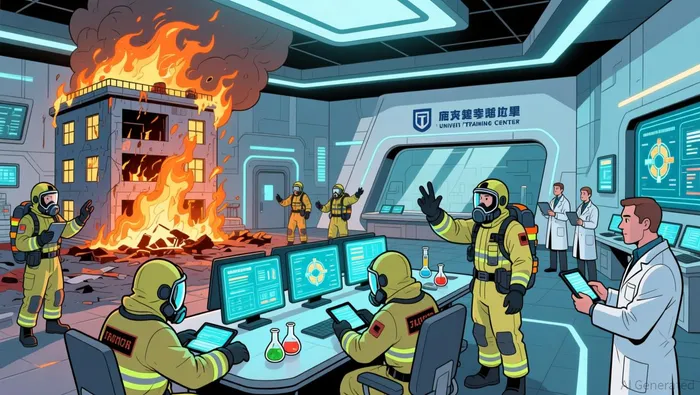
The training center, set to offer specialized programs for emergency responders, including full-scale exercises for hazardous material incidents, directly addresses vulnerabilities exposed by the East Palestine disaster. By partnering with YSU-a university with academic expertise in fire science-Norfolk Southern is not only enhancing regional preparedness but also aligning its operations with long-term safety standards. According to industry analysis, CSR initiatives increasingly focus on social and environmental indicators, such as workforce development and emissions reduction.
The project's emphasis on collaboration is telling. Norfolk SouthernNSC-- CEO Mark George highlighted the "sustainable reality" of public-private partnerships, while East Palestine Mayor Trent Conaway framed the center as a lifeline for local emergency services. Such alignment of corporate and community interests is critical in an industry where public perception can swiftly erode trust-and, by extension, profitability.
The Financial Logic of Long-Term CSR
While short-term cost-cutting strategies like precision scheduled railroading (PSR) have dominated recent railroad sector dynamics, evidence suggests these approaches risk long-term value. Activist investors have pushed for margin optimization through workforce reductions and operational streamlining, but critics argue this compromises safety and service quality, leading to market share losses to trucking companies. Oliver Wyman's analysis reinforces this, noting that railroads prioritizing growth-oriented strategies-such as service innovation and customer experience-stand to outperform peers in both profitability and resilience.
Norfolk Southern's training center, though not explicitly tied to immediate financial metrics, aligns with this growth framework. By reducing the likelihood of future crises and fostering goodwill, the company mitigates regulatory scrutiny, legal liabilities, and reputational damage. These factors are increasingly material in an era where ESG (environmental, social, and governance) criteria influence capital allocation.
Norfolk Southern's Broader Commitment
The training center is part of a larger $135 million investment in East Palestine's recovery, including a $600 million class-action settlement. While the financial impact on shareholder value remains opaque, the company's sustained engagement signals a departure from transactional CSR. This contrasts with the sector's recent focus on short-term payouts-dividends and buybacks-which, while boosting immediate returns, often neglect the infrastructure and relationships necessary for long-term stability.
However, the railroad's strategic calculus is complicated by its proposed merger with Union Pacific, a deal that could reshape market dynamics. For now, the training center stands as a testament to Norfolk Southern's attempt to balance crisis response with proactive investment.
Conclusion: A Model for Sustainable Value Creation?
The railroad sector's financial health hinges on its ability to navigate dual pressures: shareholder expectations for profitability and societal demands for accountability. Norfolk Southern's first responder training center illustrates how post-crisis CSR can serve as a bridge between these priorities. By embedding risk mitigation and community trust into operational DNA, the company positions itself to avoid the pitfalls of short-termism while aligning with evolving investor preferences.
For investors, the lesson is clear: In an industry where crises are inevitable, the most resilient railroads will be those that treat CSR not as a cost center but as a strategic lever for long-term value.







Comentarios
Aún no hay comentarios