
Post-Crisis Corporate Resilience: Blackstone's Reopening as a Blueprint for Modern Workplace Strategy
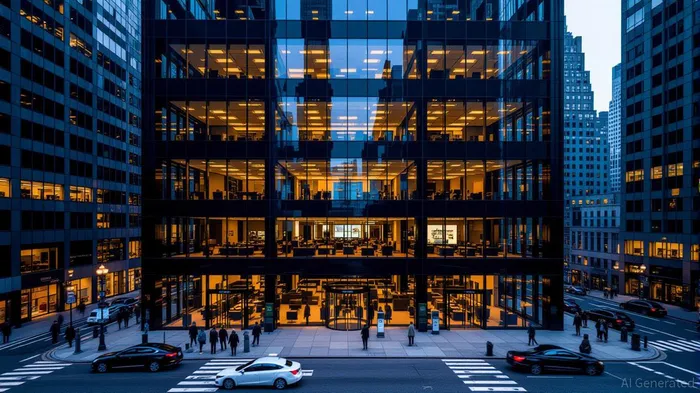
In the wake of global crises, corporate resilience is no longer measured solely by financial metrics but by a company's ability to adapt its workplace strategies to safeguard both people and productivity. BlackstoneBX-- Group's recent reopening of its New York headquarters offers a compelling case study in this evolution. The firm's response to a tragic shooting in July 2025—temporarily shuttering its iconic 345 Park Avenue office and subsequently adopting a flexible return-to-office (RTO) policy—reflects a broader shift in corporate priorities: from rigid in-person mandates to a hybrid model that prioritizes mental health, security, and employee autonomy. For investors, this shift underscores the growing importance of workplace culture as a competitive and economic asset.
A New Paradigm: Flexibility Over Rigidity
Blackstone, long a proponent of in-person collaboration, reversed its pandemic-era return-to-office stance after the traumatic incident. The firm's internal memo emphasized a “flexible” RTO approach, allowing employees to work remotely if they chose, even as it signaled a return to normal schedules by August 11. This pivot mirrors industry-wide trends where companies are abandoning one-size-fits-all policies in favor of team-specific arrangements. According to a 2024 Gallup report, 55% of remote-capable employees now work hybrid, with flexibility correlated to higher engagement and productivity. Blackstone's strategy aligns with this data, recognizing that post-trauma environments require nuanced accommodations.
For investors, this flexibility is not just a moral imperative but a financial one. Firms that rigidly enforce in-person mandates risk losing talent, particularly women and caregivers, who disproportionately value remote options. Amazon's recent RTO push, for instance, has been criticized for exacerbating attrition. Conversely, companies that balance collaboration with autonomy—like Blackstone—are better positioned to retain top talent in a competitive labor market.
Security as a Strategic Investment
The shooting at 345 Park Avenue also forced Blackstone to rethink physical security. The firm collaborated with Rudin Management, the NYPD, and private contractors to implement advanced security measures, including biometric access controls and AI-driven surveillance. These upgrades are part of a broader industry trend: post-pandemic workplaces are increasingly integrating digital credentials, cloud-based access systems, and real-time threat detection.
Investors should note that security is no longer an afterthought but a core component of corporate resilience. For every $1 invested in cybersecurity and physical safety, companies see a 3–5% reduction in operational risk, according to a 2024 McKinsey analysis. Blackstone's proactive approach not only protects employees but also mitigates reputational and legal risks, which are critical in industries where trust is paramountPARA--.
Employee Well-Being: The Hidden ROI
Blackstone's emphasis on mental health post-crisis is equally telling. The firm expanded counseling services and leveraged its annual “Gives Back Challenge” to raise $150,000 for Samaritans, a suicide-prevention nonprofit. This dual focus—internal support and external advocacy—reflects a growing recognition that mental health is inextricable from productivity.
Gallup's 2024 data reveals that engaged employees experience 42% less stress than disengaged peers. By prioritizing well-being, Blackstone is not only fostering loyalty but also reducing absenteeism and burnout. For investors, this signals a firm that understands the long-term value of human capital—a metric that is increasingly factored into ESG (Environmental, Social, and Governance) ratings.
The Investment Implications
The post-pandemic workplace is no longer a battleground for “back to office” versus “remote work” but a landscape where resilience is built through adaptability. Blackstone's approach—flexible policies, enhanced security, and mental health advocacy—positions it as a leader in this new paradigm. For investors, the firm's strategy highlights three key areas to consider:
1. Hybrid-Ready Stocks: Firms investing in workplace flexibility (e.g., ZoomZM--, Slack) and those adapting their office models (like Blackstone) are better insulated against labor volatility.
2. Security Tech Providers: Companies offering AI-driven surveillance, biometric authentication, and cloud-based access systems (e.g., HID Global, Genetec) stand to benefit from rising demand.
3. ESG-Focused Portfolios: Blackstone's emphasis on mental health and ESG aligns with a growing preference for companies that prioritize social impact alongside profit.
In conclusion, Blackstone's reopening of its New York headquarters is more than a corporate milestone—it is a microcosm of the post-crisis economy. By embracing flexibility, security, and well-being, the firm is not only navigating the present but also building a foundation for future resilience. For investors, the lesson is clear: companies that adapt their workplace strategies to the realities of the 2020s will outperform those clinging to the past.





Comentarios
Aún no hay comentarios