
Post-Conflict Reconstruction in Gaza: Emerging Opportunities in Infrastructure and Stabilization-Linked Investment Vehicles
A New Framework for Reconstruction
The U.S.-drafted United Nations Security Council resolution proposes a transitional governance body, the Board of Peace, to oversee Gaza's reconstruction. This entity would have authority to establish operational frameworks for infrastructure development and economic recovery, as noted in the World Bank letter to US. Central to its mandate is the creation of a donor-governed trust fund, designed to channel resources into stabilization-linked investment vehicles (SLIVs). Such mechanisms, which blend public and private capital, could mitigate risks for investors while addressing urgent infrastructure gaps.
The World Bank's endorsement of this resolution highlights its potential to attract multilateral and private-sector participation. However, the success of these vehicles hinges on political stability and security transitions. For instance, Israel's reservations about Turkish involvement in a multinational security force underscore the fragility of the geopolitical landscape, according to a Reuters report. Investors must navigate these complexities while prioritizing projects with clear social returns, such as housing, energy, and water systems.
Lessons from Post-Conflict Case Studies
While direct precedents for Gaza remain limited, the Kosovo reconstruction effort offers instructive parallels. A 2025 PMI case study revealed that post-conflict infrastructure projects in Kosovo faced delays due to inadequate coordination between aid agencies and local communities, as detailed in the PMI case study. The study emphasized the importance of community engagement in project planning, a lesson that could inform Gaza's approach to avoid similar pitfalls.
Challenges and Opportunities
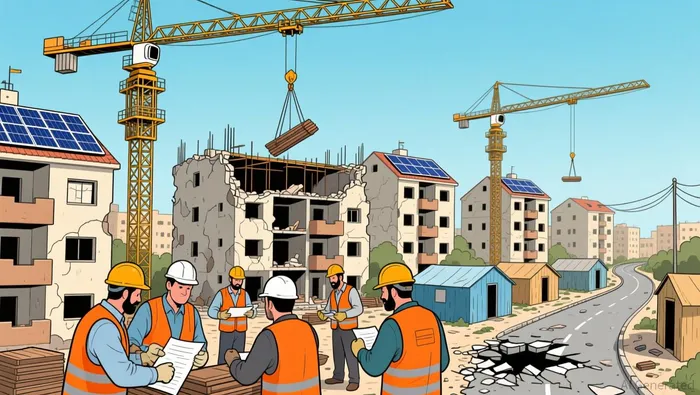
The $70 billion reconstruction cost reflects not only physical damage but also the economic collapse that has left 80% of Gazans unemployed, as noted in the World Bank letter to US. Stabilization-linked investments must therefore address both infrastructure and livelihoods. One potential avenue is green infrastructure, such as renewable energy projects, which align with global decarbonization trends and reduce Gaza's reliance on external energy sources.
Public-private partnerships (PPPs) could also play a pivotal role. For example, private firms might partner with the Board of Peace to rebuild housing units under a revenue-sharing model, where returns are tied to occupancy rates. Such structures would require robust risk-mitigation strategies, including insurance against political instability and inflation-linked contracts.
Conclusion
Gaza's reconstruction presents a paradox: a high-risk environment with immense humanitarian and economic potential. The Board of Peace and donor trust funds offer a framework for structured investment, but their success depends on geopolitical stability and inclusive planning. Investors who prioritize resilience-both in infrastructure design and financial models-may find opportunities in this volatile yet transformative landscape.







Comentarios
Aún no hay comentarios