
Positioning for Resilience: Navigating Political Uncertainty in a Fragmented Global Market
Political uncertainty has become a defining feature of the 2025 global economic landscape, with trade policy shifts and geopolitical tensions reshaping equity markets. The U.S. administration's imposition of "Liberation Day" tariffs in April 2025 triggered one of the sharpest selloffs in modern history, sending the S&P 500 into a 10% two-day decline-the worst performance since World War II, according to a CFA Institute analysis. While a 90-day pause on reciprocal tariffs briefly revived investor sentiment, the underlying fragility of policy frameworks has left markets in a state of heightened volatility. For investors, the challenge lies in balancing exposure to resilient sectors while hedging against unpredictable shocks.
The Tariff Shockwave: Volatility and Sectoral Realignments
The immediate aftermath of the April 2025 tariff announcements revealed stark sectoral divergences. European banking and energy stocks, already strained by fiscal pressures and energy price volatility, underperformed as investors anticipated windfall taxes and regulatory overhauls, according to the S&P Global outlook. Meanwhile, gold prices surged to an all-time high of $3,167.57 per ounce, reflecting a flight to safety amid inflationary fears and geopolitical instability, as reported by the CFA Institute.
UNCTAD's September 2025 report underscores the broader implications of trade policy uncertainty, noting that firms engaged in "front-loading" shipments to avoid tariffs, a trend that coincided with a 10% spike in air cargo to the U.S. in Q1 2025, according to a Russell Investments outlook. This short-term adjustment masked deeper structural shifts, including supply chain reconfigurations and elevated operational costs. For global equities, the result has been a bifurcated market: while U.S. indices rebounded to record highs by mid-2025, emerging markets-particularly those reliant on trade flows-struggled to recover, as noted by the CFA Institute.
Investor Behavior in a Climate of Uncertainty
The ripple effects of political uncertainty extend beyond price movements. Corporate capital expenditures have been delayed as firms grapple with unclear regulatory outlooks, while institutional investors have increasingly favored defensive assets. According to S&P Global's Q3 2025 economic outlook, U.S. households and corporations have maintained strong balance sheets, cushioning the economy against policy shocks. However, this resilience has not translated uniformly across markets. The U.S. dollar's anticipated weakening and policy-driven volatility have reinforced the case for global diversification, even as domestic equities remain relatively attractive, per Russell Investments' analysis.
Strategies for Resilience: Diversification and Sectoral Focus
To navigate this fragmented landscape, investors must adopt a dual strategy: hedging against macroeconomic shocks while capitalizing on sectoral opportunities. Commodity-exporting nations, for instance, have benefited from elevated resource prices, suggesting that energy and materials sectors may offer defensive value, a pattern highlighted by the CFA Institute. Conversely, technology and consumer discretionary stocks-sensitive to trade tensions-require closer scrutiny.
Diversification remains critical. Russell Investments' Q3 2025 outlook recommends a "barbell approach," combining high-quality U.S. equities with emerging market exposure in select commodity-driven economies. Additionally, gold and other safe-haven assets should retain a role in portfolios, given their historical performance during periods of geopolitical stress, as discussed by the CFA Institute.
Conclusion: Preparing for a New Normal
The 2025 market environment underscores a paradigm shift: political uncertainty is no longer a transient risk but a persistent force shaping global equities. As trade policies continue to evolve unpredictably, investors must prioritize flexibility and resilience. By aligning portfolios with sectors insulated from policy shocks and maintaining a disciplined approach to diversification, market participants can navigate the turbulence of a fragmented geopolitical landscape.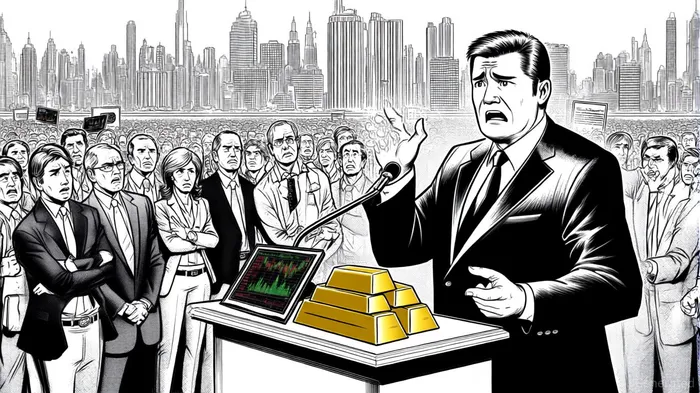







Comentarios
Aún no hay comentarios