
Positioning for a Fed Rate Cut: Strategic Entry Points in Real Estate, Tech, and Consumer Discretionary Sectors
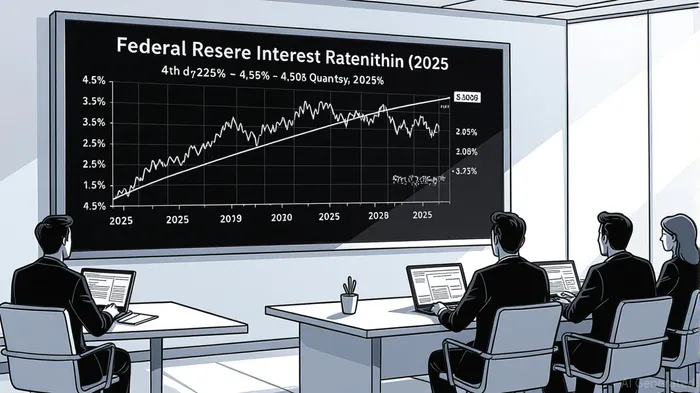
The Federal Reserve’s evolving policy stance in 2025 has created a pivotal inflection pointIPCX-- for investors. With inflation stubbornly above the 2% target and a cooling labor market, the central bank is poised to pivot toward accommodative measures. As of September 2025, markets are pricing in a near-certainty of a 25-basis-point rate cut at the September meeting, with a 50-basis-point cut gaining traction as economic data weakens [1]. This shift presents strategic entry points in sectors historically sensitive to monetary easing: real estate, technology, and consumer discretionary.
Real Estate: A Rebound in Housing Demand and REIT Valuations
The real estate sector stands to benefit directly from lower borrowing costs. With mortgage rates tied to the Fed’s policy rate, a 25-basis-point cut could reduce 30-year mortgage rates by approximately 30–40 basis points, making homeownership more accessible and stimulating demand for housing [2]. Homebuilders like PulteGroupPHM-- (PHM) and D.R. Horton (DHI) are well-positioned to capitalize on this dynamic, as weaker labor market data—such as the 73,000 July nonfarm payroll gain and a declining employment-to-population ratio—suggests a need for fiscal stimulus [3].
Real Estate Investment Trusts (REITs) also gain from lower financing costs. PrologisPLD-- (PLD), a logistics REIT, and Simon Property GroupSPG-- (SPG), a retail-focused REIT, could see improved profitability as refinancing opportunities arise [4]. However, commercial real estate remains vulnerable to a steepening yield curve, which could pressure long-term asset valuations [5]. Investors should prioritize REITs with strong balance sheets and exposure to in-demand sectors like industrial and multifamily housing.
Technology: Growth Stocks Thrive in a Dovish Environment
The technology sector, particularly high-growth firms, is a classic beneficiary of rate cuts. Lower discount rates increase the net present value of future cash flows, a critical factor for companies like NVIDIANVDA-- (NVDA) and MicrosoftMSFT-- (MSFT), which rely on long-term innovation cycles [6]. The Magnificent 7’s dominance in the Nasdaq Composite—up 18% in Q2 2025—underscores this trend [7].
AI-driven firms, such as NVIDIA, have already demonstrated resilience in the 2024 rate-cut cycle, with a 56% year-over-year gain [8]. However, investors must balance optimism with caution. Overexposure to a narrow group of large-cap tech stocks increases portfolio volatility, and valuation concerns persist amid mixed earnings revisions [9]. Positioning in tech should focus on companies with recurring revenue models and strong cash flow generation to mitigate risks from potential inflation surprises.
Consumer Discretionary: A Mixed Outlook Amid Rate Cuts
The consumer discretionary sector is a double-edged sword in a rate-cut environment. On one hand, lower borrowing costs could revive demand for big-ticket items like cars, travel, and home improvement. Retailers like CrocsCROX-- (CROX) and travel companies such as Royal Caribbean (RCL) are likely to see a rebound in sales [10]. On the other hand, the sector faces headwinds from rising tariffs and a cautious consumer base. LPL Research notes that operating margins in consumer discretionary are expected to decline by 1.5% in 2025 due to tariff impacts, with TeslaTSLA-- and General MotorsGM-- reporting significant financial drag [11].
Despite these challenges, a rate cut could offset some of the sector’s pain. PayPalPYPL-- (PYPL) and other payment processors may benefit from increased transaction volumes as consumer spending normalizes [12]. Strategic entry points here require a focus on companies with pricing power and cost efficiencies, such as StarbucksSBUX-- (SBUX) or LululemonLULU-- (LULU), which have demonstrated resilience in past cycles [13].
Actionable Insights: Balancing Opportunity and Risk
The Fed’s September rate cut creates a window for tactical positioning. For real estate, REITs with industrial exposure and low leverage are ideal. In technology, a diversified approach across AI infrastructure and cloud computing firms mitigates concentration risk. Consumer discretionary investors should prioritize companies with strong brand equity and operational flexibility.
However, the path forward is not without risks. A hard economic landing or geopolitical shocks could disrupt the current trajectory. Investors should hedge against volatility by allocating to defensive sectors like utilities or high-dividend equities while maintaining liquidity [14].
As the Fed navigates its dual mandate, the interplay between labor market data and inflation will remain critical. For now, the data suggests that a dovish pivot is firmly in motion—and those who position early may reap the rewards.
Source:
[1] Federal Reserve Calibrates Policy to Keep Inflation in Check, [https://www.usbank.com/investing/financial-perspectives/market-news/federal-reserve-tapering-asset-purchases.html]
[2] What to Expect from the September Interest Rate Decision, [https://markets.financialcontent.com/wral/article/marketminute-2025-9-3-federal-reserve-on-the-brink-what-to-expect-from-the-september-interest-rate-decision]
[3] Analysis: Dissenting Federal Reserve Policy Statements, [https://www.linkedin.com/pulse/analysis-dissenting-federal-reserve-policy-statements-faisal-amjad-bou3f]
[4] Top Stocks to Ride the 2025 Rate Cut Wave!, [https://www.cooperfarmsgrain.com/news/story/34049119/from-tech-to-real-estate-top-stocks-to-ride-the-2025-rate-cut-wave]
[5] Global Commercial Real Estate Outlook: Autumn 2025, [https://seekingalpha.com/article/4819908-global-commercial-real-estate-outlook-autumn-2025]
[6] The Imminent Fed Rate Cut and Its Implications for Equities, [https://www.ainvest.com/news/imminent-fed-rate-cut-implications-equities-2509/]
[7] Tech Steals the Q2 Earnings Show, [https://www.rbcwealthmanagement.com/en-eu/insights/tech-steals-the-q2-earnings-show]
[8] Interest Rate Cuts and Their Impact on Equity Markets, [https://www.ainvest.com/news/interest-rate-cuts-impact-equity-markets-lessons-history-today-investors-2506/]
[9] Fed Rate Cut Bets and Market Volatility: Positioning for a Dovish Dawn, [https://www.ainvest.com/news/fed-rate-cut-bets-market-volatility-positioning-post-ppi-rally-2508/]
[10] Consumer Discretionary Sector Outlook: Tariffs and..., [https://www.lpl.com/research/blog/consumer-discretionary-sector-outlook.html]
[11] Q1 2025 Consumer Discretionary Earnings Tracker, [https://get.ycharts.com/resources/blog/q1-2025-consumer-discretionary-earnings-key-highlights-market-reactions/]
[12] Buy 5 Consumer Discretionary Stocks on September Interest Rate Cut Hope, [https://finance.yahoo.com/news/buy-5-consumer-discretionary-stocks-114100196.html]
[13] Rate Cut Coming? Sectors to Watch, [https://www.schwab.com/learn/story/rate-cut-coming-sectors-to-watch]
[14] What a 2025 Fed Rate Cut Could Mean for Your Portfolio, [https://8figures.com/blog/portfolio-allocations/what-a-2025-fed-rate-cut-could-mean-for-your-portfolio]







Comentarios
Aún no hay comentarios