
Positioning for a Delayed Fed Rate-Cut Cycle: Equity Valuations and Strategic Implications
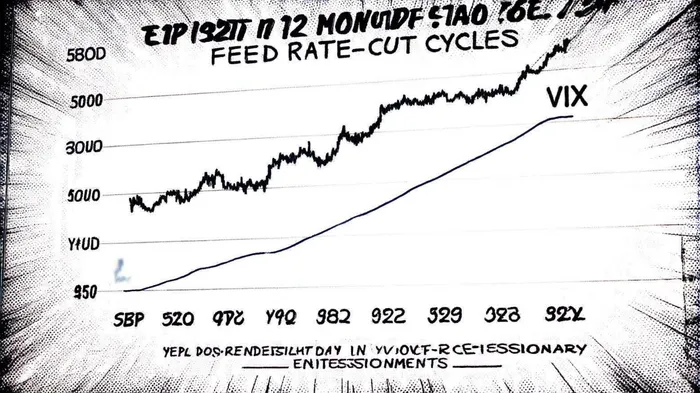
The Federal Reserve's September 2025 policy shift—marking the first rate cut since December 2024—has reignited debates about the timing and magnitude of monetary easing. With the central bank projecting three cuts by year-end, investors face a critical question: How should portfolios adapt to a delayed rate-cut cycle, where policy normalization lags economic signals? Historical patterns and current Fed projections suggest a nuanced approach, balancing sectoral exposure, duration risk, and macroeconomic contingencies.
The Fed's Balancing Act: Inflation, Employment, and Policy Lag
The Fed's September 2025 decision to cut rates by 25 basis points, with two more reductions expected before year-end, reflects a recalibration toward labor market concerns. Unemployment is projected to rise to 4.5% by 2025's close, while core PCE inflation remains stubbornly above 3% [1]. This “soft landing” scenario—where inflation gradually declines without a sharp economic contraction—mirrors historical precedents. For instance, the 1995–1997 easing cycle, which began amid similar inflation-employment tensions, saw the S&P 500 rise 14.1% in the 12 months post-first cut [2]. However, initial volatility remains a risk: Historical data shows an average 19%–20% drawdown in the first nine months of rate-cut cycles, as markets grapple with policy lags and shifting expectations [3].
The Fed's delayed response to labor market cooling—evident in its September 2025 decision—highlights the central bank's struggle to reconcile its dual mandate. While inflation remains above target, the rising unemployment risk has forced a pivot. This mirrors the 2001 and 2008 cycles, where rate cuts were delayed until equity markets had already peaked, amplifying short-term uncertainty [4]. Investors must thus brace for a bumpy ride, even as long-term equity returns remain favorable.
Equity Valuations: Sectoral Opportunities in a Soft Landing
Historical performance during rate-cut cycles reveals divergent sectoral outcomes. In non-recessionary environments, small-cap and value stocks have historically outperformed growth equities. For example, during the 1995–1997 cycle, the Russell 2000 (small-cap) gained 22% in the 12 months post-first cut, outpacing the S&P 500's 14.1% [2]. This reflects lower borrowing costs boosting earnings for companies with operating leverage, particularly in industrials, energy, and real estate. Conversely, growth stocks—especially in technology—tend to benefit from lower discount rates, as seen in the 2019 easing cycle [5].
In a soft-landing scenario, sectors with domestic revenue exposure and floating-rate debt—such as commercial real estate and construction—stand to gain from reduced financing costs. However, small-cap equities may struggle if the economic outlook weakens, as their anti-quality tilt makes them more vulnerable to earnings shocks [6]. Defensive sectors like utilities and healthcare may offer stability, but their growth potential is limited.
Fixed Income and Alternative Strategies: Navigating the Yield Curve
Fixed income strategies must adapt to the Fed's shallow rate-cut trajectory. Short-duration bonds (2–3 years) are preferable in non-recessionary cycles, as the yield curve is likely to steepen. For example, during the 2019 easing cycle, 2-year Treasury yields fell 40 basis points while 10-year yields declined only 10 basis points, creating a 30-basis-point spread [7]. Long-duration bonds, by contrast, may underperform if inflation remains sticky or fiscal concerns push term premiums higher.
Investors should also consider alternative credit strategies, such as high-yield corporate bonds or private debt, which historically deliver consistent returns during rate cuts. In the 2001 cycle, high-yield bonds outperformed Treasuries by 8% annually, capitalizing on improved credit spreads [8].
Portfolio Positioning: Diversification and Macro Contingencies
Diversified portfolios have historically outperformed cash during rate-cut cycles, particularly over longer horizons. A 60/40 equity-bond allocation, for instance, averaged 10.5% annualized returns in the 12 months post-first cut since 1980, compared to cash's 3.2% [9]. However, active tilts can enhance risk-adjusted returns. Quality and value stocks, which have shown resilience in both soft-landing and recessionary scenarios, merit overweighting.
For global exposure, dollar weakness—a common feature of U.S. rate cuts—benefits emerging markets and international equities. Countries with dollar-denominated debt, such as Brazil and India, may see improved debt servicing as U.S. rates fall [10]. Conversely, European markets could face headwinds if the ECB delays easing.
Conclusion: Strategic Patience in a Shifting Landscape
The Fed's delayed rate-cut cycle presents both risks and opportunities. While initial volatility is inevitable, historical data underscores equities' long-term resilience, particularly in non-recessionary environments. Investors should prioritize sectoral diversification, favoring value and quality stocks, while adopting a cautious approach to duration and credit risk. As the Fed navigates its dual mandate, strategic patience—and a willingness to adapt to evolving macro signals—will be paramount.







Comentarios
Aún no hay comentarios