
How to Position Cash in a Dwindling High-Yield Era: Strategic Moves as the Fed Signals Rate Cuts in 2025
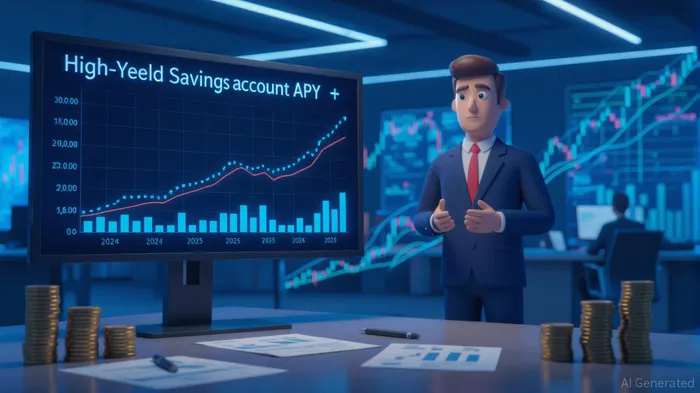
In 2025, the Federal Reserve's rate-cutting cycle has ushered in a new era for cash portfolio management. With high-yield savings account rates peaking at 4.66% (Axos Bank) and money market fund yields declining alongside the Fed's benchmark rate, investors face a critical juncture: how to preserve capital while maximizing returns in a shrinking high-yield environment. Behavioral finance principles and portfolio optimization techniques are now more vital than ever to navigate this landscape. By integrating lessons from visionary leaders like Chung Ju-Yung and leveraging tactical strategies such as CD laddering and money market fund shifts, investors can adapt their short-term assets to thrive in a low-rate world.
The Behavioral Finance Challenge: Loss Aversion and Overconfidence
The Fed's rate cuts, while intended to stimulate growth, have triggered psychological responses that cloud rational decision-making. Loss aversion, the tendency to fear losses more than value gains, has led many investors to cling to short-term CDs or underperforming IPOs, even when locking in higher yields for longer durations could yield better results. For instance, Ally Bank's APY dropped from 5.05% in 2024 to 3.50% in July 2025, yet investors remain hesitant to commit to longer-term instruments, fearing missed opportunities if rates rise again.
Conversely, overconfidence bias has driven others to chase speculative assets, such as high-yield corporate bonds or leveraged ETFs, underestimating the risks of a volatile market. This duality creates a tug-of-war between caution and recklessness, often leading to suboptimal portfolio allocations.
Tactical Asset Allocation: The Chung Ju-Yung Blueprint
Chung Ju-Yung, the founder of Hyundai, built an industrial empire through frugality, resilience, and strategic execution. His principles—prioritizing long-term vision over short-term gains—offer a blueprint for portfolio optimization. In today's context, this means:
- Diversified Liquidity Management: Just as Chung diversified Hyundai's operations to mitigate risk, investors should diversify cash holdings across high-yield savings accounts, money market funds, and short-term CDs. For example, Axos Bank's 4.66% APY offers immediate liquidity, while a CD ladder (e.g., 6-month, 12-month, 18-month terms) ensures staggered reinvestment opportunities as rates fluctuate.
- Active Duration Management: Chung's emphasis on adaptability aligns with avoiding long-duration bonds in a rate-cutting environment. Instead, focus on intermediate-term bonds (e.g., 3–5 years) to capture yield without exposing the portfolio to the volatility of longer maturities.
- Behavioral Discipline: Chung's culture of cost discipline—using both sides of paper—translates to minimizing portfolio expenses. Investors should avoid high-fee money market funds and prioritize accounts with no minimum balances (e.g., BrioDirect's 4.35% APY with no fees).
Strategic Shifts: From Money Market Funds to Income-Generating Assets
With $6.1 trillion in money market funds, investors are increasingly seeking alternatives to stagnant yields. Behavioral finance suggests that structured liquidity management—using a mix of cash, short-term bonds, and options overlays—can enhance returns without sacrificing safety. For instance:
- Covered Call Strategies: Selling call options on dividend-paying equities (e.g., Coca-ColaKO-- or Johnson & Johnson) generates income while hedging against volatility.
- Floating-Rate Instruments: Assets like AAA-rated collateralized loan obligations (CLOs) offer stability in a "no recession" rate-cutting cycle, where fewer cuts may materialize than anticipated.
Leadership-Driven Discipline: Avoiding Overvalued Traps
Chung Ju-Yung's resilience in adversity teaches investors to avoid overvalued assets. For example, U.S. preferred stocks, which have surged in a low-rate environment, are now at risk of a sell-off. Similarly, high-yield corporate bonds, while tempting, require rigorous credit analysis. A disciplined approach—exiting overvalued positions and rebalancing toward high-quality, income-generating assets—mirrors Chung's focus on sustainable growth.
Conclusion: Navigating the New Normal
As the Fed's rate cuts reshape the financial landscape, behavioral discipline and strategic portfolio optimization are non-negotiable. By embracing CD laddering, money market fund shifts, and income-generating equities, investors can preserve liquidity and outperform cash yields. Chung Ju-Yung's legacy of resilience and adaptability serves as a reminder: success in a dwindling high-yield era demands not just technical expertise, but the courage to act decisively against emotional biases.
Investment Advice:
- Immediate Action: Rebalance cash holdings into a mix of high-yield savings accounts (e.g., Axos Bank) and short-term CDs to capture compounding.
- Long-Term Strategy: Allocate a portion of the portfolio to dividend-paying equities and intermediate-term bonds, using options overlays to enhance income.
- Avoid Overexposure: Steer clear of long-duration bonds and overvalued assets like U.S. preferred stocks.
In a world where behavioral biases can derail even the most rational strategies, the fusion of leadership-driven discipline and tactical asset allocation is the ultimate safeguard for cash portfolios in 2025.







Comentarios
Aún no hay comentarios