
Portugal's Far-Right Surge Opens a Gold Mine (Literally) in Energy and Infrastructure
The May 2025 Portuguese election marked a seismic shift in European politics: the far-right Chega party surged to become the second-largest parliamentary force, nearly overtaking the Socialist Party. While Chega’s exclusion from government has kept its radical policies at bay, its rise has reshaped the political landscape—and created a rare investing opportunity. Portugal’s minority center-right government is now laser-focused on stabilizing the economy, while the EU’s €22 billion recovery fund and a lithium boom are primed to fuel growth in energy and infrastructure. Here’s why investors should pay attention now.
The Political Shift: Far-Right Influence Without Power
Chega’s 22.6% vote share—a jump from 18% in 2024—reflects voter backlash against immigration, corruption, and stagnant wages. Yet Prime Minister Luís Montenegro’s Democratic Alliance (AD) remains in power, albeit with only 32.7% of the vote. This fragile coalition must navigate a parliament where 60% of seats now belong to non-traditional parties.
While Chega’s direct policy influence is limited, its rise has forced mainstream parties to confront core issues:
- Immigration: The AD’s pre-election expulsion of 18,000 undocumented migrants was a nod to Chega’s agenda.
- Economic Discontent: Chega’s attacks on elite corruption and stagnant wages (€1,200/month average) have amplified demands for faster growth.
The result? A government acutely aware of its survival hinges on delivering tangible economic wins. Enter Portugal’s energy and infrastructure sectors, which are now the focus of both EU funds and private investment.
Lithium: The New "Black Gold" of European Energy
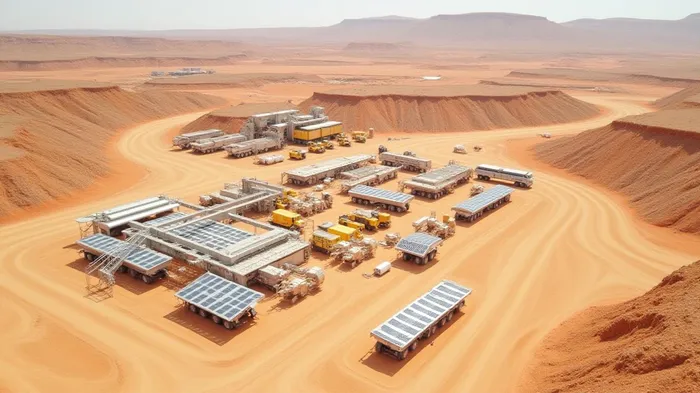
Portugal is positioning itself as Europe’s lithium powerhouse. The Barroso project, a joint venture with AMG Critical Materials, aims to produce lithium for 500,000 electric vehicles annually by the mid-2020s. With the EU’s Critical Raw Materials Act (CRMA) fast-tracking permits and offering grants covering up to 50% of project costs, this is a geopolitical play: Europe wants to reduce reliance on Chinese lithium refining (which dominates 60% of global capacity).
Why Now?
- The EU’s €22 billion recovery fund prioritizes lithium and battery projects, with Portugal’s Barroso and CatL’s $2 billion battery plant in Sines (operational 2026) at the forefront.
- Lithium prices have soared 400% since 2020, driven by EV demand. Portugal’s deposits are low-cost and near key auto hubs (e.g., VW’s plant in Palmela).
- Data Point:
Infrastructure: Chega’s "Anti-Toll" Agenda Could Backfire (in a Good Way)
Chega’s pledge to end tolls nationwide has drawn headlines, but its broader infrastructure push—lowering corporate taxes to 15% and VAT to 21%—could be a game-changer. Even if Chega doesn’t form a government, its influence has already pressured the AD to accelerate projects funded by EU recovery money.
- Housing Crisis: With rents rising 7% in Lisbon and home prices up 9%, infrastructure to boost affordable housing (e.g., public-private partnerships) could attract investment.
- Transport: Chega’s anti-toll stance may force the AD to redirect funds toward rail and port upgrades, reducing reliance on road fees.
Investment Play:
- Companies to Watch:
- Savannah Resources: Developer of the Barroso mine (ticker: SVAN.L).
- Energias de Portugal (EDP): A utility giant benefitting from EU grid modernization funds.
- Construction firms: Such as Mota-Engil (MTA.LS), which could win contracts for lithium-related infrastructure.
Risks? Yes, But the Upside Outweighs Them
- Political Gridlock: A minority government could fail, triggering fresh elections. But even a caretaker administration would prioritize lithium and EU-funded projects to avoid losing grants.
- Chega’s Populism: Its anti-immigration stance could deter foreign labor, though the Barroso project already employs 70% locals.
- Lithium Price Volatility: Demand for EVs could dip, but Europe’s green subsidies (e.g., the Inflation Reduction Act) are here to stay.
Why Act Now?
The combination of EU funding, lithium’s strategic importance, and a politically charged push to deliver growth makes Portugal’s energy and infrastructure sectors a rare bet in a volatile market. With lithium prices likely to stay high and the EU’s recovery funds flowing until 2026, this is a three-year window to capitalize on Europe’s mineral rush.
Final Call: Buy into Portugal’s lithium plays and infrastructure stocks before the EU’s €22 billion gets fully allocated. The far-right may be destabilizing politics, but their influence has created a clear path to profit—if you act before the herd catches on.
This is an investment moment shaped by politics, not just economics. Don’t miss it.







Comentarios
Aún no hay comentarios