
Portland General Electric: A Utility Powerhouse Riding the AI and Clean Energy Wave
In an era where utilities are no longer just about flipping switches but about mastering data and decarbonizing grids, Portland General ElectricPOR-- (POR) has positioned itself as a leader. With a 5.26% dividend yield, strategic investments in battery storage and renewables, and AI-driven grid optimization, PORPOR-- is not just surviving—it's thriving as the energy transition accelerates. But can this utility defy its stock's bearish trajectory and deliver outsized returns? Let's dig in.
The AI-Driven Grid of the Future
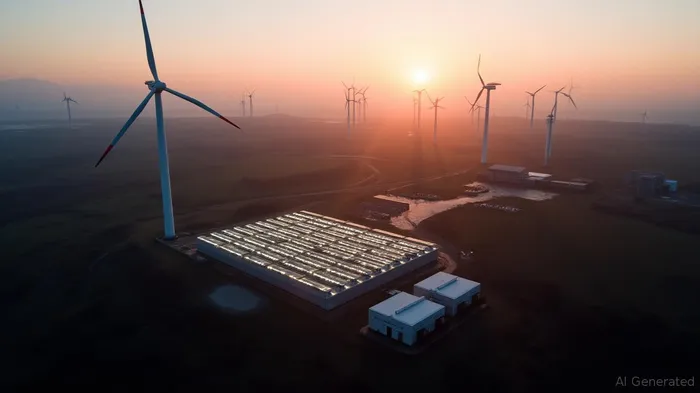
POR's secret weapon isn't just its 500+ MW of battery storage capacity (bolstered by the recently completed Seaside Battery Project), but its use of advanced analytics and artificial intelligence. By integrating AI tools, POR optimizes grid stability, predicts demand spikes, and seamlessly integrates renewable energy sources like the Clearwater Wind Energy Center. This reduces reliance on volatile wholesale markets and stabilizes earnings—a critical advantage as states mandate deeper decarbonization.
While the stock trades at a 3.87% discount compared to its 50-day moving average, the fundamentals suggest a disconnect. POR's 2025 Integrated Resource Plan (IRP) targets an 80% emissions cut by 2030 and net-zero by 2040—a roadmap aligning perfectly with Oregon's regulatory tailwinds. These mandates are expected to accelerate clean energy investments, creating a “virtuous cycle” of project approvals and stable cash flows.
The Dividend Machine
With a dividend yield of 5.26%, POR offers income investors a compelling payout that's grown by 6.5% annually since 2015. The latest quarterly dividend of $0.525 per share (up 5% year-over-year) is backed by a conservative payout ratio of 60-70%, ensuring sustainability even amid rising wildfire mitigation costs.
At a time when many utilities are trimming dividends due to inflation and regulatory pressures, POR's yield stands out. For long-term holders, the combination of dividend growth and capital appreciation potential could be a winning bet.
Catalysts to Watch
- Seaside Battery Completion: Now operational, this 200-MW project reduces POR's reliance on wholesale markets, lowering costs and boosting predictability.
- 2025 IRP Implementation: The plan's focus on renewables and grid resilience could unlock federal and state subsidies, further easing capital expenditure burdens.
- High-Tech Demand Surge: Portland's booming data center and semiconductor sectors are driving 3% annual load growth through 2029—a tailwind for utility revenue.
Risks on the Horizon
- Wildfire Liabilities: Rising costs for vegetation management and grid hardening could squeeze margins. A regulatory shift assigning greater wildfire liability to utilities could amplify this risk.
- Stock Price Volatility: Technical analysis shows a bearish trend, with the stock forecast to drop to $38.65 by July 2025—a potential buying opportunity for contrarians.
Investment Thesis
POR is a paradox: a defensive utility with offensive growth potential. Its dividend yield, regulatory tailwinds, and AI-optimized grid make it a rare blend of safety and innovation. While near-term risks like wildfire costs and sector underperformance may keep the stock in check, the long-term story is clear. Investors willing to look past short-term volatility could benefit from POR's pivot to clean energy dominance.
The $1.265 billion in 2025 capital expenditures—targeted at storage, renewables, and grid tech—signals confidence in POR's future. With a balance sheet rated investment-grade and a dividend that's both generous and sustainable, this is a stock to buy on dips.
In a sector rife with uncertainty, Portland General Electric is turning the energy transition into a winning formula. For income seekers and growth investors alike, POR could be a cornerstone of portfolios navigating the new energy economy.
Final Take: Hold or Buy for the long term. The dividend yield and strategic positioning suggest this utility is primed to outperform once markets recognize its clean energy moat.





Comentarios
Aún no hay comentarios