
Portland General Electric's Strategic Shift and Market Implications
Portland General Electric (PGE) is undergoing a transformative strategic shift that positions it at the forefront of the U.S. utility sector's and grid resilience efforts. , PGE is accelerating its commitment to decarbonization while addressing the growing demands of industrial customers, particularly in Oregon's semiconductor and data center sectors
according to Edge Tech analysis. This investment reflects a broader industry trend where utilities are redefining their roles in a climate-conscious, technology-driven energy landscape.
A Renewable Energy Transition with Measurable Progress
PGE's 2024 achievements underscore its progress:
, . This milestone is driven by projects like the 200 MW , part of a 475 MW aimed at stabilizing the grid and integrating intermittent renewables
according to Edge Tech analysis. The utility's , , further demonstrates its community-centric approach to clean energy,
while prioritizing environmental justice communities.
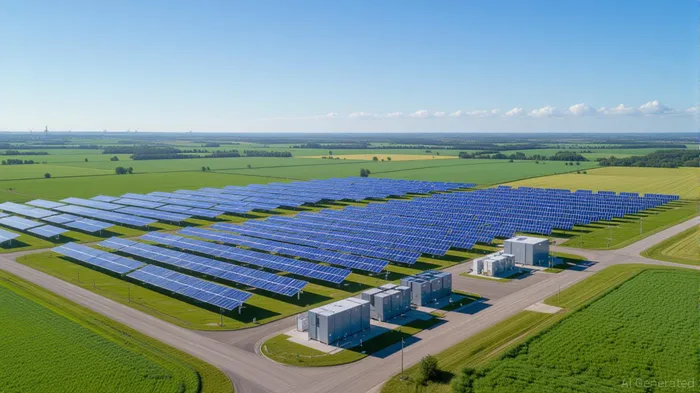 PGE's strategy extends beyond infrastructure. Its Community Benefits & Impacts Advisory Group (CBIAG) has shaped affordability programs and infrastructure upgrades,
ensuring inclusive progress toward its net-zero goal by 2040. These initiatives align with the 's (IRA) $400 billion clean energy incentives,
which are accelerating utility-scale solar and storage deployments nationwide.
PGE's focus on customer-sited resources also stands out. By targeting 155 MW of (CBRE) by 2030 and managing distributed energy resources as a Virtual Power Plant, PGE is leveraging decentralized solutions to bolster resilience
according to its resource planning strategy. This approach mirrors industry-wide shifts toward ,
which offers greater reliability and reduces transmission bottlenecks.
in an Era of Climate and Technological Disruption
The utility sector faces unprecedented challenges, including , extreme weather events, and surging demand from AI-driven data centers,
. . PGE's efforts, such as (DLR) and Asset Health Monitoring (AHM),
are being evaluated by the to optimize and reduce congestion without costly expansions. These technologies, coupled with battery storage, enhance reliability during peak demand and mitigate wildfire risks-a critical concern in regions like California, where PG&E's
have replaced long-distance lines with .
Market Implications and Investor Outlook
PGE's strategic priorities are translating into . In Q3 2025, the utility
reaffirmed its adjusted earnings guidance , driven by industrial load growth and disciplined cost management. Its 2023 and 2025 (RFP) processes are securing cost-effective renewable resources, including the ,
.
Investors are also watching PGE's alignment with broader policy frameworks. The IRA's for clean energy and labor standards are amplifying the returns on PGE's investments, while
its collaboration with the Department of Energy's GRIP program. However, challenges remain, including supply chain constraints and the need to balance affordability with decarbonization.
Conclusion: A Model for the Future of Utilities
PGE's strategic shift exemplifies how utilities can navigate the dual imperatives of and grid reliability. By combining large-scale , , and cutting-edge technologies, PGE is not only meeting regulatory and but also securing its market position in a rapidly evolving sector. As the U.S. grid
quintuples its transmission capacity over the next decade, PGE's proactive approach offers a blueprint for resilience and profitability in the renewable energy era.





Comentarios
Aún no hay comentarios