
Portland General Electric's Q1 2025 Earnings: Navigating Growth Amid Challenges
Portland General Electric (NYSE: POR) delivered a mixed performance in its Q1 2025 earnings call, highlighting operational resilience in the face of revenue volatility and rising costs. While the company reaffirmed its full-year guidance and emphasized strategic progress in renewable energy and grid modernization, investors reacted cautiously to a revenue shortfall that sent shares down 3.4% in pre-market trading. Here’s what the results mean for investors.
Financial Highlights: A Tale of Two Metrics
The quarter’s net income fell to $100 million ($0.91 per share) from $109 million ($1.08 per share) in Q1 2024, driven by adjustments for the 2024 winter storm. However, adjusted EPS of $1.21 beat analyst estimates of $1.14, reflecting cost discipline.
The $928 million in revenue, however, missed expectations by nearly $50 million, signaling challenges in pricing and demand variability. This was partially offset by strong 4.6% total load growth, fueled by a 16.4% surge in industrial demand from high-tech and data center customers.
Strategic Priorities: Betting on Renewables and Grid Resilience
PGE’s long-term strategy remains anchored in renewable energy expansion and wildfire mitigation. Key highlights include:
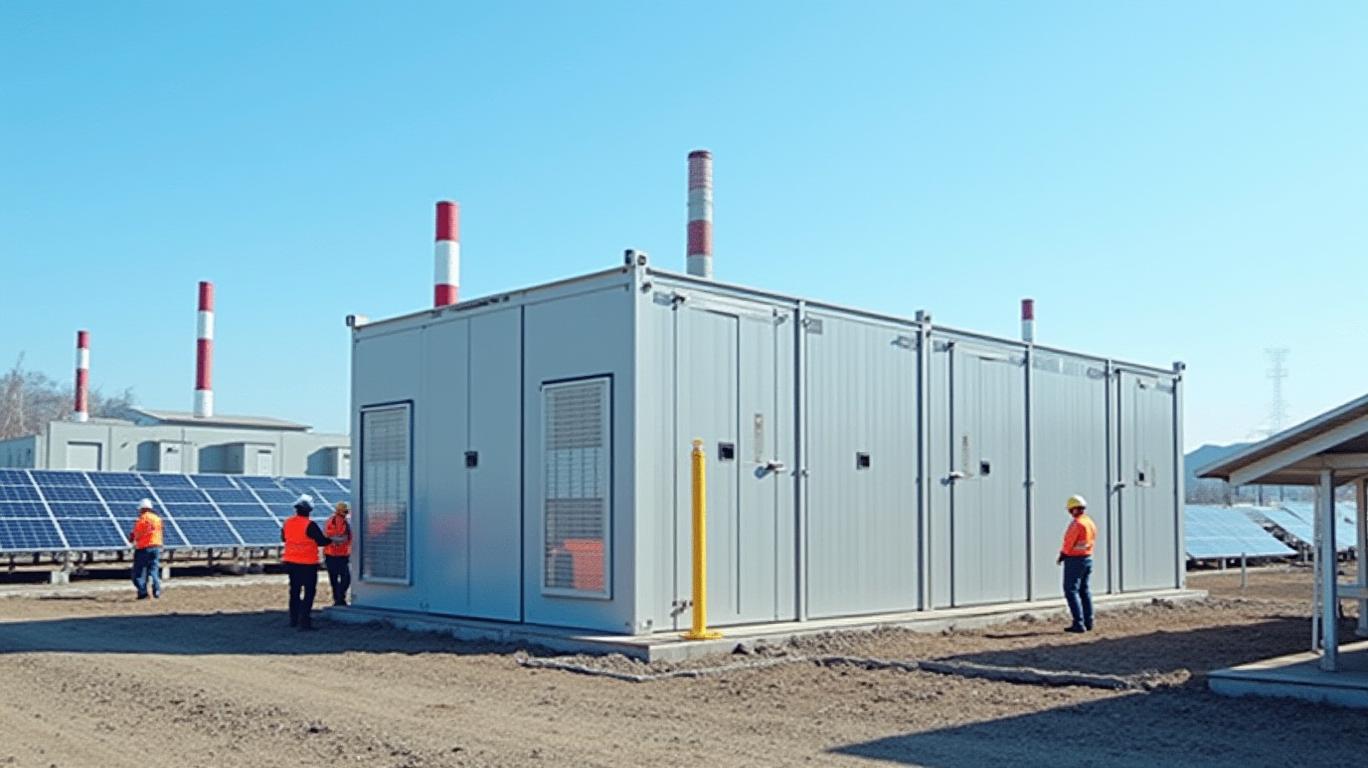
- Battery Storage: The 292 MW Constable, Sundial, and Coffee Creek systems are now operational, with the 200 MW Seaside project set to bring total capacity to 500+ MW by mid-2025. These investments aim to reduce reliance on fossil fuels and stabilize the grid.
- ESG Progress: Non-emitting resources (renewables, hydro) now account for 45% of PGE’s energy mix, up from 38% in 2020, with a goal to reach 100% clean energy by 2040.
- Wildfire Mitigation: The company plans to spend $120 million in 2025 on vegetation management and grid hardening, part of its $135 million wildfire-related expenses in operating costs.
Risks and Challenges: Cost Pressures and Regulatory Uncertainty
While PGE’s guidance remains intact ($3.13–$3.33 EPS for 2025), risks loom large:
- Revenue Volatility: The Q1 revenue miss underscores sensitivity to pricing dynamics and customer demand fluctuations.
- Cost Inflation: Operating expenses rose to $760 million, with wildfire mitigation and labor costs weighing on margins.
- Regulatory Headwinds: Federal policies on energy infrastructure and emissions could delay projects or increase costs.
Market Reaction and Dividend Discipline
Investors focused on the revenue shortfall, pushing shares down to $42.98—a 3.44% drop—despite the EPS beat. The stock now trades near its 52-week low of $40.05, suggesting skepticism about near-term execution.
PGE’s dividend, however, remains a bright spot. The $0.525 per share quarterly payout (5.1% yield at current prices) reaffirms management’s commitment to shareholder returns, with a long-term target of 5–7% annual dividend growth.
Conclusion: A Steady Hand in Turbulent Waters
Portland General Electric’s Q1 results reflect a company navigating a tightrope between growth opportunities and operational headwinds. While the revenue miss and rising costs are cause for caution, the reaffirmed guidance and progress on renewables and grid modernization suggest a path to long-term stability.
Investors should weigh PGE’s 45% clean energy mix, $500+ MW battery storage pipeline, and disciplined dividend policy against risks like regulatory uncertainty and margin pressures. With a 5% dividend yield and a stock near multiyear lows, the company could attract income-focused investors willing to bet on its clean energy transition.
The question remains: Can PGE execute its strategy while managing costs and regulatory hurdles? For now, the answer leans toward cautious optimism, but execution in 2025 will be critical.





Comentarios
Aún no hay comentarios