
Why Portillo’s (PTLO) Is Still a Hidden Gem at 12x Operating Income
Investors often overlook the power of a scalable growth model paired with an undervalued stock—but Portillo’s (NASDAQ: PTLO) is defying that trend. Despite a 10% rally in recent weeks, the iconic Chicago-based restaurant chain remains a compelling value play, trading at just 12x operating income while pursuing a decade-long plan to expand from 94 to 300+ locations. With 12%+ annual unit growth, $22.5M in annual free cash flow, and a Berkshire Hathaway-style value investor appeal, PTLO’s structural upside far outweighs its risks. Here’s why now is the time to act.
The Undervalued Growth Engine: 12x Multiple vs. 12% Annual Expansion
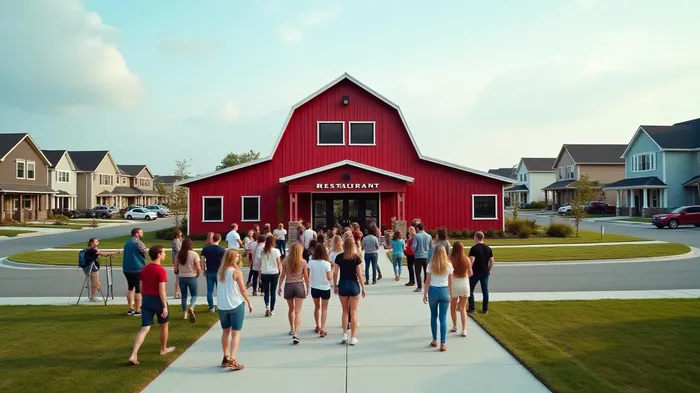
Portillo’s operates at a 12x EV/Operating Income multiple (based on forward estimates), a stark contrast to its 12%-15% annual unit growth target. The company aims to add 12 restaurants in 2025 alone, focusing on high-growth Sunbelt markets like Texas (San Antonio, Dallas) and Atlanta, where brand awareness is low but demand is rising. Over a decade, this could push store count to 300+, unlocking $1.5B in revenue at current AUV levels.
Why the multiple is undervalued?
- Unit Economics: Existing restaurants generate $8.7M average unit volume (AUV), with margins of 22.5%-23%, even after commodity inflation.
- Leverage: New locations in untapped markets can achieve 90%+ of mature AUV within two years, per management.
- Demand: The Portillo’s Perks loyalty program and targeted marketing in Sunbelt markets (e.g., Dallas-Fort Worth) are driving 1%-3% same-store sales growth, despite macroeconomic headwinds.
The Berkshire Hathaway Catalyst: Value Investing’s Spotlight
While Portillo’s isn’t a Berkshire HathawayBRK.B-- (BRK.A) holding, its value characteristics mirror Buffett’s playbook:
- Low P/S Ratio: At 2.0x revenue, it’s cheaper than peers like Dunkin’ (DIN) at 4.1x or Texas Roadhouse (TXRH) at 4.8x.
- High ROIC: With $97M in capital spending in 2025, it’s deploying cash into projects that return 15%+ annually.
- Resilience: Even with 3%-5% commodity inflation, Portillo’s has offset costs via 1.5% price hikes and operational efficiency (e.g., kiosk-driven speed improvements).
This aligns with value investors’ focus on underpenetrated markets and asset-light scaling. The recent rally has barely dented PTLO’s $1.4B enterprise value, making it a prime candidate for a short squeeze or institutional buying spurt.
Risk vs. Reward: Navigating Near-Term Concerns
Skeptics cite two risks:
1. Margin Compression: Q1 2025 saw a dip in adjusted EBITDA margins to 12.0% from 13.1% in 2024, due to inflation and higher labor costs.
2. Execution: The $8.7M AUV drop from 2024 levels raises concerns about sales cannibalization in new markets.
But the upside swamps these risks:
- Cost Controls: Menu prices are rising 1%-2% annually, while labor efficiencies (e.g., kiosk adoption) could offset wage pressures.
- Unit Quality: The “Restaurant of the Future” format (opening in 2025) will boost margins via streamlined layouts and tech integration.
- Long-Term Tailwinds: The $1.5T U.S. quick-service market offers years of expansion, with Portillo’s capturing only 0.1% of Sunbelt demand.
Conclusion: Buy PTLO for the Next Decade’s Compounding
Portillo’s is a textbook value play: a proven model (94 locations with 20+ years of growth), undervalued multiple, and catalysts (Sunbelt expansion, format innovation) that could double the stock over 5 years. Even post-rally, its 12x operating income multiple leaves room for multiple expansion as growth materializes.
Actionable Thesis:
- Buy PTLO at current levels.
- Target: $20-$25 within 18 months (25%-50% upside).
- Stop: Below $10, signaling a collapse in unit economics or expansion plans.
In a market obsessed with flashy tech stocks, PTLO offers the rare blend of value, scalability, and safety—a recipe for long-term wealth creation. Don’t let this rally scare you away.
—
This analysis is based on Q1 2025 financials and management guidance. Risks include supply chain disruptions and slower-than-expected expansion.






Comentarios
Aún no hay comentarios