
Port of Tauranga: A Rocky Road Ahead for Value Creation?
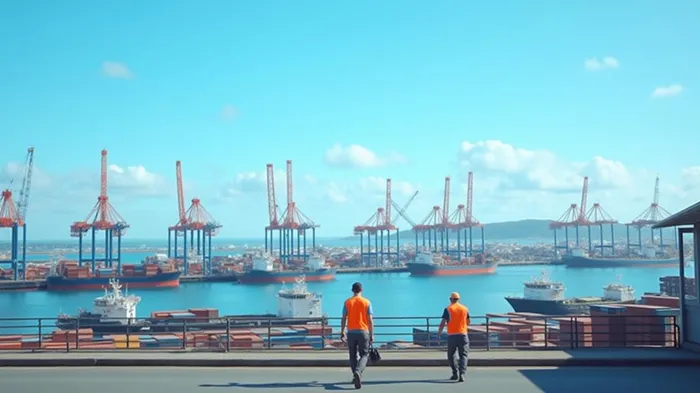
The Port of Tauranga (NZSE:POT) is New Zealand's busiest port, handling over 25 million tonnes of cargo annually and serving as a critical hub for log exports, container transhipment, and bulk commodities. Yet beneath its logistical dominance lies a troubling financial reality: its Return on Invested Capital (ROIC) has consistently failed to keep pace with its cost of capital since 2021, raising serious questions about the sustainability of its growth strategy.
ROIC vs. Cost of Capital: A Widening Gap
Port of Tauranga's ROIC has trended downward for over four years, falling from 4.86% in 2020 to a paltry 3.37% in 2024 (as of June 30). Meanwhile, its Weighted Average Cost of Capital (WACC) has surged, climbing from 6.64% in 2020 to 10.46% in 2025, according to GuruFocus data. This divergence is alarming: when ROIC consistently trails WACC, it means the company's investments are destroying value rather than creating it.
The math is clear: a ROIC of 3.71% (trailing twelve months as of May 2025) versus a WACC of 10.46% means every dollar of new capital deployed is losing over 6% in value annually. For a port operator reliant on massive infrastructure investments—like harbor dredging, terminal upgrades, and rail capacity—this is a critical red flag.
Strategic Investments: A Costly Gamble?
Port of Tauranga has poured capital into expanding its footprint and efficiency. Key projects include:
- Hub Port Strategy: Focused on transhipment traffic, which requires deep-water terminals and advanced logistics systems.
- Infrastructure Upgrades: Including a $200 million harbor dredging project to accommodate larger container ships.
- Rail Capacity: Investing to reduce bottlenecks in freight transport to key agricultural regions.
While these investments align with long-term growth, they have yet to deliver the promised returns. ROIC has stagnated despite a 34% increase in capital expenditures between 2020 and 2024. Even the modest ROIC uptick to 4.22% in Q4 2024 (a seasonal high) remains far below the WACC hurdle.
The disconnect suggests a systemic issue: Port of Tauranga's capital allocation is misfiring. Without a clear path to lift ROIC above 10%, its growth could become a liability.
Risks Compounding the Challenge
- Commodity Dependence: Logs and dairy products account for over 40% of cargo volumes. Weak global demand for these commodities—exacerbated by trade wars and inflation—could further squeeze margins.
- Competitive Threats: The port faces rising competition from rival New Zealand terminals like Lyttelton Port, which is undergoing a $1 billion upgrade.
- Cost Pressures: Operating expenses have climbed 12% since 2020, driven by higher rail charges and maintenance costs.
These risks are magnified by the company's overvaluation. Its intrinsic value of NZ$4.67 (per GuruFocus) is a stark contrast to its current stock price of NZ$6.69—a 30% overvaluation that leaves little room for error.
The Case for Caution: A Sell or Hold?
For income-focused investors, Port of Tauranga's consistent dividends might seem appealing. However, stagnant earnings growth and the ROIC-WACC gap suggest dividends are at risk of stagnation or cuts.
Thesis Conclusion:
Port of Tauranga's ROIC shortfall and elevated valuation make it a hold at best for income investors. Until ROIC surpasses WACC—a feat requiring either sharply higher returns or a drastic reduction in capital costs—growth initiatives will continue to erode shareholder value.
Recommendation: Sell or Hold until ROIC exceeds 10% or valuations drop to intrinsic value. Aggressive investors might consider a small position as a speculative play on New Zealand's export recovery, but the risks far outweigh the rewards at current prices.
Data as of May 23, 2025. Past performance does not guarantee future results.







Comentarios
Aún no hay comentarios