
Port Sudan Under Siege: How Drone Strikes Threaten Global Supply Chains and Humanitarian Investments
The port city of Port Sudan, once a vital Red Sea trade hub and lifeline for humanitarian aid in Africa, is now at the epicenter of a humanitarian and economic catastrophe. Recent drone strikes by the Rapid Support Forces (RSF) have crippled infrastructure critical to global supply chains and left millions facing starvation. For investors, the fallout is a stark reminder of how geopolitical conflict can disrupt economies and reshape regional investments.
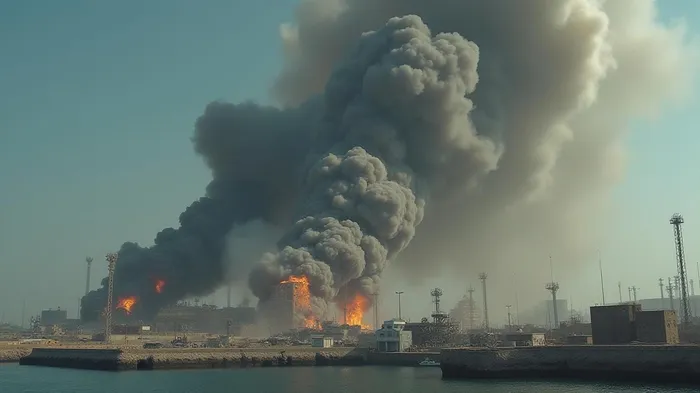
Infrastructure in Ruins: The Port’s Role as a Strategic Target
The RSF’s May 2025 drone campaign specifically targeted Port Sudan’s economic arteries. The port itself, handling 80% of Sudan’s trade, now operates at 50% of pre-war capacity due to damaged cargo systems, refrigeration units, and fuel depots. A critical electricity substation near the port was destroyed, plunging the city into darkness and halting aid deliveries. The Osman Digna Air Base, a military logistics hub, suffered catastrophic damage after a drone strike ignited a two-day fire in its ammunition storage.
The economic toll is staggering. Sudan’s inflation rate hit 118.9% in 2025, while its currency, the Sudanese pound, lost 99% of its value since 2023. . With trade volumes halved, agricultural exports—once a cornerstone of the economy—are down to 46% of 2023 levels, further deepening the crisis.
Humanitarian Collapse: A Disaster for Global Aid Networks
Port Sudan is the primary entry point for humanitarian aid, including food, medicine, and fuel for 30 million Sudanese in need. The strikes have forced the UN to suspend flights and ground shipments, exacerbating famine conditions. Over 23.4 million people now face acute hunger, with the World Food Programme warning of irreversible harm to children’s health.
Investors in logistics and humanitarian aid firms face mounting risks. Companies like Werner Enterprise (WERN) or DHL (DHLG) could see costs rise due to rerouting cargo to safer ports, while NGOs may struggle to secure funding amid escalating needs.
Geopolitical Crossroads: Regional Power Plays and Legal Battles
The conflict’s geopolitical dimensions further complicate the investment landscape. The UAE, accused of supplying RSF drones, has denied involvement, but Sudan’s legal pursuit of the UAE at the International Court of Justice highlights the region’s volatility. Egypt, a key ally of Sudan’s military, has condemned the strikes, fearing spillover into the Suez Canal zone.
Meanwhile, regional powers like Russia and Turkey are positioning for influence over Sudan’s post-war reconstruction. This geopolitical jostling creates both risks and opportunities. Investors in defense contractors like Raytheon Technologies (RTX) or energy firms with Red Sea exposure might see indirect benefits if stability returns, but the current environment favors caution.
Investment Implications: Risks and Opportunities
The Port Sudan crisis underscores two key trends for investors:
1. Supply Chain Vulnerabilities: Disruptions to Red Sea trade routes affect global commodities markets. Investors in shipping firms like Maersk (MAERSK-B.CO) or CMA CGM (CMCR.PA) must account for rerouting costs and delays.
2. Humanitarian Sector Stress: NGOs and aid-related stocks face reputational and financial risks as operations become more dangerous.
Longer-term, the port’s potential for reconstruction could present opportunities—but only if a ceasefire materializes. Infrastructure firms with expertise in conflict zones, such as Bechtel or ACS Group (ACS.MC), might eventually benefit, though political instability remains a barrier.
Conclusion: A Crossroads for Sudan and Global Markets
The strikes on Port Sudan are not just a humanitarian tragedy but a systemic risk to regional and global economies. With 30 million lives hanging in the balance and infrastructure damage likely permanent, the port’s role as a Red Sea trade gateway may never recover. Investors must brace for prolonged volatility in logistics, commodities, and regional equities.
The data is unequivocal: Sudan’s economy is collapsing, and without a ceasefire or international intervention, the costs will only rise. For now, Port Sudan’s smoldering fuel depots and idle cargo ships serve as a warning—a reminder that geopolitical conflict can upend even the most stable investments.
The path forward is grim, but the stakes for investors—and humanity—are too high to ignore.







Comentarios
Aún no hay comentarios