
Port of Los Angeles Cargo Surge: A Signal of Supply Chain Resilience or a Tariff-Driven Mirage?
The Port of Los Angeles, the nation's busiest container port, is bracing for a mid-July surge in cargo traffic as retailers and importers scramble to beat expiring tariff pauses. While this uptick reflects a temporary rebound in consumer goods logistics, it also underscores the fragility of global supply chains amid unresolved trade tensions. For investors, the situation presents opportunities in port infrastructure, logistics firms, and exporters adapting to shifting trade dynamics—but risks remain tied to policy uncertainty.
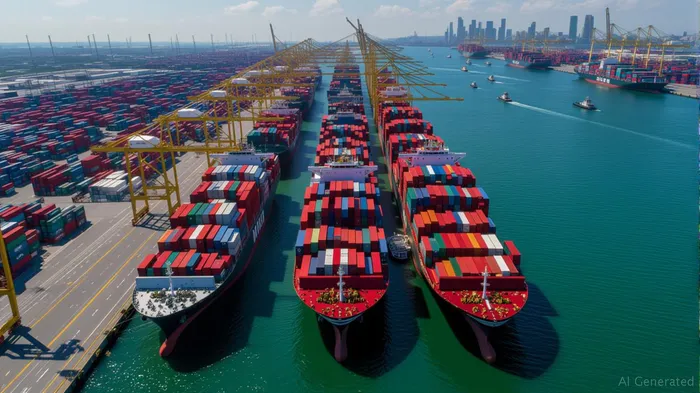
The Tariff-Driven Surge: Cause and Context
The current surge is fueled by two factors: retailers stockpiling goods ahead of the year-end holiday season and a last-minute scramble to avoid tariffs. A 90-day tariff pause, announced in May 2025, temporarily reduced U.S. tariffs on Chinese goods from 145% to 30%, creating a window for importers to replenish inventories. Port Executive Director Gene Seroka noted that cargo arrivals for the week of June 15 rose to 125,000 TEUs, nearing typical June volumes after May's 5% year-over-year decline to 716,619 TEUs—a two-year low.
However, the rebound remains fragile. Projections for July 2025 suggest a 27% drop in cargo volumes compared to July 2024, as tariffs are set to expire again in August. This volatility has left retailers walking a tightrope: accelerating imports now risks overstocking if demand weakens later, while delaying shipments could leave shelves bare by December.
Investment Opportunities: Ports, Logistics, and Exporters
- Port Infrastructure and Operators:
Ports like Los Angeles and Long Beach are investing in efficiency upgrades to handle fluctuating traffic. Investors might consider infrastructure-focused ETFs like the Global X U.S. Infrastructure Development ETF (PAVE) or individual operators such as International Business Machines (IBM) or engineering firms like Bechtel Group (though publicly traded equivalents might include Fluor CorporationFLR-- (FLR)).
Ports themselves, such as the Port of Los Angeles, are critical nodes in global trade. However, direct investment options are limited; instead, investors might look to real estate investment trusts (REITs) like PrologisPLD-- (PLD), which owns warehouses and distribution centers near ports.
- Logistics and Transportation Firms:
Companies like JB Hunt Transport ServicesJBHT-- (JBHT) and XPO LogisticsXPO-- (XPO), which handle last-mile delivery and cross-border freight, stand to benefit from increased cargo volumes. Their agility in adapting to tariff-driven shifts could drive earnings growth.
Meanwhile, railroads like Union PacificUNP-- (UNP) and logistics tech platforms like FourKites (a supply chain visibility firm) could see demand rise as companies seek smarter inventory management.
- Exporters Adapting to Trade Dynamics:
Firms diversifying supply chains away from tariff-heavy regions—such as those pivoting to Southeast Asia or Mexico—might outperform peers. For example, apparel brands using nearshoring or onshoring strategies (e.g., PVHPVH-- Corp, which owns Tommy Hilfiger and Calvin Klein) could mitigate tariff impacts.
Risks: Tariffs, Trade Policy, and Overstocking
The surge's sustainability hinges on trade policy outcomes. If tariffs remain elevated post-August, consumer goods prices could rise sharply, hurting demand and leaving ports with less traffic. The Port of Los Angeles warns that unresolved trade agreements could reduce product selection by year-end, squeezing retailers' margins.
Additionally, the rush to import ahead of tariffs may lead to overstocking, creating a glut by late 2025. This risk is especially acute in sectors like electronics and apparel, where demand is seasonal.
Investment Strategy: Balance Momentum with Caution
Investors should take a tactical approach:
- Short-term plays: Bet on logistics and port infrastructure stocks (e.g., JBHTJBHT--, PAVE) while tariffs drive near-term traffic.
- Long-term caution: Avoid overexposure to companies reliant on U.S.-China trade until a lasting deal emerges. Instead, focus on firms with diversified supply chains or those benefiting from broader e-commerce trends (e.g., AmazonAMZN-- Logistics partners).
Conclusion
The mid-July surge at the Port of Los Angeles is a fleeting victory in a prolonged trade war. While it signals temporary resilience in global supply chains, the lack of durable trade agreements keeps risks elevated. Investors would be wise to capitalize on the momentum in logistics and infrastructure while hedging against policy uncertainty—until tariffs fade from the horizon.





Comentarios
Aún no hay comentarios