
Porsche's Strategic Transition: Navigating the High-Stakes Shift to Electric Vehicles
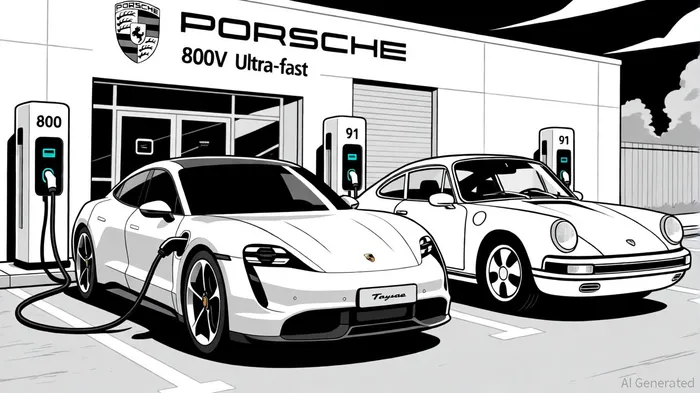
The luxury automaker sector is in the throes of a seismic shift, and Porsche AG is at the center of the storm. As the world grapples with the realities of slower-than-anticipated EV adoption, , and shifting consumer preferences, Porsche's recalibration of its product strategy offers a masterclass in navigating the high-stakes transition to electric vehicles. For investors, the question isn't just whether Porsche can survive this transition—it's whether it can thrive while balancing the demands of tradition, innovation, and profitability.
The Strategic Tightrope: Balancing Electrification and Combustion
Porsche's 2025 strategy is a textbook example of a luxury automaker walking a tightrope. The company has pivoted from its earlier all-in bet on EVs to a more pragmatic approach, blending (BEVs), , and combustion engines. This shift is driven by two key realities: the slower uptake of EVs in key markets like China and Europe, and the financial strain of depreciating assets and supply chain disruptions.
According to a report by Porsche's newsroom, the company is now launching its new SUV series above the Cayenne exclusively with combustion engines and plug-in hybrids, abandoning its earlier plan for a fully electric lineup [1]. This recalibration extends to the Panamera and Cayenne, which will remain in production until the 2030s [1]. While this strategy ensures short-term revenue stability, .
The financial implications are stark. , . These adjustments reflect the broader challenges of a luxury EV market that's growing but not yet mature. For investors, this is a red flag: Porsche is sacrificing near-term profitability to hedge against uncertain demand.
Competitor Moves and Market Realities
Porsche isn't alone in this balancing act. BMW and Mercedes-Benz are also recalibrating their strategies. Mercedes, for instance, . , prompting a partnership with BMW to share engine technology and mitigate tariff impacts [3]. BMW, meanwhile, is doubling down on a , offering a mix of powertrains to adapt to regulatory and market shifts [3].
The itself is a mixed bag. , , structural challenges persist. , particularly in emerging markets [2]. Porsche's Taycan, despite its performance credentials, has struggled to match the Macan's sales success, .
Opportunities in Innovation and Resilience
Yet, Porsche's strategy isn't without upside. The company's , , positions it as a leader in fast-charging innovation [4]. Moreover, . .
For investors, the key is to separate short-term pain from long-term potential. Porsche's ability to adapt its product mix while maintaining brand prestige is a strength. The company's motorsport heritage and premium positioning—bolstered by wins in and endurance racing—reinforce its image as a performance leader [4].
The Verdict: A High-Risk, High-Reward Play
Porsche's strategic transition is a high-stakes gamble. The company is navigating a perfect storm of U.S. tariffs, supply chain bottlenecks, and lukewarm EV demand in key markets. Yet, its ability to pivot without abandoning its EV ambitions—while maintaining profitability through combustion and hybrid models—demonstrates operational agility.
For investors, the risks are clear: near-term earnings pressure, regulatory uncertainties, and the possibility of being outpaced by rivals like TeslaTSLA-- or RivianRIVN--. But the opportunities are equally compelling. Porsche's brand equity, innovation in , and a luxury EV market poised for growth by 2030 make it a compelling long-term play—if it can weather the next few years.
In the end, Porsche's story isn't just about electric vehicles—it's about the broader challenge of balancing legacy and transformation. And in that arena, the stakes have never been higher.





Comentarios
Aún no hay comentarios