
Porsche AOS Failure: A Hidden Catalyst for Used Sports Car Depreciation and Aftermarket Opportunity
The Porsche AOS (Air-Oil Separator) system, a critical component in boxer-engine models, has emerged as a double-edged sword for investors and high-performance vehicle owners. While Porsche's strategic realignment toward combustion engines and hybrids has reshaped depreciation dynamics, the AOS failure-a recurring mechanical issue-has introduced unique risks and opportunities in the used car and aftermarket sectors. This analysis explores how AOS-related depreciation and repair demand are redefining investment strategies for Porsche enthusiasts and aftermarket stakeholders.
The AOS Failure: A Depreciation Accelerant
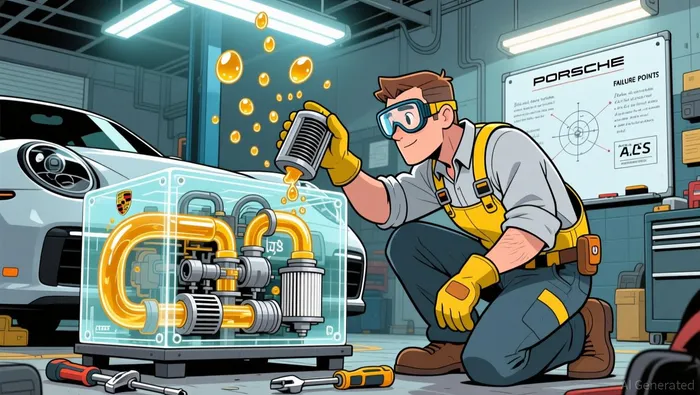
Porsche's AOS system, designed to separate oil from air in the crankcase ventilation system, is prone to failure in models like the 911, Boxster, and Cayman. When the AOS fails, it leads to oil contamination in the intake manifold, excessive exhaust smoke, and increased oil consumption-symptoms that can escalate to severe engine damage if unaddressed according to case studies from Atlantic Motorcar. These failures are not merely mechanical but directly impact residual values. For instance, the 2025 Cayman GT4 RS saw a 13% price drop, partly attributed to AOS-related concerns, while Taycan base models lost 16.9% of their value amid broader market shifts according to market analysis.
 The depreciation risk is amplified by Porsche's financial struggles. A 96% drop in profits and a $1.1 billion quarterly loss in 2025, driven by EV production delays and restructuring costs, have eroded consumer confidence according to financial reports. This financial instability indirectly pressures used car markets, as buyers grow wary of models with known mechanical vulnerabilities. For example, the 992-generation 911 has depreciated by 4.3–5.2% in six months, while older 991.1 and 991.2 models retained or even appreciated in value according to market data. This divergence underscores the importance of model-specific risk assessment for investors.
Aftermarket Opportunities: AOS Repairs as a Growth Engine
The AOS failure, while a depreciation risk, has also spurred robust demand in the aftermarket. Replacing the AOS is a high-cost, high-skill repair, with genuine Porsche units priced at £1,200 and motorsport-grade alternatives reaching £3,500 according to pricing data. Independent garages and specialty parts suppliers have capitalized on this niche, offering cost-effective solutions like the UAOS (Universal Air-Oil Separator) to mitigate repair expenses according to product information.
Broader industry trends further validate the potential for aftermarket growth. The global automotive aftermarket is projected to expand from $443.12 billion in 2025 to $565.73 billion by 2032, driven by aging vehicle fleets and the rise of electric vehicles according to industry reports. For Porsche, the shift toward combustion and hybrid models-rather than fully electric-extends the lifecycle of older platforms, increasing the demand for specialized repairs. In the U.S. alone, the light-duty aftermarket is expected to grow by 5.1% in 2025, with AOS-related services likely to contribute to this trend according to market projections.
Strategic Investment Considerations
For investors, the AOS issue highlights two key strategies: risk mitigation through proactive maintenance and capitalizing on aftermarket demand.
- Risk Mitigation:
- Model Selection: Prioritize models with strong depreciation resilience, such as the 991.1 and 991.2 911s, which have shown minimal value loss according to market analysis. Avoid newer 992 models and Taycans, which face higher depreciation risks due to AOS issues and market volatility.
Preventive Maintenance: Adhere to AOS replacement schedules (every 6 years or 75,000 miles) and use low-volatility motor oil to reduce oil consumption and intake deposits according to technical guidance.
Aftermarket Opportunities:
- Parts and Services: Invest in businesses offering AOS replacements, UAOS alternatives, and diagnostic tools. The demand for these services is expected to grow alongside Porsche's aging fleet.
- E-commerce Integration: Leverage the rise of automotive e-commerce, where online sales of parts and services are projected to grow at 5.4% annually through 2030 according to e-commerce trends.
Conclusion: Balancing Risk and Reward
The Porsche AOS failure exemplifies how mechanical vulnerabilities can intersect with macroeconomic trends to create both depreciation risks and investment opportunities. While depreciation rates vary by model, the aftermarket's resilience-fueled by aging vehicles and Porsche's strategic shifts-offers a compelling avenue for investors. For high-performance vehicle owners, proactive maintenance and informed model selection remain critical to preserving asset value. As the automotive landscape evolves, the AOS issue serves as a reminder that even the most iconic brands are not immune to the interplay of engineering challenges and market forces.







Comentarios
Aún no hay comentarios