
Popeyes' Strategic Expansion in Mexico and Its Implications for Fast-Food Growth in Emerging Markets
The fast-food industry's global expansion has long hinged on the ability to balance brand consistency with cultural customization. Popeyes' recent foray into Mexico exemplifies this duality, offering a compelling case study for investors seeking to capitalize on underpenetrated markets and localized brand adaptation. With plans to open over 300 new restaurants across Mexico by 2035, Popeyes is leveraging strategic partnerships, menu innovation, and regional expertise to tap into Latin America's fastest-growing quick-service restaurant (QSR) market, according to a PR Newswire release.
Localized Adaptation: A Recipe for Relevance
Popeyes' success in Mexico hinges on its ability to marry its signature Louisiana-style cuisine with local tastes. The brand's emphasis on bold, Cajun-inspired flavors-such as its globally popular Chicken Sandwich-aligns with Mexico's affinity for bold seasonings and chicken-centric dishes, as QSR Magazine reported. As ProvisionerOnline summarizes, a report by Restaurant BrandsQSR-- International (RBI), Popeyes' parent company, finds the menu's adaptability is a key differentiator in a competitive QSR landscape where affordability and novelty drive consumer choices.
This strategy is not merely theoretical. By partnering with regional franchisees like Star Louisiana (West region), Border Crunch (Northwest), Grupo Euro (Central), and Grupo Berny (Southeast), Popeyes is embedding itself into local ecosystems. These partners bring operational expertise and cultural insights, ensuring that menu items and marketing resonate with Mexican consumers, as Finviz reported. For instance, while the Chicken Sandwich remains a cornerstone, Popeyes' menu in Mexico is expected to incorporate local ingredients or complementary sides to enhance appeal-a tactic that has proven successful in markets like Italy and the Balkans, according to IMARC Group.
Market Underpenetration: A Goldmine for Growth
Mexico's QSR market remains significantly underpenetrated, particularly in secondary cities and rural areas. In 2024, the market size reached $4.0 billion, with QSRs accounting for 57% of the foodservice sector due to their affordability and convenience, according to Mordor Intelligence. However, the market is projected to grow at a compound annual rate of 3.99%, reaching $5.7 billion by 2033, Fortune Business Insights projects. This growth is fueled by urbanization, rising disposable incomes, and the digitalization of food delivery-a trend Popeyes is actively embracing through app-based ordering and third-party delivery integrations, per RBI's news release.
Popeyes' expansion into Mexico is particularly timely given the country's fragmented QSR landscape. While international chains like McDonald's and KFC dominate urban centers, regional players and smaller operators still hold significant market share. By targeting both urban and tier-2/3 cities, Popeyes aims to capture untapped demand while creating thousands of local jobs-a dual benefit that aligns with both investor returns and corporate social responsibility goals, as Business News Today analysis notes.
Challenges and Risks: Navigating a Complex Landscape
Despite its promising strategy, Popeyes faces hurdles. Commodity inflation and supply chain disruptions could pressure margins, particularly in a country where logistics costs vary widely across regions, the Simply Wall St analysis warns. Additionally, consumer preferences in Mexico are diverse, with regional variations in taste and dining habits. For example, while the Northwest favors spicier flavors, the Southeast has a stronger tradition of slow-cooked, marinated meats. Popeyes' ability to balance consistency with flexibility will be critical to long-term success.
Implications for Emerging Market Growth
Popeyes' Mexican expansion underscores a broader trend: the importance of localized adaptation in emerging markets. For investors, this strategy highlights the value of partnerships with regional experts and the need to align product offerings with cultural nuances. The QSR sector's scalability-driven by franchise models and digital integration-further amplifies its appeal in markets like Mexico, where urbanization and digital adoption are accelerating.
However, success is not guaranteed. As noted in a 2025 analysis by Business News Today, Popeyes must ensure that its 300-unit target translates into sustainable unit economics. This includes optimizing labor costs, managing supply chains, and maintaining brand differentiation in a crowded market.
Conclusion
Popeyes' foray into Mexico represents a calculated bet on localized adaptation and market underpenetration. By combining its global brand equity with region-specific strategies, the chain is positioning itself to capitalize on one of Latin America's most dynamic QSR markets. For investors, this expansion offers a blueprint for navigating emerging markets: prioritize cultural relevance, leverage local partnerships, and invest in scalable infrastructure. If executed effectively, Popeyes' Mexican venture could not only boost its own growth but also set a precedent for fast-food chains seeking to thrive in diverse, high-potential regions.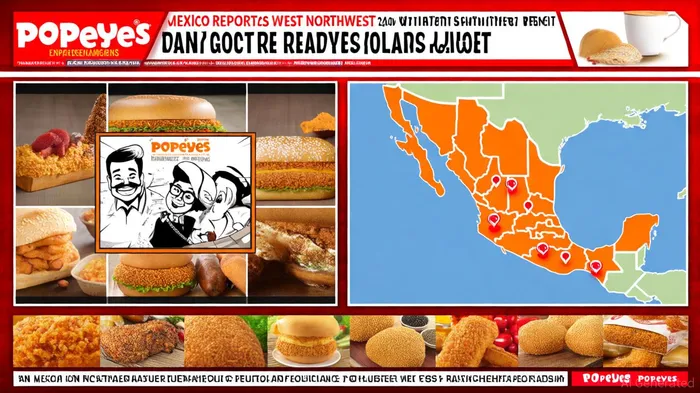







Comentarios
Aún no hay comentarios