
Why Pope Leo XIV's Name Choice Signals a New Era for Workers and Investors
The election of Pope Leo XIV in 2025 marked a historic shift, not just for being the first American-born pontiff, but for the symbolism embedded in his papal name. By choosing “Leo,” he invoked a legacy tied to Pope Leo XIII, the 19th-century reformer whose encyclical Rerum Novarum laid the groundwork for modern Catholic social teaching. This choice is no accident: it hints at a broader societal reckoning with automation, workers’ rights, and the ethical challenges of the AI-driven Industrial Revolution now underway.
The Historical Blueprint: Leo XIII and the First Industrial Revolution
Pope Leo XIII’s 1891 encyclical Rerum Novarum emerged during the height of the Industrial Revolution, addressing exploitation of workers, the role of labor unions, and the moral imperative to balance profit with human dignity. Fast-forward to today, and we’re in the throes of a Fourth Industrial Revolution, driven by AI, automation, and robotics. The parallels are stark.
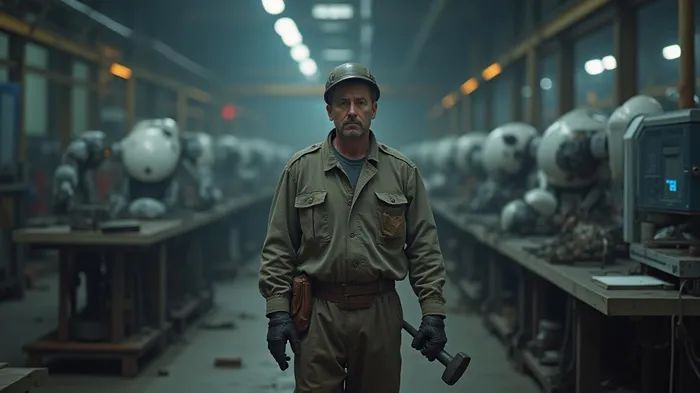
The New Industrial Revolution and Its Discontents
The AI boomBOOM-- is reshaping labor markets with unprecedented speed. According to the World Economic Forum, automation could displace 5.2 million jobs by 2023, while creating 2.3 million new roles—a net loss of 2.9 million jobs. The sectors most at risk? Manufacturing, retail, and transportation, where have surged.
Yet, as Pope Leo XIV’s name choice implies, this technological leap requires a moral framework. The Pope’s focus on social justice—rooted in his work with marginalized communities—aligns with calls for ethical AI development, fair wages, and retraining programs.
Investors: Navigating the New Terrain
For investors, the intersection of technology and social responsibility offers both risks and opportunities.
1. AI Ethics: A Growing Investment Theme
Companies prioritizing AI ethics—such as those developing transparent algorithms or investing in worker retraining—are gaining traction. For instance, IBM’s AI Fairness 360 Toolkit and Microsoft’s Responsible AI initiatives have attracted institutional capital. Meanwhile, sectors like robotics and automation are booming, but their long-term viability hinges on societal acceptance.
2. Workers’ Rights and Labor Market Resilience
Investors are increasingly scrutinizing companies for their labor policies. Sectors with strong worker protections—such as healthcare and education—are outperforming those with poor labor practices. For example, healthcare stocks (e.g., UnitedHealthcare (UNH), CVS (CVS)) have shown resilience during economic downturns, partly due to their stable, high-touch workforce.
Conversely, companies with labor controversies, such as Amazon (AMZN) over its warehouse conditions, face reputational and legal risks.
3. The Green Tech Connection
Pope Leo XIV’s environmental advocacy adds another layer. The clean energy transition is creating jobs in renewable sectors, which now employ over 12 million people globally—a figure expected to double by 2030. Investments in solar (e.g., First Solar (FSLR)) and EV manufacturing (e.g., Tesla (TSLA)) are tied not just to environmental goals but also to job creation in regions left behind by traditional industries.
The Bottom Line: Social Justice as a Profitable Strategy
The data is clear: companies aligning with social justice principles outperform their peers. A 2023 study by MSCI found that firms with strong environmental, social, and governance (ESG) scores delivered 6% higher returns than those with weaker scores. Meanwhile, shows tech workers out-earning manufacturing workers—a gap that could grow without intervention.
Pope Leo XIV’s name choice is a clarion call for investors to prioritize ethical tech adoption, fair labor practices, and inclusive growth. As automation reshapes the global economy, the “Leo” legacy reminds us that profit and purpose must coexist.
Conclusion: The Fourth Industrial Revolution is here, but its trajectory depends on how we balance innovation with humanity. Investors ignoring the lessons of Pope Leo XIII—now echoed by Pope Leo XIV—risk missing out on sustainable growth opportunities. Companies leading in AI ethics, worker equity, and green tech are not just doing good; they’re positioning themselves to thrive in an era where moral leadership is a competitive advantage. As history shows, revolutions that neglect the human element never last.







Comentarios
Aún no hay comentarios