
Pope Francis’s Passing Leaves Argentina at an Economic Crossroads
Argentines and the global Catholic community mourned the death of Pope Francis on April 21, 2025, marking the end of a papacy that intertwined with Argentina’s political and social struggles. The Vatican’s 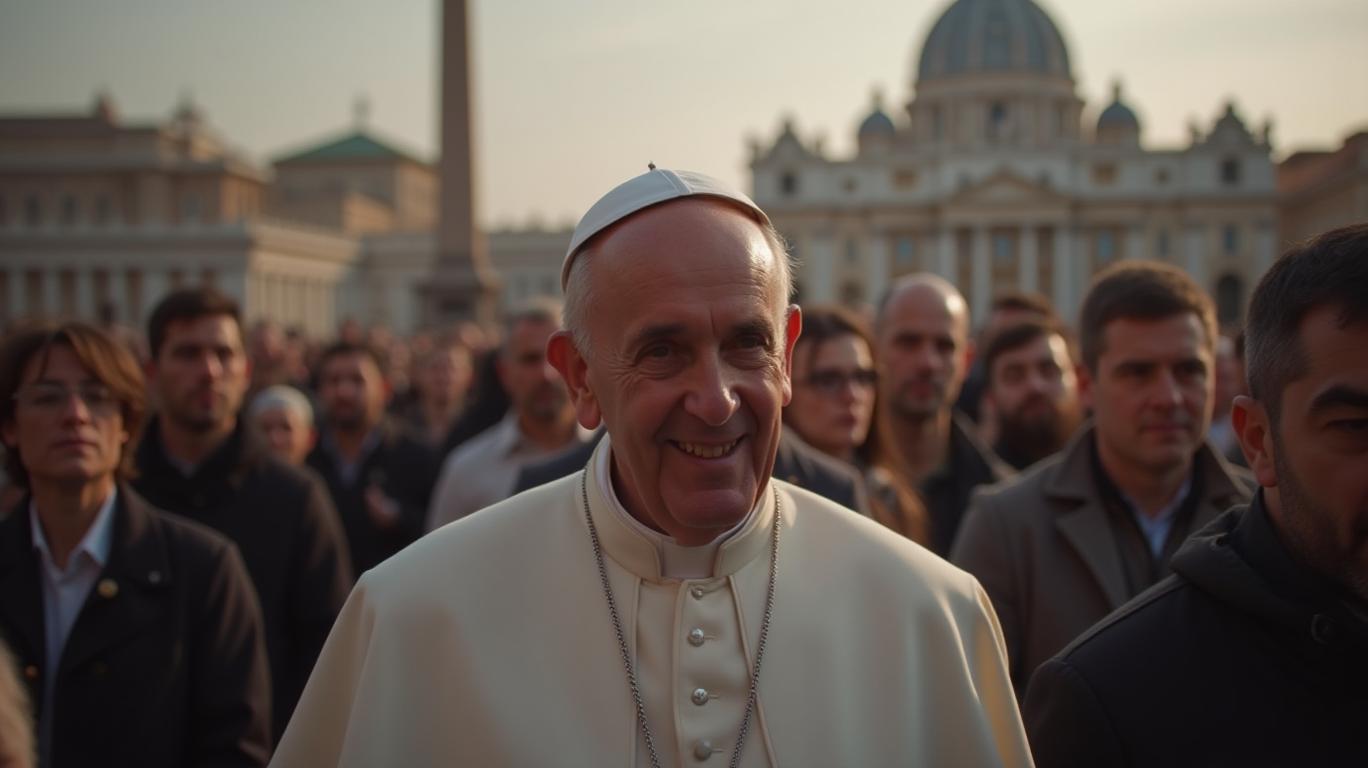 became a focal point for reflection, but for investors, the focus is on the economic implications for Argentina—a nation at a crossroads between fiscal reform and social equity.
Political Stability and Fiscal Policy: A Delicate Tightrope
President Javier Milei’s neoliberal agenda, which prioritizes austerity and market liberalization, faces both opportunities and risks in the post-Francis era. Francis’s advocacy for fiscal responsibility aligns with Milei’s rhetoric, potentially bolstering investor confidence in short-term stability. However, their ideological divide on poverty alleviation remains stark.
reveals volatility tied to inflation (over 130% in 2023) and currency fluctuations. The peso has lost over 70% of its value against the U.S. dollar since 2019, complicating foreign investment. While political stability post-Francis may attract capital, Milei’s cuts to social spending—a stark contrast to the Pope’s “pope of the poor” ethos—risk fueling unrest.
Tourism and Pilgrimages: A Fleeting Economic Lift
The Vatican’s modest economy, with a GDP of €550 million in 2022, and Argentina’s tourism sector—contributing 8% to GDP in 2023—stand to benefit from a surge in pilgrimages to Francis’s birthplace in Buenos Aires and his final resting place in Rome. However, infrastructure challenges, including unreliable energy grids and inflation eroding purchasing power, limit long-term gains.
Social Safety Nets: The Vanishing Moral Anchor
The Catholic Church’s role as a social safety net is critical in Argentina, where 28% of the population lives in poverty. Institutions like Hogar deDE-- Cristo, a drug rehabilitation center, and schools like Our Lady of Fatima (educating 3,000 students) fill gaps left by state services. Without Francis’s moral authority to pressure the government, poverty could worsen, destabilizing social cohesion.
Geopolitical Shifts and the Vatican’s New Direction
The conclave to elect Francis’s successor could reshape Argentina’s diplomatic ties. A fiscally conservative pope might align with Milei’s policies, while a progressive leader could amplify calls for corporate social responsibility and climate action. A non-European pope could redirect Vatican priorities toward Africa or Asia, sidelining Argentina in favor of emerging markets.
Currency Volatility and Structural Risks
Argentina’s economy remains vulnerable. shows the currency’s steady decline, while inflation is projected to stay above 60% in 2025. Structural issues—reliance on imported goods, weak fiscal discipline—persist. Milei’s reforms, including wage cuts and subsidy reductions, have not resolved these challenges, with GDP contracting by 4% in 2023.
Conclusion: Balancing Market Freedom and Social Equity
Pope Francis’s death underscores Argentina’s economic duality: a resource-rich nation hamstrung by inequality (the top 1% holds 25% of wealth) and political polarization. Investors must weigh short-term gains in tourism and infrastructure projects against systemic risks like inflation and currency instability.
The path forward hinges on whether Argentina can balance Milei’s market-driven policies with the social equity ideals Francis championed. Without addressing poverty (28% of the population) and fiscal mismanagement, recovery will remain elusive. As one analyst noted, “Faith in recovery may be the only thing left to pray for.”
highlights the urgency: sustainable growth requires more than austerity. It demands a renewed commitment to the marginalized—a lesson Francis’s legacy demands Argentina not forget.







Comentarios
Aún no hay comentarios