
Pomona Investment Fund’s Decade of Resilience: Why 2025 is the Time to Embrace Secondaries for All-Weather Returns
As the Pomona Investment Fund (PIF) celebrates its 10-year anniversary, investors are taking note of a rare opportunity: access to institutional-grade private equity secondaries with a proven track record of navigating market cycles. With $1.9 billion in assets under management (AUM) as of December 2024 and a $130 million AUM surge in Q1 2025, PIF has positioned itself as a leader in reducing risk while capitalizing on the growing secondaries market. Amid 2025’s volatile macro landscape—from geopolitical tensions to looming recession risks—this fund offers a compelling case for investors seeking steady returns and diversification.
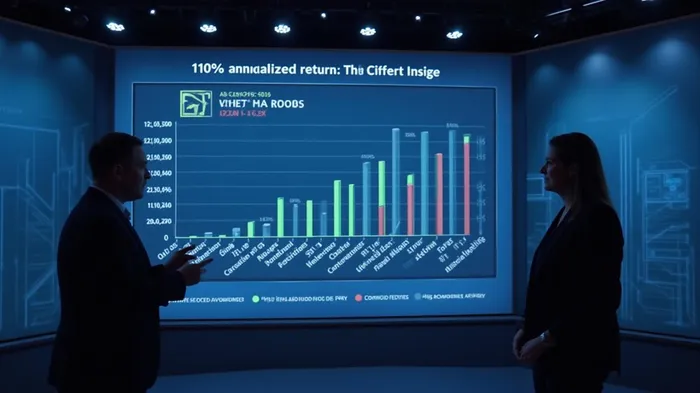
The All-Weather Strategy: Mitigating Risk Through Secondaries
PIF’s cornerstone is its focus on private equity secondaries, a strategy that buys into mature funds (typically 70–90% called capital). This approach sidesteps the “J-curve” risk inherent in primary investments, where capital is locked up for years before generating returns. By acquiring seasoned assets, PIF accelerates cash flow: its portfolio now boasts 27% average annual liquidity and 8% annual distributions to shareholders, ensuring steady payouts even in uncertain markets.
This strategy was battle-tested during the 2008 financial crisis and the 2020 pandemic. For instance, PIF’s $750 million 2012 transaction—a landmarkLARK-- deal during the post-crisis recovery—demonstrated its ability to identify undervalued assets and capitalize on market dislocations. Today, with global private equity secondaries markets projected to exceed $160 billion in 2025, PIF is poised to repeat this success.
Why Now? 2025’s Perfect Storm for Secondaries
The current macro environment is rife with uncertainty: central banks are tightening liquidity, geopolitical conflicts are spiking energy costs, and tech valuations remain volatile. In this climate, traditional equities and fixed income may struggle, but PIF’s secondaries-focused strategy shines.
- Diversification Without Lockups: PIF’s portfolio spans 327 underlying funds and 2,600 global companies across industries like manufacturing (e.g., TerraVest/Entrans), education (Nord Anglia’s $14.5 billion exit), and tech (Hexaware’s IPO). This multi-sector exposure reduces reliance on any single market.
- Liquidity in Tough Times: Unlike primary funds, PIF’s closed-end structure and secondary focus avoid multi-year lockups. Its 27% annual liquidity reserves provide a buffer to pivot into safer assets (e.g., cash or bonds) during downturns.
- Valuation Discipline: PIF’s track record of buying below intrinsic value—such as its TerraVest/Entrans deal at a 7x EBITDA multiple—ensures it enters cycles with a margin of safety.
Accessibility Meets Institutional Expertise
PIF breaks down barriers to private equity investing: a $25,000 minimum opens the door to accredited investors who previously lacked access to such strategies. Backed by Pomona Capital’s $19.3 billion in total commitments across its funds and 30+ years of institutional experience, PIF combines scale with agility.
A Call to Action: Secure Your Position Now
With 2025’s risks mounting and secondaries markets poised to grow, PIF offers a rare combination: low volatility, high liquidity, and a decade of consistent returns. Investors who act now can capitalize on discounted pricing in secondary deals while diversifying beyond volatile public markets.
The fund’s history speaks for itself: through crises and booms alike, PIF has delivered. As the next market cycle unfolds, this is no time to hesitate.
Investors should carefully review PIF’s prospectus and risk disclosures before committing. Past performance does not guarantee future results.







Comentarios
Aún no hay comentarios