
Polymarket's Nobel Prize Betting Scandal: Implications for Prediction Markets and Regulatory Risk
The Mechanics of a Market Gone Rogue
Prediction markets like Polymarket thrive on the aggregation of collective wisdom, but their unregulated nature creates fertile ground for exploitation. Unlike traditional financial markets, Polymarket operates offshore and does not prohibit insider trading, leaving it in a legal gray area. The platform's recent $2 billion investment from Intercontinental ExchangeICE-- and its plans to re-enter the U.S. market in 2026 underscore its growing influence, according to Coindoo.
Regulatory Scrutiny in a Borderless World
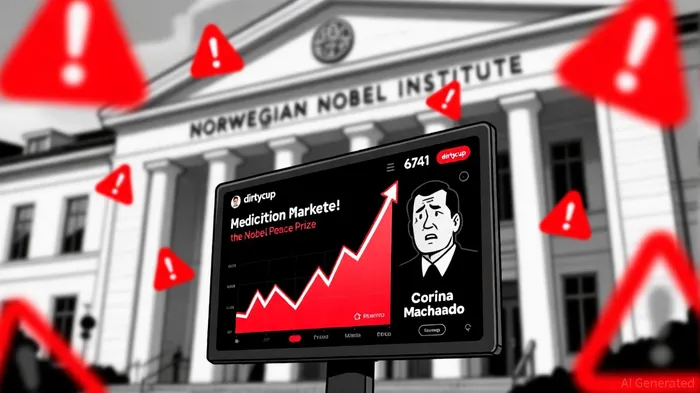
The Norwegian Nobel Institute has launched an internal review to determine whether confidential information was leaked, a move that could set a precedent for how institutions respond to digital market manipulation. According to a Blockworks report, Norwegian officials suspect insider knowledge was used to exploit the platform, raising questions about the integrity of the Nobel selection process. Meanwhile, Polymarket's silence on the matter-despite being a key player in the incident-has drawn criticism. The platform's refusal to comment reflects a broader tension: decentralized systems often lack accountability mechanisms, especially when operating outside jurisdictions like the U.S., as Cryptopolitan reports.
The Risks of a Wild West Ecosystem
The scandal underscores a paradox at the heart of crypto-native prediction markets. While they democratize access to speculative trading, they also enable scenarios where a single actor-or a coordinated group-can distort outcomes for profit. In traditional markets, insider trading is a felony; in Polymarket's world, it's a loophole. This asymmetry is not lost on regulators. The U.S. Securities and Exchange Commission (SEC) has long warned about the risks of unregulated crypto platforms, and this incident could accelerate calls for stricter oversight.
A Future of Innovation or Regulation?
Polymarket's upcoming POLY token launch in 2026, designed to incentivize ecosystem participation, represents a bold step toward mainstream adoption. However, the Nobel scandal complicates this narrative. If the platform cannot demonstrate robust safeguards against insider trading, its U.S. relaunch-and the broader legitimacy of prediction markets-could falter. As stated by Matthew Modabber, Polymarket's CMO, the token is meant for "genuine utility," but utility means little without trust.
The incident also raises philosophical questions about the role of prediction markets in society. Are they tools for forecasting, or do they risk becoming vectors for manipulation? The answer may depend on whether platforms like Polymarket can reconcile their decentralized ethos with the need for accountability.
Conclusion
The Nobel Prize betting scandal is a microcosm of the broader crypto ecosystem's challenges. It reveals the tension between innovation and regulation, the risks of unregulated financial experimentation, and the difficulty of enforcing rules in a borderless digital world. For investors, the takeaway is clear: while prediction markets like Polymarket offer exciting opportunities, they also carry unique risks that demand careful scrutiny. As the Norwegian investigation unfolds and Polymarket navigates its U.S. ambitions, the incident serves as a cautionary tale for the future of decentralized finance.





Comentarios
Aún no hay comentarios