
Polygon Shifts to Single Leadership Model, Phases Out zkEVM Chain
Polygon co-founder Sandeep Nailwal has announced a significant shift in the network's governance structure, transitioning to a singular leadership model. This change is seen as a strategic response to inefficiencies that have hindered Polygon's progress. On June 11, Nailwal took over as CEO of the Polygon Foundation, emphasizing the need for clear direction and focused execution to drive the project forward.
Under Nailwal's sole leadership, Polygon will sunset its zkEVM chain and concentrate on real-world assets (RWAs) and stablecoin payments through Polygon PoS. The network will leverage its AggLayer to pursue its vision of building the internet of blockchains. Polygon claims to be in good financial condition, which supports this strategic pivot.
Nailwal's decision to take sole authority mirrors a similar move by Ethereum co-founder Vitalik Buterin, who declared sole authority over decisions regarding the Ethereum Foundation's leadership. Nailwal described his role as a director, emphasizing the need for streamlined decision-making to accelerate Polygon's development. This shift comes after Polygon's rise in 2021 and 2022, during which the project sought to institutionalize by adopting structures similar to large companies. The dissolution of the board leaves Nailwal as the sole decision-maker, aiming to reduce the time taken for critical decisions.
Nailwal's leadership style, shaped by his upbringing, is characterized by a "servitude mentality," which he believes has helped build Polygon's early community. He credits this instinct with fostering a strong community by personally engaging with retail users. However, he acknowledges the need to balance this approach with the demands of leading a growing organization.
The crypto industry is evolving, moving away from valuing theoretical research and toward rewarding real-world traction and revenue. Nailwal believes that this shift is already underway, with a greater focus on practical applications and revenue generation. This evolution aligns with Polygon's new focus on RWAs and stablecoin payments, which are seen as key use cases for the network.
Following Nailwal's announcement, questions have surfaced about the health of zkEVM, which is set to be phased out by 2026. Once known as Hermez Network and acquired in 2021 for 250 million MATIC (POL), zkEVM was Polygon's bid for Ethereum equivalence. However, it failed to meet user expectations and struggled to generate fees, operating at a loss. With zkEVM fading, Polygon's attention turns to its PoS chain and AggLayer infrastructure, which host significant value and activity.
Nailwal believes that meaningful NFTs will continue to endure, comparing speculative NFTs to memecoins. He sees the underlying NFT technology as a key player for tokenizing assets, which can either be fungible or non-fungible. Polygon's focus on actual NFTs and stablecoin payments aligns with global trends, including the US Senate's passage of the GENIUS stablecoin bill and institutional interest in RWAs.
Polygon's road to 100,000 transactions per second (TPS) under the Gigagas roadmap is a significant milestone. This goal matches modern rivals that are scaling their networks or launching faster blockchains. Nailwal and Polygon are betting it all on this roadmap, aiming to prove the network's relevance in a maturing crypto ecosystem. The community's reaction to Nailwal's leadership has been mixed, with some praising his wartime CEO stance while others point to the costly zkEVM detour.
Nailwal believes that a faster decision-making process is what the moment demands, and he is ready to go all in to achieve Polygon's goals. Whether this bet on himself pays off will likely become clear by the end of the year, as the network races to hit its TPS milestone and prove its relevance in the evolving crypto landscape. 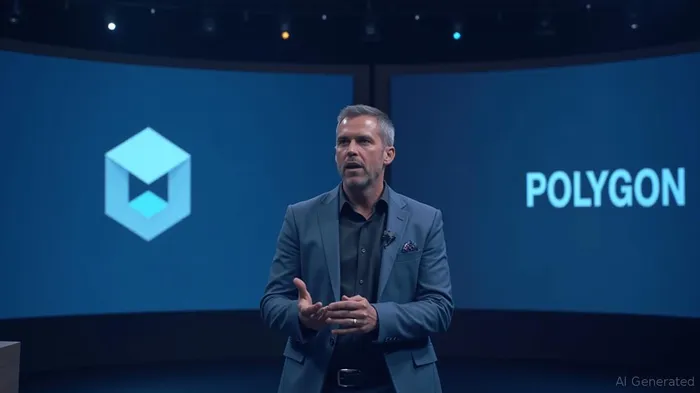






Comentarios
Aún no hay comentarios