
Polygon (MATIC) as a Scalable Ethereum Layer-2 Play: Can It Reach $1 by 2030?
Technological Innovation: The Foundation of Scalability
Polygon's evolution from a simple sidechain to a multi-chain ecosystem underscores its commitment to addressing Ethereum's limitations. The launch of Polygon 2.0, scheduled for September 2024, marks a pivotal upgrade. This rebranding includes the migration of the MATIC token to a new POL token, designed to enhance governance, staking, and utility within the ecosystem, as outlined in a Flitpay forecast. The POLPOL-- token's introduction is expected to streamline transaction finality and incentivize long-term participation, aligning with Ethereum's post-merge focus on efficiency.
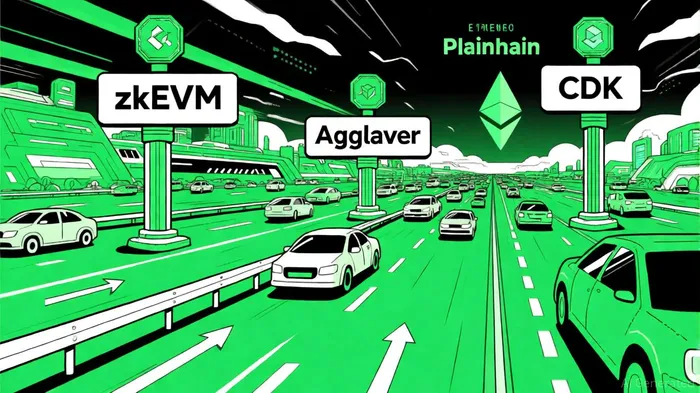
Key innovations include Polygon zkEVM, which combines zero-knowledge proofs with EthereumETH-- Virtual Machine (EVM) compatibility, enabling near-instant transactions at a fraction of the cost. By Q1 2025, Polygon zkEVM's Total Value Locked (TVL) surged to $312 million, up from $92 million in mid-2024, according to CoinLaw statistics. Additionally, the Agglayer initiative, launched in February 2025, introduced pessimistic proofs for cross-chain interoperability, enhancing security while reducing latency, according to a Messari report. These advancements position Polygon as a leader in hybrid Layer-2 solutions, balancing throughput with trustless security.
Adoption Metrics: A Network on the Rise
Polygon's adoption metrics paint a picture of sustained growth. As of March 2025, its TVL reached $4.12 billion, a 93% year-over-year increase, per CoinLaw statistics. DeFi protocols account for 76% of this TVL, with AaveAAVE--, QuickSwap, and Balancer leading the charge. Meanwhile, Polygon's transaction volume has exploded: daily transactions on the PoS chain averaged 8.4 million in Q1 2025, up from 4.6 million in Q1 2024, as reported by CoinLaw. On February 16, 2025, the network processed a record 10.3 million transactions in a single day, according to the same CoinLaw statistics.
Cost efficiency remains a core differentiator. Average gas fees on Polygon hover at $0.0063, compared to Ethereum's $1.72, per CoinLaw data. During peak activity, Ethereum's fees can spike to $14+, while Polygon rarely exceeds $0.02. This cost advantage has translated into tangible savings: users saved $8.9 million in gas fees during January 2025 alone, according to CoinLaw's analysis.
Competitive Positioning: Outpacing Rivals
Polygon's dominance in the Layer-2 space is underscored by its ability to outperform competitors like OptimismOP-- and ArbitrumARB--. In Q1 2025, Polygon processed 30% of all Ethereum L2 transactions, per CoinLaw statistics, a figure bolstered by its 45,000+ dApps and 420 enterprise partnerships, according to a CoinLaw comparison. Major brands like Nike, Starbucks, and Walmart have integrated Polygon for NFTs and supply chain solutions, as detailed by CoinLaw.
Comparative metrics highlight Polygon's edge:
- Transaction Volume: Polygon averaged 68 million daily transactions in 2025, double Ethereum's 34 million, per the CoinLaw comparison.
- Gas Fees: 83% of Polygon transactions cost less than $0.01, versus 5% on Ethereum, based on the CoinLaw comparison.
- Ecosystem Growth: Over 85% of Ethereum dApps migrating to L2 in 2024–25 prioritized Polygon, CoinLaw reports.
Optimism, while ranked higher in cryptocurrency rankings (#61 vs. Polygon's #118), lags in enterprise adoption and transaction volume, according to a BitDegree comparison. This gap suggests Polygon's first-mover advantage in enterprise partnerships and developer tools is a key differentiator.
Price Projections and Market Catalysts
Current price targets for MATIC are bullish. By 2025, estimates range from $3.84 to $6.25, with an average of $5.045, according to the Flitpay forecast cited above. By 2030, the token could reach $10.4, averaging $8.55 in that same forecast. These projections hinge on three factors:
1. Polygon 2.0 Migration: The POL token's launch could drive demand through enhanced utility and staking rewards.
2. Bitcoin Halving (April 2024): A potential bull run in crypto markets could spill over to Ethereum and its Layer-2 solutions.
3. Ethereum's Progress: Upgrades like Ethereum 2.0 and the rise of rollups will amplify Polygon's role as a scaling infrastructure.
However, risks remain. Competition from Arbitrum's optimistic rollups and Optimism's growing TVL could erode market share. Regulatory shifts and macroeconomic volatility also pose threats.
Conclusion: A $1 Target Within Reach?
Polygon's trajectory suggests a strong case for optimism. Its technological depth, cost efficiency, and ecosystem growth create a compelling narrative for long-term value. While a $1 price tag by 2030 is ambitious, the data supports the possibility, especially if Polygon continues to outpace competitors and secure enterprise adoption. Investors should monitor the POL token's performance post-September 2024 and the broader Ethereum ecosystem's evolution.







Comentarios
Aún no hay comentarios