
Polygon's Expansion in Stablecoin Payments: Scaling Infrastructure and Merchant Adoption as Catalysts for Token Demand and Ecosystem Value
Scaling Infrastructure: A Foundation for Global Payments
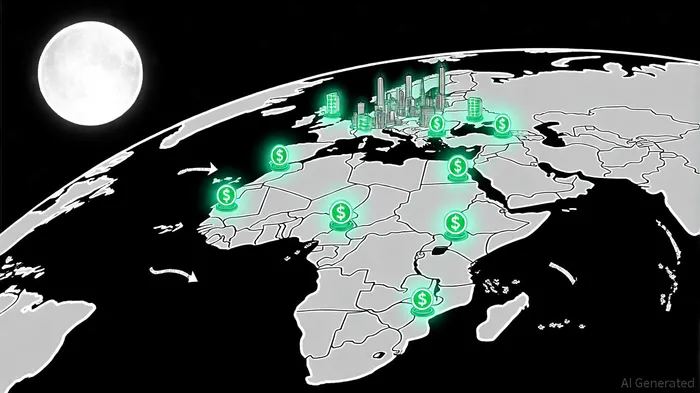
Polygon's infrastructure has evolved into a robust Layer 2 solution, enabling low-cost, high-speed transactions ideal for stablecoin settlements. The partnership with Flutterwave, one of Africa's largest fintech firms, exemplifies this shift. By deploying Polygon's blockchain, Flutterwave is rolling out a stablecoin-powered cross-border payment network across 34 African countries, targeting enterprises first and expanding to consumer remittances by 2026, according to a Coinotag article. This system reduces transaction fees to as low as $0.01 and cuts settlement times to seconds, a stark contrast to traditional banking's days-long delays and 6%+ fees, per a Bitget report.
The integration of stablecoins like USDCUSDC-- and USDTUSDT-- is particularly significant in regions grappling with currency instability, such as Nigeria, where local fiat devaluation has eroded trust in traditional financial systems. By offering a stable value store, Polygon's infrastructure not only facilitates remittances but also supports broader financial inclusion, as noted by Bitget.
Merchant Adoption and Ecosystem Expansion
Merchant adoption is accelerating Polygon's ecosystem growth, with partnerships extending beyond payments into sectors like telecom and retail. For instance, Polygon's collaboration with Jio, India's largest telecom provider with 477 million users, is set to integrate blockchain into Jio's retail and digital services, enhancing scalability and user experience, according to a CryptoRobotics article. Such partnerships create flywheels of adoption, as enterprises leverage Polygon's infrastructure to reduce operational costs and improve liquidity.
Data from Chainalysis underscores the economic impact, with a BitDegree report noting that stablecoin remittances in Sub-Saharan Africa are 60% cheaper than traditional methods-a trend amplified by Polygon's low-fee model. Additionally, Polygon's CDK (Customizable Data Availability) chains processed 3.2 million transactions in a single day in 2025, reflecting robust infrastructure utilization, as reported by CryptoRobotics. This surge in transaction volume is a direct indicator of growing ecosystem value, as more users and enterprises anchor their financial activities on the network.
Token Demand and Economic Implications
The MATIC token's role in stablecoin cross-border transactions is expanding rapidly. As of Q1 2025, transaction volume on Polygon CDK chains grew by 240% compared to Q4 2024, driven by enterprise and consumer adoption, according to CoinLaw statistics. This growth is tied to MATIC's utility in gas fees and staking, creating a deflationary pressure as demand for the token rises.
Moreover, regulatory advancements in African markets-such as Nigeria's digital asset framework-are fostering a conducive environment for Polygon's expansion. These developments reduce friction for institutional adoption, potentially attracting capital inflows that further bolster MATIC's value proposition, as noted by Bitget.
Investment Outlook
Polygon's infrastructure and merchant partnerships are not just technical upgrades-they are economic catalysts. By addressing inefficiencies in global payments and aligning with regulatory progress, the platform is positioning itself as a critical node in the stablecoin economy. For investors, the interplay between transaction volume growth, token utility, and ecosystem expansion presents a compelling case for long-term value creation.
As the world shifts toward digital finance, Polygon's ability to scale and adapt will determine its trajectory. With Africa's financial landscape undergoing rapid transformation and enterprise demand for blockchain solutions rising, the platform's ecosystem value is poised for sustained growth.






Comentarios
Aún no hay comentarios