
The Political Volatility of Executive Power and Its Impact on Market Stability
The U.S. political landscape has become a volatile arena where executive power and institutional norms clash, creating ripple effects across global markets. As the 2024 election cycle unfolds, the interplay between polarized governance and corporate strategy has never been more critical. This analysis examines how the Trump administration's 2019 clash with dissenting GOP senators over Venezuela, coupled with broader election-year dynamics, has reshaped risk profiles in defense, energy, and foreign policy-driven sectors.
Institutional Fragility and the Venezuela Case Study
The 2019 Venezuela intervention epitomizes the fragility of U.S. governance under polarization. When President Trump unilaterally captured Nicolás Maduro and asserted control over Venezuela's oil infrastructure, five GOP senators-including Todd Young and Lisa Murkowski-defied party loyalty to invoke the War Powers Act, demanding congressional oversight. This intra-party fracture underscored a broader erosion of institutional cohesion, as Trump accused the senators of "betraying the GOP," while they defended their stance as a check on executive overreach.
The market response was equally telling. While Venezuela's oil reserves theoretically promised a boost to global energy supplies, the reality was mired in uncertainty. Analysts noted that short-term oil price volatility was limited, but long-term gains hinged on political stability and massive reinvestment-a scenario fraught with risk. Meanwhile, gold prices surged as investors sought safe-haven assets amid geopolitical tensions. This duality-strategic resource control versus market skepticism-highlights how executive actions in polarized environments can destabilize investor confidence.
Defense Sector: Budget Constraints and Geopolitical Repricing
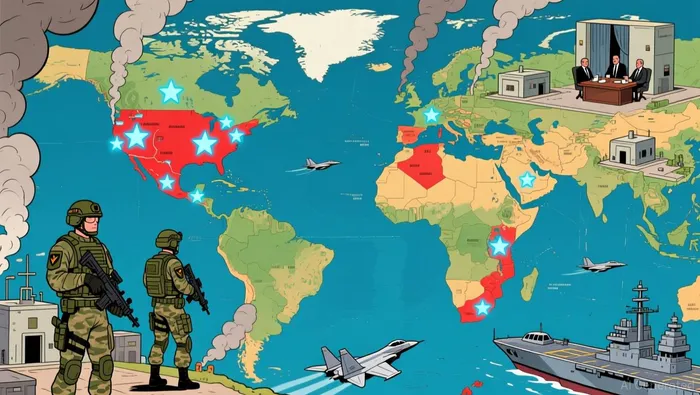 The defense sector has faced unique challenges under polarized governance. The 2025 defense budget of $849.8 billion, while nominally robust, reflects fiscal constraints imposed by the Fiscal Responsibility Act of 2023. Modernization programs have been deferred, and long-term purchasing power eroded, as the National Defense Strategy pivots toward integrated deterrence against China and Russia.
Geopolitical events like the Venezuela intervention have further complicated corporate strategies. European defense stocks, for instance, surged 7% in early 2025 following U.S. military action, as heightened tensions spurred expectations of sustained demand for defense equipment. U.S. firms, meanwhile, grapple with the dual pressures of election-year policy shifts and global supply chain disruptions. The EY report underscores how political uncertainty-particularly around congressional control-has depressed equity returns in foreign markets, forcing companies to adopt more defensive postures.
Energy Sector: Lobbying, Policy Whiplash, and Capital Flight
The energy sector has become a battleground for political influence, with lobbying expenditures spiking after the Venezuela intervention. ChevronCVX--, for example, cited "Venezuela energy issues" 12 times in its 2025 lobbying filings, while Gulf Coast refiners like Phillips 66 lobbied aggressively for resumed crude imports. These efforts reflect a sector recalibrating to a Trump administration prioritizing fossil fuels over renewables.
Public opinion has mirrored this shift. Republican support for solar and wind energy has plummeted since 2020, with 61% now favoring solar and 48% supporting wind-a stark contrast to 84% and 75% in 2020. Conversely, backing for offshore drilling and fracking has risen, aligning with Trump's emphasis on fossil fuel development. This ideological realignment has left energy firms in a precarious position: while Venezuela's oil infrastructure offers potential, production remains below 1 million barrels per day due to years of mismanagement and sanctions.
Corporate Strategies in a Polarized Era
Companies operating in defense and energy have adopted strategies to mitigate election-year risks. The EY report highlights a trend toward regional diversification and reduced exposure to politically volatile regions. For example, firms are reconfiguring supply chains to avoid overreliance on U.S. policies prone to abrupt shifts. In energy, this has meant hedging bets between fossil fuels and renewables, as state-led climate initiatives-like those in Texas and Arizona-emerge as alternatives to inconsistent federal policies. According to a Nature study, this shift reflects a broader transition toward more resilient energy systems.
The rise of "Globalization 2.0," as outlined by the Institute for Technology and Innovation, further illustrates this shift. Companies are now prioritizing strategic trade partnerships aligned with national interests, rather than pursuing open-market globalization. This approach, while protective, also signals a retreat from the interconnected trade networks that once underpinned economic stability.
Conclusion: Navigating the New Normal
The Venezuela intervention and subsequent election-year dynamics reveal a clear pattern: polarized governance amplifies sectoral risks by creating policy vacuums and geopolitical uncertainty. For investors, the lesson is twofold. First, defense and energy sectors must be evaluated through the lens of political volatility, not just economic fundamentals. Second, capital allocation strategies must prioritize flexibility, as rapid shifts in executive priorities-whether in Venezuela or elsewhere-can upend market expectations overnight.
As the U.S. enters another election year, the interplay between executive power and institutional fragility will remain a defining feature of market stability. Companies and investors who adapt to this reality will be best positioned to navigate the turbulence ahead.





Comentarios
Aún no hay comentarios