
Political Uncertainty in NYC's 2025 Mayoral Race: Implications for Real Estate and Municipal Bonds
The 2025 New York City mayoral race has emerged as a pivotal event for investors, with its outcome poised to reshape the city's real estate and municipal bond markets. The contest between former Governor Andrew Cuomo, a pro-development advocate, and Zohran Mamdani, a democratic socialist, reflects a stark ideological divide. These competing visions—streamlined regulation and tax incentives versus rent freezes and expanded affordable housing—have created a climate of uncertainty that is already influencing investor behavior and market dynamics.
Real Estate Market Volatility and Policy Risks
The real estate sector, long a cornerstone of New York's economy, faces divergent futures depending on the election's outcome. Mamdani's proposals, including a freeze on rents for rent-stabilized housing and higher taxes on corporations, threaten to dampen investor confidence in residential and commercial properties. According to a Hogan Lovells report, these policies could reduce the profitability of office-to-residential conversions and discourage private investment in high-density developments. Conversely, Cuomo's platform—emphasizing property tax caps, streamlined regulatory processes, and incentives for housing supply expansion—aligns with traditional development interests and could offer a more predictable environment for real estate stakeholders, the Hogan Lovells analysis notes.
The recent passage of the “City of Yes for Housing Opportunity” zoning amendment in December 2024 has introduced a layer of optimism, simplifying affordable housing requirements and reducing parking mandates, though that progress is tempered by the risk of policy reversals or additional regulatory hurdles under a Mamdani administration. For instance, his push for aggressive tenant protections could clash with the zoning reforms, creating a fragmented regulatory landscape. As noted in a Forbes piece, real estate professionals are already preparing for potential “regulatory shocks,” with 44% of firms adjusting investment strategies in response to market volatility.
Municipal Bond Yields and Fiscal Policy
The mayoral race also carries significant implications for New York City's municipal bond market. A Mamdani victory could lead to higher tax burdens on high-income earners and corporations, potentially increasing public funding for affordable housing initiatives. While such measures might align with social equity goals, they could alter the risk profile of the city's debt. According to a Propmodo analysis, a Mamdani administration's focus on public investment may lead to higher municipal bond yields, reflecting increased perceived risk from investors wary of reduced private-sector participation.
In contrast, a Cuomo-led administration would likely prioritize policies that attract private capital, such as property tax caps and streamlined development approvals. These measures could stabilize bond yields by reinforcing New York's appeal to investors seeking predictable returns. The city's municipal debt, already a critical component of global fixed-income portfolios, could see reduced volatility under a pro-business agenda.
Investor Sentiment and Market Behavior
Despite the uncertainty, investor sentiment remains cautiously optimistic. The “City of Yes” reforms and 2024 housing tax changes have incentivized developers to pursue projects in higher-density districts, according to the Hogan Lovells analysis. However, polls reported by Propmodo indicate that 63% of likely voters believe Mamdani will win the election, while 20% favor Cuomo. This split has led to a dual-track approach among investors: some are hedging against policy risks by prioritizing affordable housing developments, while others are accelerating projects in areas less affected by regulatory shifts.
The real estate market's structural challenges—high interest rates and limited inventory—further complicate the outlook. Forbes later highlighted that 38% of real estate firms are now sending weekly updates to investors to maintain transparency amid shifting conditions. This underscores the need for agility in a market where political outcomes can rapidly redefine risk parameters.
Conclusion
The 2025 mayoral race epitomizes the tension between progressive urban policy and traditional development interests. For real estate investors, the stakes are clear: Mamdani's agenda could curb short-term profitability but align with long-term affordability goals, while Cuomo's policies would prioritize market stability and growth. Municipal bond markets, meanwhile, face a recalibration of risk perceptions based on the city's fiscal direction.
As the election approaches, investors must balance optimism about zoning reforms with caution regarding policy uncertainty. The outcome will not only shape New York's skyline but also redefine the city's role as a global financial hub.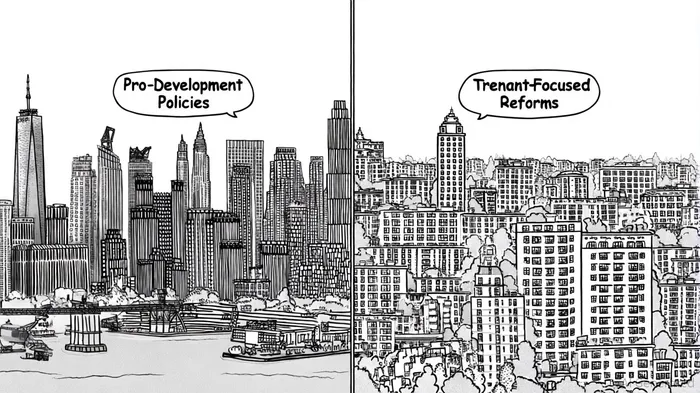







Comentarios
Aún no hay comentarios